
Clover leaf miner
Phytomyza obscura
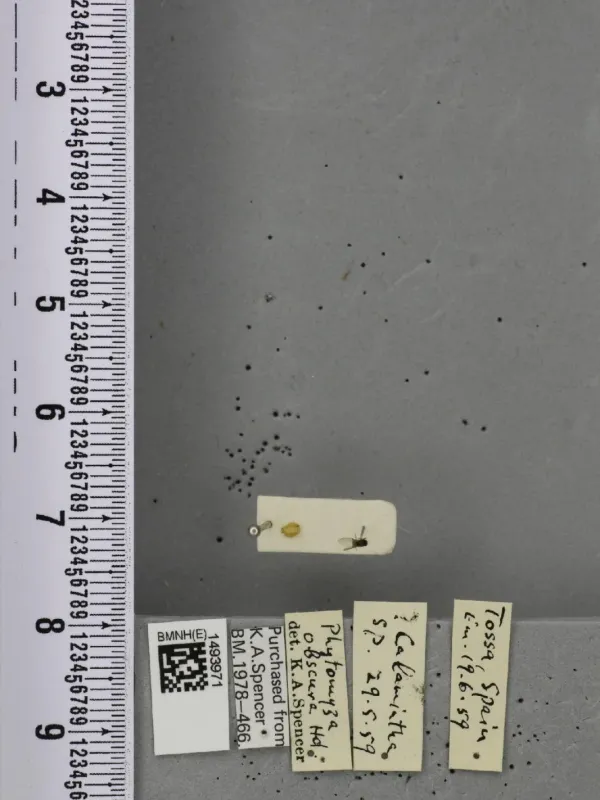
Description
How to identify
The clover leaf miner (Phytomyza obscura) is a small dipteran insect belonging to the family Agromyzidae. Adults are typically about 2–3 mm in length with a dark, inconspicuous coloration.
The larval stage is the most important for identification, as these legless maggots live and feed exclusively within the leaf tissues, hidden from external predators.
Adults possess functional wings, which allow them to spread rapidly across clover fields during the growing season to mate and lay eggs.
The life cycle encompasses four stages: egg, larva, pupa (within a puparium), and adult, with the pupal stage being the primary means of overwintering.
Their size and cryptic behavior often make them difficult to detect until significant damage to the leaf structure has already occurred.
What it damages
This pest primarily targets clover species (genus Trifolium), which are vital forage crops for livestock and essential components of sustainable agriculture.
The larvae feed by consuming the mesophyll of the leaf, creating distinct tunnel-like paths known as mines that disrupt the plant's ability to perform photosynthesis.
As the infestation progresses, leaves become yellow, wither, and eventually drop, leading to a substantial decrease in the biomass production of the field.
In addition to direct loss of foliage, the physical damage weakens the plant, making it more susceptible to opportunistic pathogens and environmental stressors.
Reduced forage quality and yield are the primary economic consequences of a severe infestation, especially in fields grown for high-quality animal feed.
When it appears
The emergence of overwintered adults typically occurs in early spring, synchronized with the resumption of clover growth after the winter season.
The species can complete multiple generations in a single year, resulting in a persistent threat to the crop throughout the entire summer period.
Peak larval activity usually aligns with warmer weather conditions, which facilitate faster development and higher survival rates of the larvae within the leaves.
During the late summer and autumn, as temperatures drop, the pest prepares for its overwintering stage by transitioning into puparia in the soil or crop debris.
Monitoring the population throughout the season is crucial, as overlapping generations can lead to a continuous presence of larvae on the plants.
Signs of infestation
The most diagnostic sign of a clover leaf miner infestation is the presence of winding, light-colored tunnels visible on the surface of the clover leaves.
These mines appear as white or grey serpentine lines, reflecting the larval movement as it consumes the inner tissue of the leaf blade.
Examining the mines closely often reveals small, dark deposits of larval frass, which confirm that the tunnels were created by insect activity.
In cases of high pest density, individual mines may coalesce, resulting in large necrotic blotches that severely impair the leaf's functionality.
Farmers can also detect adults sitting on the foliage, especially during calm, sunny weather when the insects are most active for feeding and oviposition.
Control measures
Cultural control practices, such as crop rotation and the timely harvest of clover, are highly effective in disrupting the leaf miner's life cycle.
Deep plowing after the harvest is recommended to bury crop residues and pupae, thereby reducing the population size for the following season.
In cases where infestations exceed economic thresholds, the application of selective systemic insecticides may be necessary to target larvae within the leaves.
Maintaining field hygiene by removing alternative host weeds around the perimeter can significantly limit the source of infestation.
- Integrated Pest Management (IPM) strategies.
- Regular scouting for early detection of leaf mines.
- Selecting clover varieties with higher vigor.
- Encouraging natural predators and parasitoids in the field.
Taxonomy
- Latin name
- Phytomyza obscura
- Order
- Diptera (flies)
- Family
- Agromyzidae
- EPPO code
- PHYYOB
Discussion
No discussions yet — be the first.