
Scilla miner fly
Phytomyza krygeri
Description
How to identify
The Scilla miner fly (Phytomyza krygeri) belongs to the Agromyzidae family within the order Diptera, known for its larvae's mining behavior.
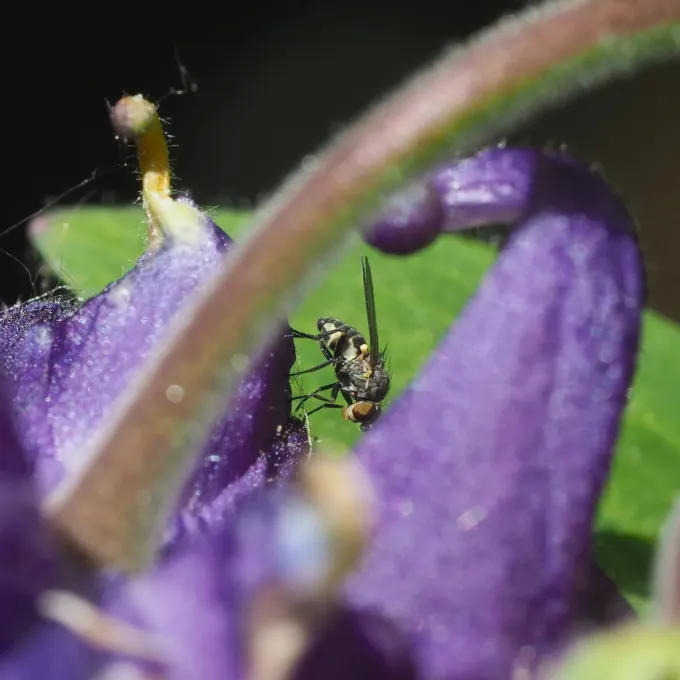
Adult flies are small, dark-colored insects that are often overlooked in garden environments due to their rapid movement and limited size.
The life cycle involves an egg stage, larval stage, pupal stage, and the adult fly, with the larvae causing the most damage to the plants.
The species is highly specialized, targeting specific genera of bulbous plants, which makes it a notable pest in ornamental horticulture.
Identifying the pest often requires observation of the specific damage patterns on leaves rather than the adult flies themselves.
What it damages
The primary hosts for this miner include members of the Asparagaceae family, specifically the genus Scilla and similar spring-flowering bulbs.
Larvae feed within the leaf tissue, creating narrow, winding tunnels known as mines that destroy the internal photosynthetic cells.
Extensive mining leads to chlorosis, premature yellowing, and drying of the foliage, which significantly weakens the bulbs' energy storage.
Loss of leaf surface area reduces the overall vigor of the plant, often leading to smaller flowers or failure to bloom in subsequent seasons.
In high infestation levels, the leaves may become so fragile that they break prematurely, further complicating the plant's recovery.
When it appears
The activity begins in early spring, synchronized with the emergence of the host plant foliage following winter dormancy.
Females deposit eggs directly into the leaf tissue, where the newly hatched larvae immediately begin feeding and constructing tunnels.
The pest may complete multiple generations within a single growing season, depending on local climate conditions and plant availability.
Pupation frequently occurs within the leaf tissue or in the surface layer of the soil, ensuring the next generation is ready for the following cycle.
Overwintering takes place as puparia in soil or debris, making sanitation a critical factor in disrupting the life cycle of the pest.
Signs of infestation
The most visible symptom is the presence of distinctive, thin, light-colored winding lines that traverse the surface of the leaves.
These tracks are usually dotted with small dark spots, which are larval frass deposits left behind as the larva moves and feeds.
Affected leaves often lose their vibrant green color and may appear mottled, which detracts significantly from the plant's ornamental appeal.
Persistent infestations often result in necrotic patches where the leaf tissue has been completely consumed and subsequently desiccated.
Gardeners should perform regular visual inspections of foliage during the active growing months to identify early stages of mining activity.
Control measures
Sanitation is the first line of defense: remove and destroy all infested plant foliage and debris at the end of the season to eliminate overwintering sites.
Good cultural practices, such as providing proper spacing and balanced nutrition, can help plants withstand minor infestations.
Systemic insecticides are the most effective chemical control, as they can reach the larvae hiding within the leaf's protected internal structures.
Biological control strategies involving the encouragement of natural predators can also help suppress populations of the miner fly in managed landscapes.
- Proper disposal of plant remains.
- Avoidance of overcrowded planting areas.
- Timely monitoring and early intervention.
Taxonomy
- Latin name
- Phytomyza krygeri
- Order
- Diptera (flies)
- Family
- Agromyzidae
- EPPO code
- PHYYKR
Discussion
No discussions yet — be the first.