
Onion leaf miner
Phytomyza gymnostoma
Description
How to identify
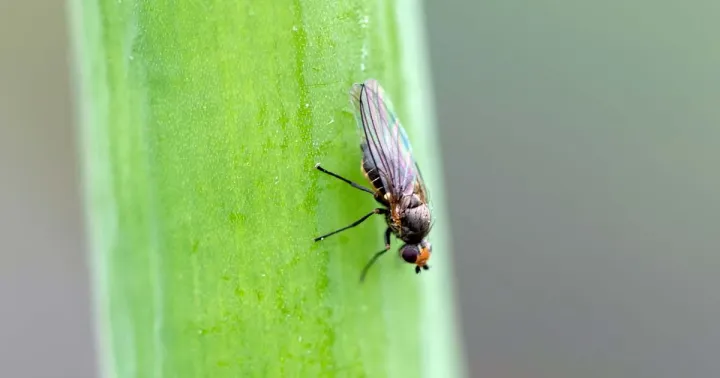
The onion leaf miner (Phytomyza gymnostoma) is a small dipteran insect belonging to the family Agromyzidae. The adult fly is approximately 3 mm long and is characterized by a grey-black body with yellow markings on the head and legs.
The larvae are legless, whitish-yellow in color, and grow up to 5 mm in length. Their cryptic lifestyle inside plant tissues makes them difficult to target during the feeding stage.
The insect follows a complete metamorphosis: egg, larva, pupa (puparium), and adult. It typically produces two generations per year in temperate climates, which allows for rapid population growth.
Overwintering occurs as pupae within soil or plant debris. In spring, adults emerge as temperatures rise, beginning the cycle for the new growing season.
Accurate identification of the adult flies is rarely possible for the average grower; therefore, recognizing the distinct mining symptoms is essential for early intervention.
What it damages
This pest primarily infests Allium species, including bulb onion, leek, garlic, shallot, and chives. It is a significant threat to both commercial vegetable production and home gardening.
Adult flies cause damage by puncturing leaves with their ovipositors to feed on sap and lay eggs. These punctures serve as primary entry points for secondary pathogens and bacteria.
Larvae create narrow, serpentine mines within the leaf blades. As they tunnel downwards towards the bulb neck, they destroy internal leaf structures, causing significant physiological stress.
Severe infestations result in stunted growth, leaf deformation, and premature wilting. The feeding damage can lead to soft rot in the bulb neck, rendering the crop unmarketable.
For crops grown for their foliage, such as chives or green onions, the aesthetic and physical damage often results in total loss of the product.
When it appears
The emergence of the first generation of adults usually begins in early spring when air temperatures reach 10–12°C. This corresponds with the initial growth phase of spring-sown crops.
The peak activity of egg-laying typically occurs in May and June. During this time, the larvae develop rapidly within the foliage, which is often the most critical window for protection.
A second generation often appears in late summer, posing a serious risk to fall-harvested onions and overwintering crops like garlic or winter leeks.
Environmental factors, particularly temperature and humidity, play a major role in the insect's development rate. Hot summers can speed up the life cycle, leading to overlapping generations.
Monitoring for the presence of adult flies using yellow sticky traps can help determine the exact timing for implementing control measures in specific regions.
Signs of infestation
The initial sign of an infestation is the presence of white spots arranged in linear patterns on the leaf surface. These are the oviposition scars made by female flies.
As the larvae feed, they create winding, translucent mines (tunnels) within the leaf tissue. These mines become more visible as they widen over time.
Affected plants often show chlorosis (yellowing), wilting, and drooping leaves. In advanced stages, the foliage may twist or collapse entirely.
The bulb neck often becomes soft and exhibits signs of rot due to the combined effect of larval tunneling and subsequent bacterial infection.
- Linear rows of white puncture marks.
- Visible serpentine mines within the leaves.
- Yellowing and drying of leaf tips.
- Soft, rotting bulb necks.
Control measures
Good agricultural practices are the foundation of control. Implementing a strict crop rotation schedule helps reduce the local buildup of overwintering pupae.
Using fine-mesh insect netting (floating row covers) during the adult flight periods effectively prevents females from laying eggs on the host plants.
Post-harvest hygiene is crucial. Removing and destroying infested plant material, including debris in the soil, prevents the next generation from successfully overwintering.
If chemical control is necessary, systemic insecticides applied at the correct growth stage are most effective. Always check local regulations and adhere to pre-harvest intervals.
Deep cultivation of the soil after harvest can bury or damage puparia, significantly reducing the survival rate of the pest population before the next season starts.
Taxonomy
- Latin name
- Phytomyza gymnostoma
- Order
- Diptera (flies)
- Family
- Agromyzidae
- EPPO code
- NAPOGY
Discussion
No discussions yet — be the first.