
Phytomyza crassiseta
Phytomyza crassiseta
Description
How to identify
Phytomyza crassiseta is a species of leaf-mining fly belonging to the family Agromyzidae in the order Diptera. Adults are typically small insects, measuring approximately 2–3 mm in length.
The body of the fly is generally dark, and the wings are translucent with specific venation patterns characteristic of the Agromyzidae family, allowing for precise identification.
The larvae are legless, maggot-like, and typically off-white or yellowish. Their life is spent entirely within the leaf tissue, which acts as both their habitat and primary food source.
The name "crassiseta" refers to the presence of thickened bristles on the adult, which serve as essential diagnostic features for entomologists examining the specimen under a microscope.
These flies are highly adapted to their niche, with specialized mouthparts for adults to feed on plant sap and for larvae to tunnel through leaf parenchyma.
What it damages
This pest species primarily targets plants within the Asteraceae family. Its presence is often recorded on sunflower crops and various wild-growing host plants.
The larval stage is responsible for the most significant damage, as they mine through the internal leaf tissues, destroying the chlorophyll-rich cells essential for photosynthesis.
The characteristic tunnels, or "mines," disrupt the nutrient flow and structural integrity of the leaf, leading to decreased plant vigor and reduced overall biomass production.
Adult flies cause secondary damage by creating numerous puncture marks on the leaves, which can serve as entry points for bacterial or fungal pathogens.
In cases of heavy infestation, the cumulative leaf damage can lead to premature senescence, reduced seed filling in crops, and a substantial loss in total yield.
When it appears
The life cycle of Phytomyza crassiseta is synchronized with the growing season of its host plants. Activity typically commences in the spring when temperatures rise.
Depending on the climatic conditions, the pest can complete multiple generations per year. Warmer seasons accelerate the life cycle, leading to rapid population growth.
The peak periods of infestation often coincide with the rapid vegetative growth phase of crops, when the plant produces an abundance of succulent, susceptible foliage.
As larvae complete their development, they usually pupate within the leaf or drop to the surface of the soil to undergo metamorphosis, emerging later as new adults.
The species survives the winter in a state of diapause, typically as a pupa, protected within plant debris or the upper layers of the soil until the next season begins.
Signs of infestation
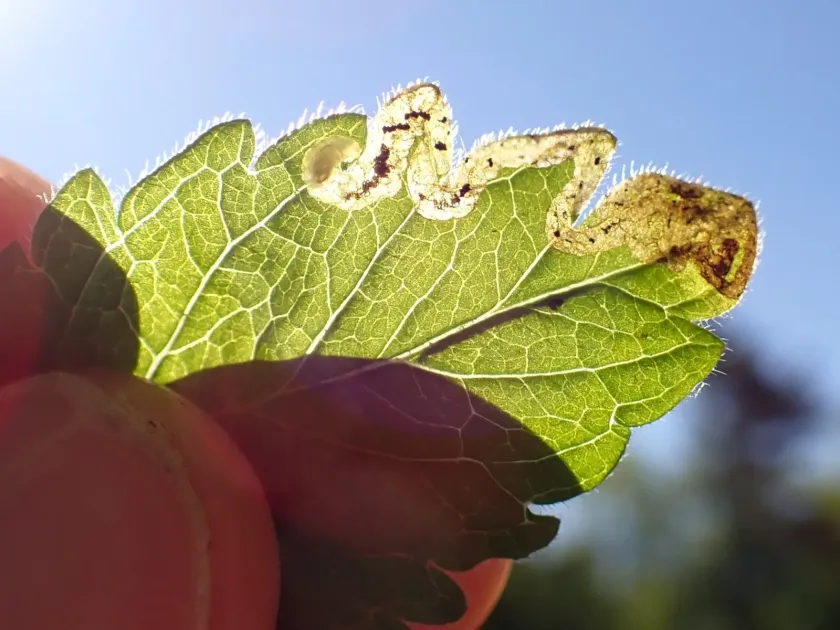
The most distinctive sign of Phytomyza crassiseta infestation is the presence of white, winding, thread-like lines visible on the surface of the leaf.
Small, pin-prick-sized spots appear on leaves where female flies have punctured the epidermis to feed or to deposit their eggs into the mesophyll layer.
As the larva consumes the leaf tissue, the mine widens and becomes more prominent. These tunnels may intersect, creating large, irregular discolored patches across the leaf.
Severely damaged leaves often turn yellow (chlorotic), lose their turgidity, and may eventually wither and drop from the plant prematurely.
Inspecting a leaf against a light source often reveals the larva itself or dark, granular frass (excrement) deposited along the path of the tunnel.
Control measures
Integrated pest management (IPM) is essential for controlling this leaf miner. Crop rotation is a primary strategy to prevent the buildup of local populations.
Sanitation practices, such as the removal and destruction of host weeds and post-harvest crop residues, significantly reduce the number of overwintering pupae.
Systemic insecticides are the most effective chemical approach, as they are absorbed into the plant tissue to reach the larvae hidden within the mines.
- Utilizing yellow sticky traps to monitor adult flight activity and time insecticide applications.
- Encouraging the presence of natural enemies, such as parasitic wasps that predate on the larvae.
- Applying biological control agents like entomopathogenic fungi to reduce the pest population density.
Taxonomy
- Latin name
- Phytomyza crassiseta
- Order
- Diptera (flies)
- Family
- Agromyzidae
- EPPO code
- PHYYCR
Discussion
No discussions yet — be the first.