
Columbine leafminer
Phytomyza aquilegiana
Description
How to identify
The Columbine leafminer (Phytomyza aquilegiana) belongs to the Agromyzidae family of Diptera. This small fly is a specialized pest that specifically targets plants of the genus Aquilegia, making it a common concern for garden enthusiasts and professional floriculturists.
The life cycle involves an egg stage, a larval stage inside the leaf tissue, a pupal stage, and an adult fly. The adult is a tiny, often inconspicuous insect, making the larval damage the most reliable method for identifying its presence in a garden or nursery.
Development speed is highly dependent on ambient temperature. During the peak of the growing season, multiple generations can emerge, which means that monitoring must be consistent to prevent an infestation from spiraling out of control.
The larvae are small, legless maggots that feed exclusively on the mesophyll layer of the leaves. By remaining inside the leaf tissue, they are protected from many external environmental factors and common contact-based insecticides.
Understanding the biology of Phytomyza aquilegiana is essential for effective management. Because the pupal stage often occurs within the leaf or in the soil, sanitation is a crucial part of interrupting their life cycle.
What it damages
The damage is almost exclusively inflicted on the foliage of Columbine plants (Aquilegia spp.). Both wild and hybrid varieties are susceptible to infestation, which can range from minor cosmetic issues to severe loss of plant vitality.
Larval feeding destroys the green tissue responsible for photosynthesis. As a result, the plant loses its ability to produce energy effectively, which is particularly detrimental if the infestation occurs early in the growing season.
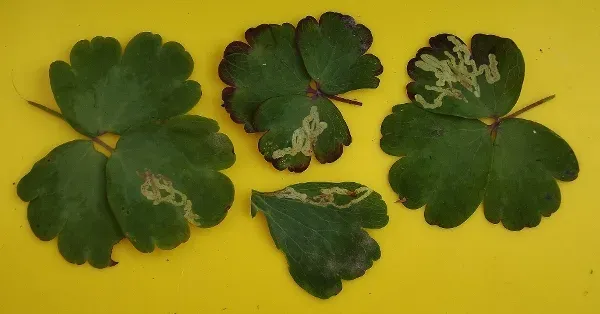
Visually, the damage manifests as unsightly, winding white tracks on the leaves. These tracks not only ruin the ornamental value of the plant but can also lead to premature leaf yellowing and eventual leaf drop if the density of the mines is high.
The compromised leaf surface can serve as an entry point for various secondary pathogens, including fungi and bacteria. This can lead to blotch diseases that further stress the plant and accelerate its decline.
In large-scale nursery production, the presence of these miners can lead to product rejection due to reduced aesthetic appeal. Even if the plant is healthy enough to survive, it may no longer meet the quality standards required for retail sales.
Signs of infestation
The most distinctive signs of infestation are light, serpentine mines that crisscross the leaf blade. These tunnels often appear as pale or white lines, standing out against the natural green color of the columbine leaves.
Small, dark spots of frass (larval excrement) can often be observed within the mines. In cases of high infestation, these mines may coalesce, creating large, blotchy, and necrotic areas that significantly disfigure the foliage.
As the larvae grow, the mines tend to widen. Close inspection of the leaf surface might reveal the larvae themselves, especially at the end of the tunnel, though they are quite small and easily missed by the untrained eye.
Premature leaf senescence is a major red flag. If columbine plants start showing signs of early wilting or yellowing during the middle of the summer, a careful inspection of the lower foliage for mining tracks is recommended.
Distinguishing these signs from other pests is important. Unlike caterpillars that chew holes through leaves, leafminers leave the outer layers of the leaf intact, which creates the unique "transparent window" or "paper-thin" appearance of the mines.
Control measures
The first line of defense is mechanical removal. Regularly inspect columbine plants and pick off or prune any leaves showing active mines. This simple step can significantly reduce the pest population if done early and consistently.
Fall sanitation is a critical preventative measure. Since many leafminers overwinter in soil or plant debris, clearing away all fallen leaves and lightly tilling the soil around the base of the plants can destroy pupae and minimize next year's outbreak.
Systemic insecticides are generally the most effective chemical control method. Because the larvae are protected inside the leaf, systemic products that move through the plant's vascular system are needed to reach the target effectively.
Encouraging natural predators, such as parasitic wasps, is a sustainable long-term strategy. These beneficial insects naturally target leafminer larvae and can help keep population levels below the economic threshold without chemicals.
Proper cultural practices, including adequate watering and avoiding overcrowded planting, ensure that columbine plants remain vigorous. A strong plant is better equipped to compensate for minor foliar loss and is less attractive to opportunistic pests.
Taxonomy
- Latin name
- Phytomyza aquilegiana
- Order
- Diptera (flies)
- Family
- Agromyzidae
- EPPO code
- PHYYAU
Discussion
No discussions yet — be the first.