
Aconite leaf miner
Phytomyza aconiti
Description
How to identify
The Aconite leaf miner, scientifically known as Phytomyza aconiti, belongs to the Agromyzidae family of dipteran insects. This tiny fly is a specialist pest that targets specific plants within the Ranunculaceae family.
Adult flies are small, usually dark-bodied, and are often overlooked due to their size. The systematic classification places them within the order Diptera, which includes a wide range of agricultural and horticultural pests.
What it damages
The primary hosts of this insect are plants from the Aconitum genus. The damage is caused by the larval stage of the insect, which tunnels into the leaf tissue and consumes the chlorophyll-rich mesophyll layer.
Heavy infestations can lead to a significant reduction in the plant's vigor. As the photosynthetic area of the leaf decreases, the overall growth, development, and blooming potential of the affected host plant are negatively impacted.
When it appears
The life cycle typically begins in late spring, following the emergence of adults from overwintering pupae. The activity continues throughout the summer months, often producing several overlapping generations depending on the regional climate.
Temperature plays a crucial role in the development speed of Phytomyza aconiti. Warm and humid conditions generally favor faster reproduction rates, leading to higher populations during the mid-summer period.
Signs of infestation
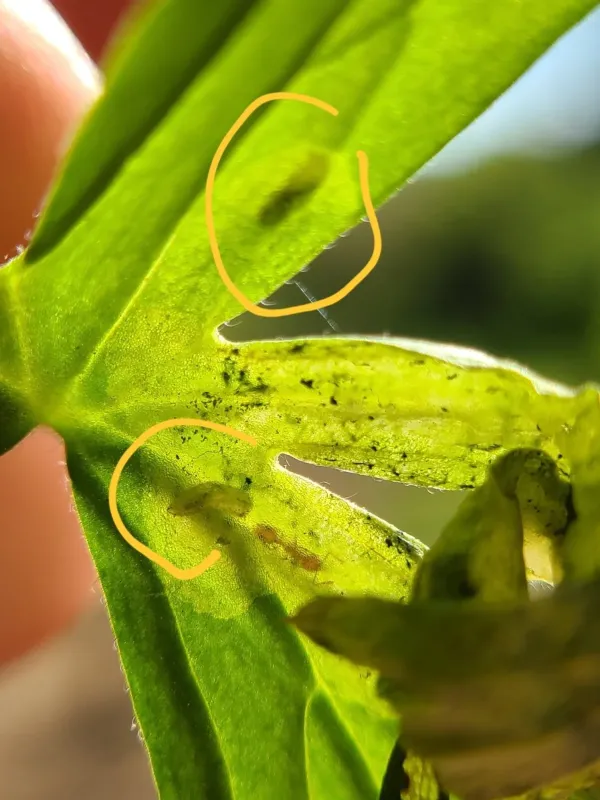
The most distinctive symptom of infestation is the appearance of winding, pale trails across the leaf surface. These tunnels, or "mines," start thin and become wider as the larva grows inside the leaf tissue.
Over time, these mines may coalesce, causing the leaf tissue to brown and wither. Severe damage often results in premature foliage drop and makes the plant look unkempt and sickly during the active growing season.
Control measures
Sanitation is a critical first step in management. Pruning and destroying infested leaves as soon as mines are detected can prevent the current generation from completing its cycle and emerging to lay more eggs.
For chemical control, systemic insecticides are the most effective solution. These agents move through the plant's vascular system, ensuring that the larvae feeding within the leaf tissues are exposed to the active ingredient.
Taxonomy
- Latin name
- Phytomyza aconiti
- Order
- Diptera (flies)
- Family
- Agromyzidae
- EPPO code
- PHYYDE
Discussion
No discussions yet — be the first.