
Phytomyza
Phytomyza
Description
How to identify
Phytomyza is a genus of leaf-mining flies belonging to the family Agromyzidae within the order Diptera. These are tiny insects, typically measuring less than 3 mm, often with a dull gray or black coloration.
The larvae are specialized for an endophagous life, living inside leaf tissues. They are legless, pale in color, and possess mouthparts designed for feeding on plant parenchyma.
Adult females use a sharp ovipositor to puncture the leaf epidermis. They feed on the plant sap and deposit eggs into these punctures, which is the initial step in the infestation process.
Identifying species within the Phytomyza genus often requires expert examination of puparia or larval morphology, as many species are superficially identical.
The life cycle undergoes complete metamorphosis, including egg, larva, pupa, and adult stages. They typically overwinter as pupae in the soil or within plant debris.
What it damages
This pest attacks a wide range of plants, including vegetables, ornamental species, and various weeds. It is a significant threat to members of the Asteraceae, Brassicaceae, and Apiaceae families.
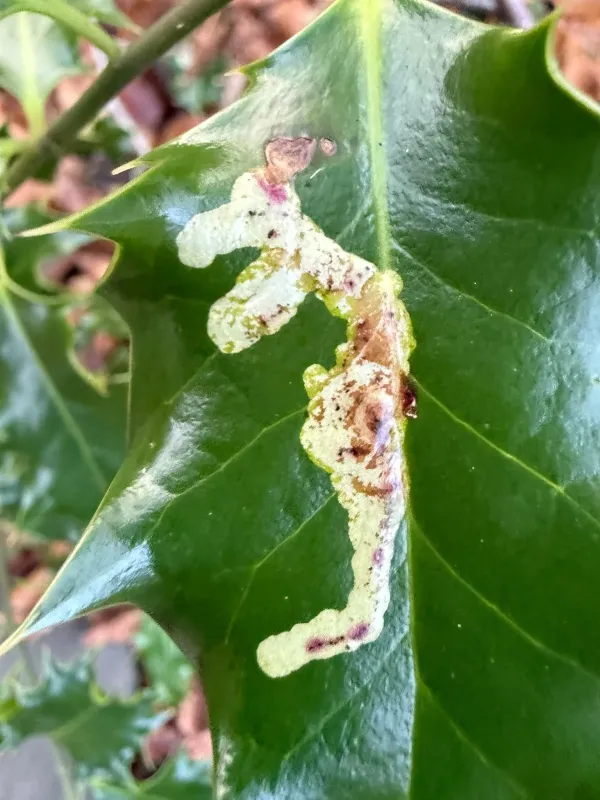
The larvae cause damage by creating winding tunnels (mines) within the leaf lamina, which directly disrupts the photosynthesis process and weakens the host plant.
As the larvae feed, the leaf tissue dries out, becomes brittle, and eventually turns necrotic. Severe infestations lead to premature defoliation and a significant reduction in photosynthetic capacity.
The mines serve as entry points for secondary infections, including fungal, bacterial, and viral pathogens, which can exacerbate the damage caused by the larvae alone.
In cases of heavy infestation, the aesthetic and market value of leafy vegetables can be completely lost, making the crop non-saleable.
When it appears
Adult flies emerge in the spring when temperatures are conducive to their activity. The pest remains active throughout the growing season, often completing multiple generations per year.
The peak of damage typically occurs during the mid-summer months when plant growth is most vigorous, providing abundant food for the developing larvae.
Climate conditions heavily influence the number of generations; in greenhouses, Phytomyza can reproduce continuously, posing a year-round threat to indoor production.
As autumn temperatures drop, the insects enter a state of diapause. Pupae remain dormant in the soil or leaf litter until the conditions for emergence are met in the following spring.
Signs of infestation
The first signs of infestation are minute white dots on the leaf surface, caused by female feeding and oviposition punctures.
Over time, these develop into characteristic winding, pale trails known as mines. These trails expand as the larva grows, sometimes becoming blotchy in appearance.
Looking at the leaf against light often reveals the larva inside the mine, along with small, dark spots of frass (larval waste) arranged along the tunnel.
Affected leaves eventually yellow, starting from the edges or the infestation zone. Progressive wilting and deformation of the leaf structure are common in late stages of infestation.
Yellow sticky traps are highly effective for monitoring adult fly populations and confirming their presence in the field or greenhouse.
Control measures
Cultural practices are the first line of defense, including the thorough removal and destruction of crop residues where pupae may survive.
Deep plowing or soil cultivation can effectively bury pupae, preventing adult flies from emerging successfully in the spring.
Crop rotation is crucial to break the life cycle of Phytomyza, reducing the buildup of localized populations that prefer specific host plants.
Biological control methods, such as utilizing parasitoid wasps (e.g., Braconidae), are highly effective at suppressing larval populations in integrated pest management programs.
- Apply systemic insecticides during peak adult flight periods.
- Monitor crops regularly for early signs of leaf mining.
- Use yellow sticky traps to capture and reduce the adult population.
- Maintain weed-free environments to eliminate secondary hosts.
- Implement strict quarantine measures for incoming plant material.
Taxonomy
- Latin name
- Phytomyza
- Order
- Diptera (flies)
- Family
- Agromyzidae
- EPPO code
- PHYYSP
Discussion
No discussions yet — be the first.