
Phytoliriomyza
Phytoliriomyza
Description
How to identify
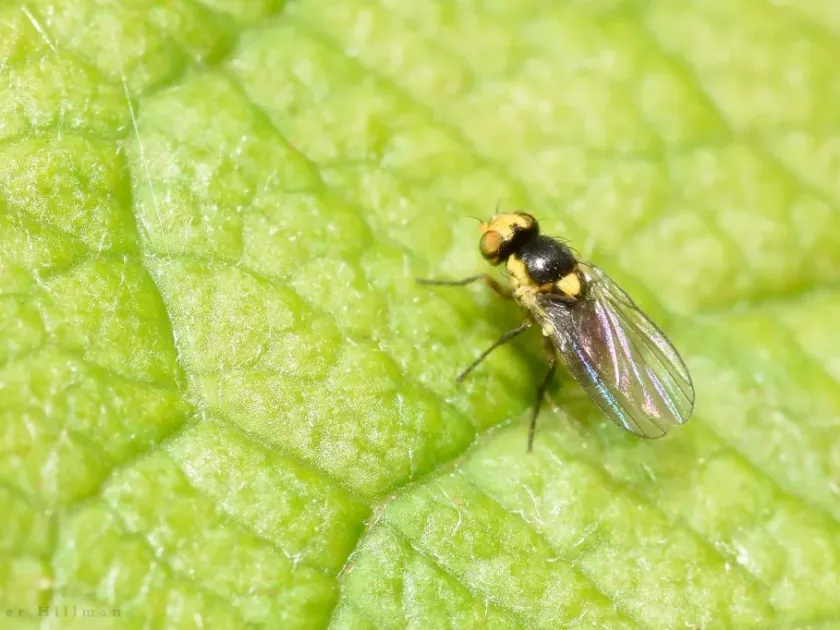
Phytoliriomyza is a genus of small flies belonging to the family Agromyzidae (leafminer flies) in the order Diptera. Adult specimens are typically small, measuring between 1 and 3 mm in length, with distinctive wing venation.
The larvae of this pest live exclusively within the plant tissue, specifically inside the leaf layers. They have a slender, yellowish or whitish body, which is a common characteristic among many species of leafminers.
Identifying specific species of Phytoliriomyza is challenging due to their microscopic size and often requires expert entomological examination of the male genitalia.
The biology of the pest is strictly dictated by the host plant's internal environment. The entire development from egg to larva occurs within the leaf, which provides both protection and nutrition for the immature insect.
Pupation may occur either within the leaf mine or by falling to the soil surface or plant debris, which must be considered when determining integrated pest management strategies.
What it damages
This pest affects a wide array of crops, including various vegetables, ornamental flowers, and certain forest plant species. They are particularly known for damaging greenhouse crops like chrysanthemums and gerberas.
Larvae feed on the leaf mesophyll, creating meandering or linear trails known as mines, which are easily visible on the leaf surface. This feeding behavior disrupts photosynthesis and leads to premature leaf senescence.
The tunnels created by larvae serve as infection pathways for secondary pathogens, such as fungi and bacteria. Weakened plants exhibit stunted growth, reduced quality, and in severe cases, plant death.
High infestation levels can result in significant yield losses, often ranging from 20% to 40% in vegetable crops. For ornamental plants, the visual damage renders the product unmarketable due to aesthetic flaws.
Economic losses are compounded by the costs of chemical applications and the necessity for mandatory quarantine procedures in commercial greenhouse operations.
Signs of infestation
The earliest signs of infestation are narrow, winding lines on the leaf surface that turn pale or brown over time. These are the tracks left by the larvae mining the interior tissues.
Within the mines, you can often spot tiny dark specks, which are larval frass (excrement), a definitive diagnostic sign of a leafminer infestation. Leaves harboring the pest often turn yellow and dry out prematurely.
An inspection of the underside of the leaf might reveal small exit holes or slight bumps. In young plants, severe damage can lead to leaf deformation or stem twisting.
Monitoring should be performed regularly, ideally during early morning or evening. The use of yellow sticky traps is a standard method for detecting the presence and activity of adult flies.
Viewing a leaf against light using a magnifying glass allows for the detection of the larva actively moving within the leaf tissue, confirming an ongoing infestation.
Control measures
Effective control strategies start with cultural practices, such as removing weeds that act as alternate hosts and implementing strict crop rotation. Maintaining proper humidity and ventilation helps create an environment unsuitable for fly development.
Biological control, including the release of parasitoid wasps like Dacnusa sibirica, is a highly effective and environmentally friendly method for managing populations in protected cultivation.
Chemical control involves the use of systemic insecticides that can penetrate plant tissues to reach the larvae. Products containing abamectin and other specialized active ingredients are frequently used in professional settings.
- Sanitation of tools and greenhouse structures to prevent spread.
- Deployment of yellow sticky traps for monitoring population density.
- Manual removal and disposal of heavily infested foliage.
- Use of biopesticides during the early stages of infestation.
Due to the pest's rapid life cycle and potential for developing resistance, rotating insecticides with different modes of action is critical to maintaining efficacy and long-term control.
Taxonomy
- Latin name
- Phytoliriomyza
- Order
- Diptera (flies)
- Family
- Agromyzidae
- EPPO code
- PLIRSP
Discussion
No discussions yet — be the first.