
Cambium mining fly
Phytobia setosa
Description
How to identify
The cambium mining fly (Phytobia setosa) belongs to the order Diptera and the family Agromyzidae. This insect is a small fly that spends its larval stage feeding under the bark of living trees.
Adult flies are typically small and dark in color. The primary concern is the larval stage, which develops within the tree's living tissues, creating characteristic tunnels.
Identification of this pest in the field is challenging, as the adults are rarely seen, and the evidence of their activity is only revealed through lumber processing or specific wood inspection.
Accurate diagnosis often requires expert entomological analysis of adult specimens or a detailed study of the tunnel patterns within the cambium layer.
Professionals recommend using pheromone or sticky traps during the adult flight period to effectively monitor population levels in forestry environments.
What it damages
The primary host trees for this species include various deciduous species, particularly those in the genera Betula (birch), Populus (poplar), and Salix (willow).
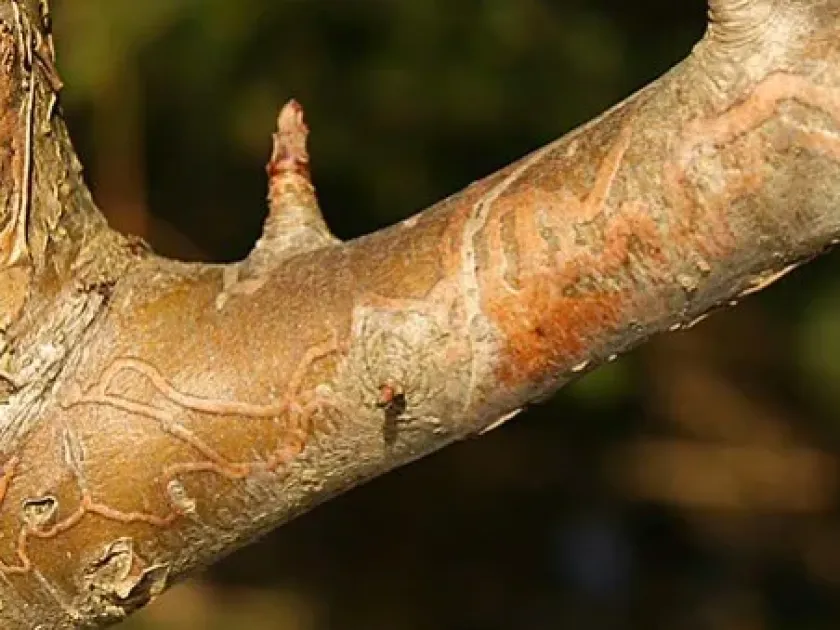
Larvae create winding tunnels within the cambium layer, which disrupts normal sap flow and the formation of new wood layers.
This damage negatively impacts wood quality, often causing "pith flecks" or dark streaks that significantly lower the commercial grade and value of timber.
In cases of high infestation, the trees may experience reduced vigor, making them more susceptible to secondary pests and various wood-decaying fungi.
The most significant economic impact is observed in the forestry industry, where larval damage degrades the quality of high-value lumber.
When it appears
Adult activity occurs during the spring and summer months, which aligns with the period of active tree growth required for larval nourishment.
Females oviposit their eggs directly beneath the bark of young trees using a specialized ovipositor.
Larval development proceeds throughout the warm season, with the larvae tunneling vertically along the trunk as the tree adds new wood layers.
Once the cycle is complete, the larvae bore an exit hole, drop to the ground, and pupate within the soil or leaf litter.
The overwintering stage typically occurs in the pupal form within the soil, providing protection against harsh winter conditions.
Signs of infestation
The primary sign of infestation is the presence of linear or spiral tunnels found on the cross-sections of logs after harvesting.
- Presence of dark, narrow channels within annual growth rings.
- Overall reduction in tree trunk diameter increment.
- Compromised bark integrity at larval exit points (in severe cases).
During visual inspections of standing trees, there are almost no external symptoms, making population monitoring an extremely difficult task.
Only a detailed cross-sectional analysis allows foresters to estimate the level of infestation by the cambium mining fly in a stand.
Control measures
Currently, there are no highly effective eradication methods for this pest in natural forest settings due to the larvae's protected lifestyle under the bark.
The main strategy remains silvicultural: maintaining stand health and ensuring the timely removal of weakened or highly susceptible trees.
Biological control methods may involve supporting natural enemies, such as parasitoids, which can help limit adult populations during the flight phase.
Chemical control with insecticides is generally restricted in forestry due to environmental regulations and is rarely effective against larvae hidden beneath the bark.
Preventative measures include selecting resistant tree species or cultivars that show lower susceptibility to attacks by this specific type of mining fly.
Taxonomy
- Latin name
- Phytobia setosa
- Order
- Diptera (flies)
- Family
- Agromyzidae
- EPPO code
- PHYBSE
Discussion
No discussions yet — be the first.