
Phytobia flavifrons
Phytobia flavifrons
Description
How to identify
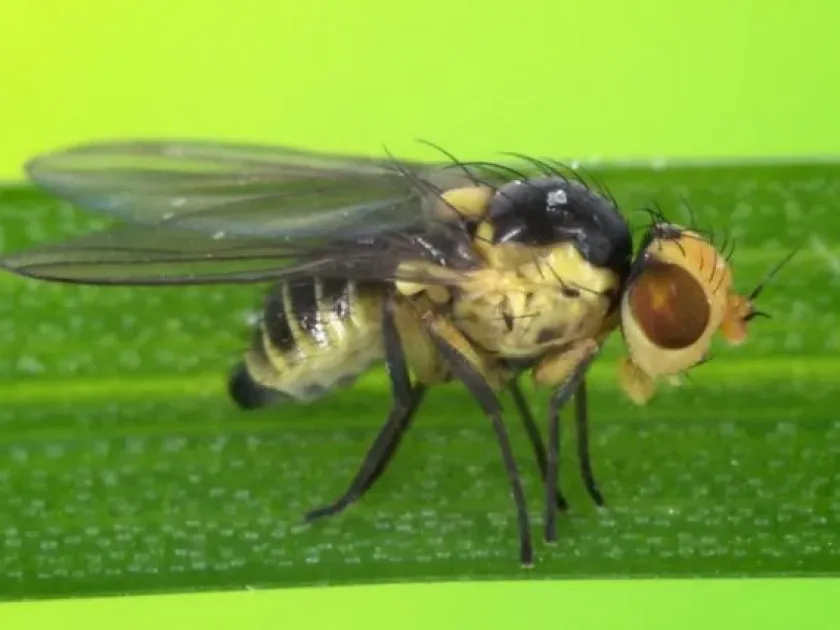
Phytobia flavifrons is a species of leaf-mining fly belonging to the family Agromyzidae (order Diptera). This insect is characterized by its small size and a distinct yellow-colored head, which is a key identifying feature.
The adult fly is a small insect that feeds on plant nectar. However, it is the larval stage that causes economic damage, as larvae live and feed inside the leaf tissues of their host plants.
The biological cycle consists of four distinct stages: egg, larva, pupa, and adult. The duration of each stage is highly dependent on ambient temperature and humidity.
Pupation typically occurs within the leaf mine or by dropping to the soil, depending on the specific environmental conditions and the developmental stage of the host plant.
This pest is particularly successful in greenhouse environments where the controlled climate allows for continuous reproduction and the buildup of high population densities throughout the year.
What it damages
The primary hosts of Phytobia flavifrons are plants within the Caryophyllaceae (pink) family, such as various species of Dianthus grown for both ornamental and cut-flower purposes.
Larvae feed on the leaf parenchyma, creating intricate, winding tunnels known as mines. These mines disrupt the photosynthetic capacity of the leaves, weakening the plant's overall health.
Heavy infestation results in visible yellowing of the leaves, premature senescence, and leaf fall, which severely impacts the commercial value of the crop.
Besides direct tissue damage, the mines serve as entry points for secondary pathogens, potentially leading to bacterial or fungal infections that cause rot.
In ornamental nurseries, the presence of these pests reduces the quality of the plants, making them unsuitable for sale and leading to significant economic losses for growers.
Signs of infestation
The most prominent sign of infestation is the appearance of light-colored, serpentine trails (mines) on the leaf surface, which are clearly visible against the green background.
When held up to a light source, one can often see the larva inside the mine, along with small dark spots representing the larva's frass (excrement) deposited as it feeds.
Leaves that are heavily mined often become distorted, twist, or show signs of necrosis, as the damaged cells die and turn brown.
The reduction in healthy leaf area significantly slows down the plant's growth and can lead to a visible decrease in flower production or vigor.
Adult flies can be detected by monitoring yellow sticky traps placed at the plant canopy level, which are highly effective for early detection of the pest.
Control measures
Integrated pest management (IPM) is crucial, starting with the prompt removal and disposal of infested leaves to eliminate larvae before they complete their life cycle.
Maintaining strict hygiene in and around the greenhouse is essential, including the eradication of weed species belonging to the Caryophyllaceae family.
Biological control using parasitoid wasps has proven effective in many professional settings, as these natural enemies target the larvae directly within their mines.
When chemical intervention is required, systemic insecticides are the most effective choice, as they are absorbed into the leaf tissue to reach and kill the feeding larvae.
- Regular monitoring with yellow sticky cards.
- Sanitary disposal of infested plant material.
- Introduction of biological control agents (parasitoids).
- Application of systemic pesticides when thresholds are met.
Taxonomy
- Latin name
- Phytobia flavifrons
- Order
- Diptera (flies)
- Family
- Agromyzidae
- EPPO code
- PHYBFL
Discussion
No discussions yet — be the first.