
Bladder snail
Physa fontinalis
Description
How to identify
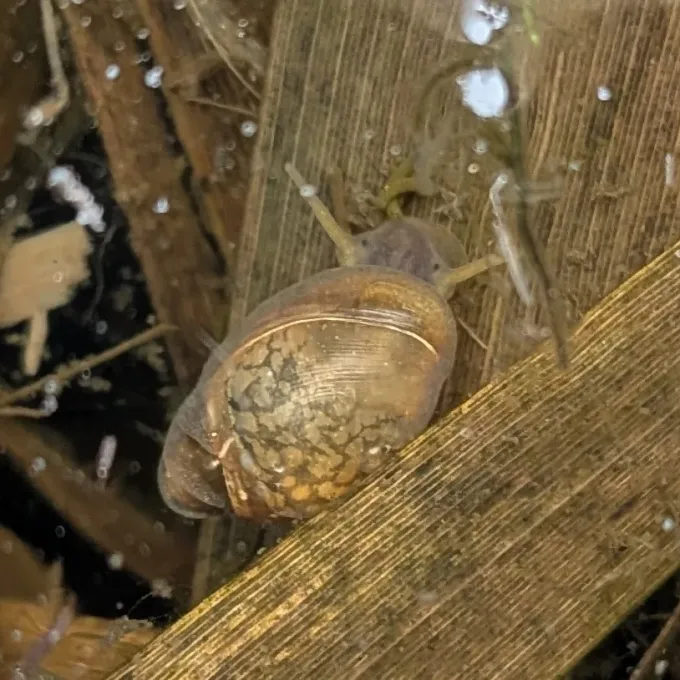
The bladder snail (Physa fontinalis) belongs to the family Physidae. It is a small freshwater mollusk characterized by a thin, fragile, and semi-transparent shell.
The shell of this snail is sinistral, meaning it coils to the left, which is a key identification feature distinguishing it from many other pond snails.
The body is typically grayish or brown, and the foot is broad, allowing the snail to move quickly across surfaces, including the water surface film.
Adult snails grow to approximately 10–12 millimeters in length. Their ability to adapt to various environmental conditions makes them common in many aquatic systems.
They are frequently found in stagnant or slow-moving waters, thriving where there is an abundance of decaying organic matter and aquatic vegetation.
What it damages
Bladder snails cause significant damage to aquatic plants by grazing on soft tissues, especially preferring new, tender shoots and leaves.
In nurseries and controlled aquatic environments, they can quickly destroy delicate specimens, rendering them unsuitable for commercial or decorative use.
Beyond direct feeding, these snails act as vectors for various pathogens, facilitating the spread of bacterial or fungal infections between healthy plants.
Feeding activities often leave unsightly holes and ragged edges, which weaken the plant and make it more susceptible to further decay and stress.
Heavy infestations lead to a decline in plant health and can severely disrupt the biological balance of a managed aquatic ecosystem.
When it appears
Reproduction of the bladder snail occurs throughout the year, provided that water temperatures remain within the range of 18 to 25 degrees Celsius.
Activity levels tend to peak during the warmer months, when metabolic rates increase, leading to faster life cycles and rapid population growth.
As hermaphrodites, these snails can self-fertilize, allowing a single individual to start an entire colony if environmental conditions are appropriate.
Egg masses are typically deposited in gelatinous capsules on the undersides of leaves, ensuring protection and high survival rates for the offspring.
The rate of population expansion is highly dependent on nutrient availability and the presence of organic debris, which serves as a secondary food source.
Signs of infestation
Small, irregular holes appearing in the young leaves of aquatic plants are the primary indicator of an emerging bladder snail infestation.
Visible clusters of small, transparent egg capsules on the aquarium glass or leaf surfaces signify active breeding and an impending population surge.
Increased activity of snails on the water surface or along the walls of the tank is a clear sign that the population has reached a significant level.
Yellowing or rotting sections of the plant tissue near the grazing sites often indicate secondary infection caused by the presence of the snails.
A general loss of vigor and the degradation of the plant's structural integrity over a short period are definitive signs of snail-related damage.
Control measures
Preventive measures, such as thorough inspection and disinfection of new plants, are the most effective ways to avoid introducing these pests.
Manual removal of adult snails and careful cleaning of egg-covered surfaces can effectively reduce the population size in controlled setups.
Introducing natural predators, such as specific fish or crustacean species, can provide long-term biological control against snail populations.
- Reducing excess organic waste and decaying plant matter.
- Using commercial snail traps to catch and remove adults.
- Monitoring nutrient levels to limit excessive algal growth.
- Regular maintenance of filtration and water circulation systems.
In severe cases, total system sterilization and a complete water change may be necessary to eradicate the infestation and protect remaining plants.
Taxonomy
- Latin name
- Physa fontinalis
- Order
- Molluscs
- Family
- Physidae
- EPPO code
- PHSAFO
Discussion
No discussions yet — be the first.