
Phylloxerina nyssae
Phylloxerina nyssae
Description
How to identify
Phylloxerina nyssae belongs to the family Phylloxeridae, part of the order Hemiptera. These tiny insects are morphologically related to the grapevine phylloxera but are strictly specialized in their host plants, primarily targeting the Nyssa genus.
Adults and nymphs are microscopic and typically exhibit a pale yellowish or greenish hue, which helps them camouflage effectively against the leaf tissue of the host plant. They possess specialized piercing-sucking mouthparts designed to extract sap from plant tissues.
Identification is complex and often requires microscopic examination to observe the structure of antennal sensilla and wing venation patterns. In the field, their cryptic behavior makes them difficult to spot until symptoms appear.
Their life cycle involves multiple generations, with potential for both leaf-feeding and root-feeding forms, a trait common among many members of this insect family.
The population can expand rapidly due to parthenogenic reproduction, allowing a single colony to propagate across the canopy of a host tree in a short period under favorable environmental conditions.
What it damages
The primary hosts for Phylloxerina nyssae are trees of the genus Nyssa, such as Nyssa sylvatica. The insect feeds exclusively on the tissues of these specific decorative trees.
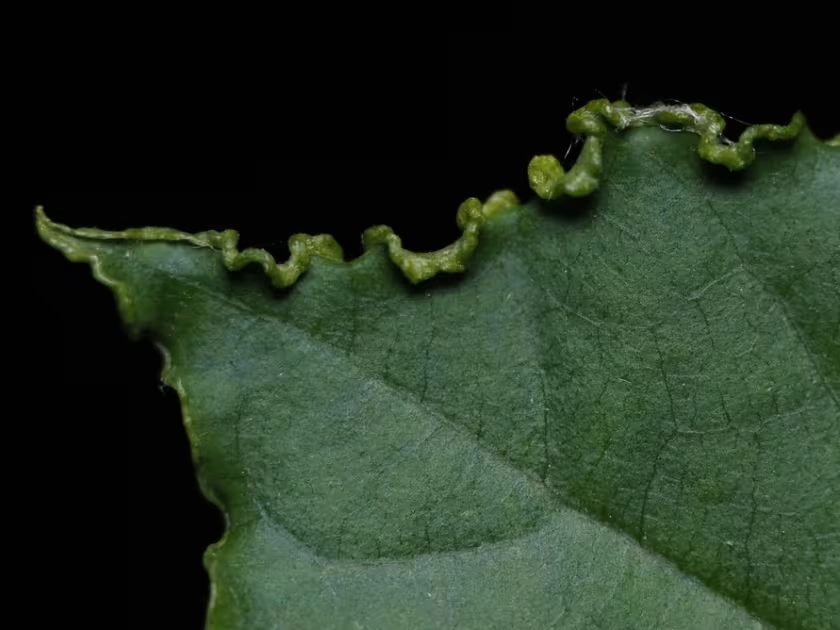
As the insects feed, they trigger the development of galls on the leaf surface. These galls serve as protected chambers where the insects continue to feed and reproduce, sequestered from the external environment.
This persistent feeding disrupts the tree's physiological processes, including photosynthesis, which can lead to weakened tree vigor and stunted growth in severe infestations.
In addition to physiological stress, the damage weakens the structural integrity of the leaves, often leading to premature leaf drop during the peak summer months.
The punctures and galls created by the pest act as entry points for secondary fungal and bacterial pathogens, which can exacerbate the decline of the infested branches.
When it appears
The activity of Phylloxerina nyssae is closely synchronized with the host plant's growing season. Emergence usually coincides with bud break and the initial flush of spring foliage.
Throughout the summer, multiple generations occur, leading to a significant increase in the number of galls present on the leaves by mid-summer.
As temperatures begin to drop in the autumn, the insects enter diapause, seeking refuge in bark crevices or within the plant debris on the forest floor to survive the winter.
Climate variables, particularly spring temperatures, play a critical role in the timing of the life cycle. A warmer spring often results in an earlier and more aggressive infestation.
Effective monitoring should begin as soon as the first leaves unfold, as targeting the early generations is the most efficient way to prevent widespread colonization.
Signs of infestation
The most visible symptom of infestation is the formation of galls, which appear as irregular, swollen growths on the leaves, frequently changing color to red, purple, or brown.
Careful inspection of the underside of the leaves usually reveals clusters of these small insects, often covered by a waxy or fuzzy secretion that provides additional protection.
Secondary signs include leaf deformation, curling, and chlorotic spotting. In cases of chronic infestation, one might observe a general loss of canopy density and reduced overall tree health.
A heavily infested tree will often shed leaves prematurely, leading to a diminished aesthetic appearance, which is particularly problematic in landscape and park settings.
- Presence of characteristic leaf galls.
- Microscopic insects visible on the underside of leaves.
- Early leaf drop and reduced foliage quality.
- Chlorotic or distorted leaves.
Control measures
Cultural management is the first line of defense: ensuring that trees are well-watered and properly fertilized helps maintain tree vigor and resistance against pest damage.
Chemical control often requires the use of systemic insecticides that are absorbed by the plant and reach the insects inside the galls where contact sprays are ineffective.
Timing is crucial for chemical applications; treatment is most effective early in the season before the galls become fully enclosed and hardened.
Sanitation practices, such as pruning heavily infested branches and removing leaf litter in the fall, significantly reduce the population of insects preparing for winter hibernation.
Encouraging predatory insects and natural biological controls can provide long-term suppression of the pest population while reducing the reliance on broad-spectrum chemical interventions.
Taxonomy
- Latin name
- Phylloxerina nyssae
- Order
- Hemiptera (bugs, aphids, leafhoppers)
- Family
- Aphididae
- EPPO code
- PHXNNY
Discussion
No discussions yet — be the first.