
Oak leaf miner
Phyllonorycter quercifoliella
Description
How to identify
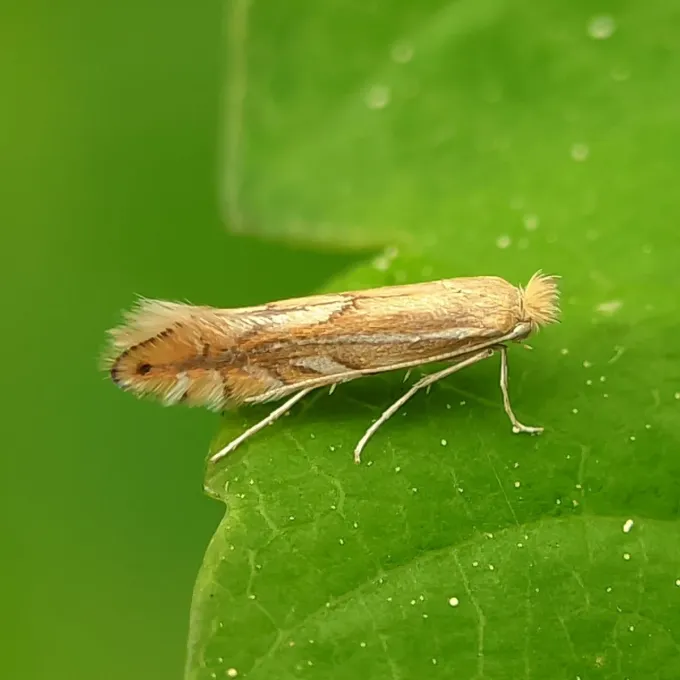
The Oak leaf miner Phyllonorycter quercifoliella is a species of moth belonging to the Gracillariidae family. These tiny insects have a wingspan of approximately 7–9 mm, with distinctive golden-brown wings marked by white streaks.
The life cycle involves four stages: egg, larva (caterpillar), pupa, and adult. The moths are primarily nocturnal, and their reproductive success is highly dependent on the phenology of their host oak trees.
A key biological trait is the larval stage, where the caterpillars live exclusively within the leaf tissue. They feed on the parenchymal cells, creating specialized galleries known as mines, which serve as protection from predators.
Pupation typically occurs in fallen leaves during winter. In early spring, when temperatures rise, adult moths emerge, often coinciding with the budburst of oak trees, allowing the larvae to access fresh foliage immediately.
In temperate climates, the species produces two to three generations annually. This high reproductive rate allows populations to expand rapidly during favorable weather conditions, particularly in warm summers.
What it damages
The primary hosts are species of the Quercus genus, such as the pedunculate oak. The damage is caused by larvae mining the leaves, which disrupts the tree's photosynthetic capability by destroying the internal leaf structure.
Early-season infestation leads to yellowing and premature leaf drop. While established trees can usually survive, repeated annual attacks significantly reduce the tree's vigor, growth rates, and overall health.
Stressed trees are significantly more susceptible to secondary pests and fungal pathogens. Chronic defoliation acts as a major stressor, potentially leading to branch dieback in severe cases.
In urban landscapes and parks, the aesthetic damage is highly visible, leading to concerns regarding the health of public greenery and the potential for secondary infestation by wood-boring insects.
Economic impacts include the degradation of timber quality in forested areas and the increased costs associated with managing pest outbreaks in municipal and sensitive ecological zones.
Signs of infestation
The most reliable sign of infection is the presence of pale, blotch-like mines on the underside of the leaves. These mines are initially small and translucent but turn brown and necrotic as the larvae grow.
Upon close inspection, particularly against a light source, the interior of the mine reveals frass (larval waste) or the larva itself. The leaf surface above the mine often becomes wrinkled or slightly blistered.
Massive infestations can result in premature autumnal coloration in mid-summer. A significant portion of the canopy may appear bronzed or withered due to the loss of photosynthetic area.
In the evening, the presence of the adult moths can be detected around the tree trunks. High densities of these moths indicate a significant population capable of causing widespread leaf damage.
- Visible blotch mines on the lower leaf surface.
- Premature leaf senescence and early autumn leaf drop.
- Blistering of the leaf epidermis.
- Presence of pupal exuviae on fallen leaves.
Control measures
Sanitation is a cornerstone of management: collecting and disposing of leaf litter in late autumn effectively removes the overwintering pupae, drastically reducing the next generation's population.
Encouraging natural predators such as parasitic wasps is highly effective for long-term suppression. Avoiding broad-spectrum pesticides ensures that these beneficial insects survive to regulate pest numbers naturally.
Chemical control should be reserved for high-value trees or severe outbreaks. Systemic insecticides applied during the early stages of larval development are most effective, as they reach the larvae inside the leaf mines.
Maintaining tree vitality through proper irrigation and soil care is essential. Healthy trees are better equipped to compensate for the loss of foliage caused by mining larvae.
Monitoring populations using pheromone traps is recommended for professional pest management. This approach allows for targeted interventions only when necessary, minimizing the chemical footprint in the environment.
Taxonomy
- Latin name
- Phyllonorycter quercifoliella
- Order
- Lepidoptera (butterflies)
- Family
- Gracillariidae
- EPPO code
- PRYCQU
Discussion
No discussions yet — be the first.