
Coffee leaf miner
Acrocercops coffeifoliella
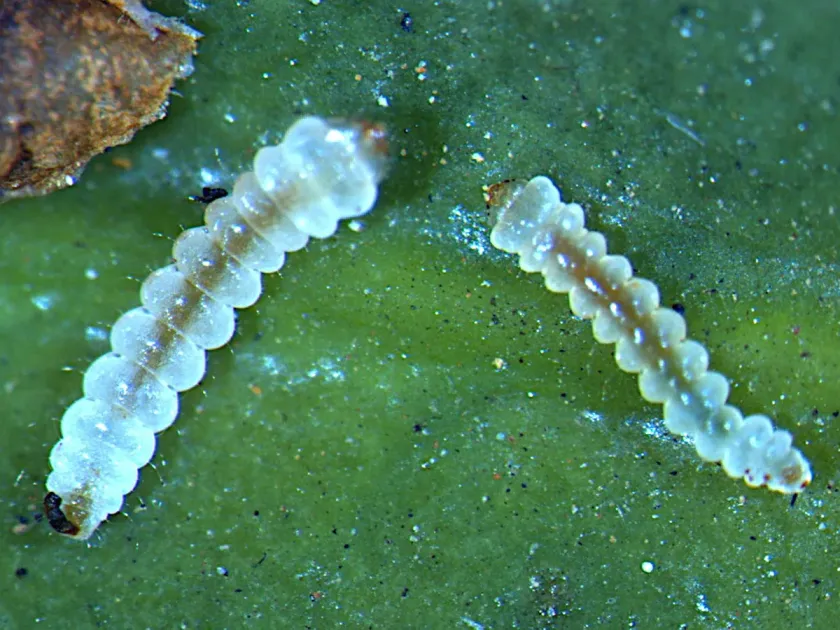
Description
How to identify
The coffee leaf miner Acrocercops coffeifoliella belongs to the Gracillariidae family of moths. These are small insects, often difficult to observe due to their nocturnal behavior and cryptic coloring that blends with the environment.
The life cycle consists of four stages: egg, larva, pupa, and adult. The larval stage is the most significant from an agricultural perspective, as it is the period during which the moth causes direct mechanical damage to the leaf tissue.
Adult moths lay eggs on the upper surface of the leaves. After hatching, the larvae penetrate the leaf tissue immediately, avoiding exposure to external conditions and many traditional contact pesticides.
The pupal stage occurs inside the leaf mine or within leaf litter on the ground. The pupa is protected by a thin silken cocoon, which provides a degree of environmental resistance during the transition to the adult form.
Multiple generations per year often overlap, creating continuous pressure on the plants. Understanding this developmental pattern is essential for effective timing of control measures in coffee cultivation.
What it damages
The primary hosts are Coffea arabica and Coffea canephora. The pest particularly affects young, rapidly growing foliage, which is vital for the development of both seedlings and mature trees.
Larvae consume the mesophyll tissue, creating characteristic mines. These mines initially appear as light-colored spots or lines but eventually turn necrotic and brown, causing the leaf area to die off.
Heavy infestation leads to severe defoliation, as damaged leaves dry up and fall prematurely. This significant loss of leaf surface area inhibits photosynthesis, negatively impacting tree vigor and growth rate.
Reduced photosynthetic capacity directly results in lower bean quality and overall yield reduction. Stressed trees are also more susceptible to secondary infections by various fungal and bacterial pathogens.
In nursery environments, the coffee leaf miner can cause stunted growth in young plants, leading to high mortality rates and increased costs for replacing damaged stock.
Control measures
Cultural control involves systematic removal and destruction of infested foliage to reduce the population density. Maintaining balanced nutrition and proper spacing between trees helps reduce the severity of pest impact.
Biological control relies on naturally occurring parasitoids and predators that hunt the moth larvae. Enhancing biodiversity on the farm is a sustainable strategy to suppress the pest population naturally.
Chemical control focuses on the use of systemic insecticides that are absorbed by the plant. These chemicals are the most effective way to reach the larvae protected within the leaf tissue, which contact sprays often miss.
Resistance management is crucial; therefore, alternating between different chemical classes is highly recommended. Monitoring adult moth activity with pheromone traps allows for precise treatment scheduling.
Integrated Pest Management (IPM) strategies are strongly encouraged to minimize ecological impact. By combining regular monitoring, biological control agents, and selective chemical use, farmers can effectively manage the coffee leaf miner.
Taxonomy
- Latin name
- Acrocercops coffeifoliella
- Order
- Lepidoptera (butterflies)
- Family
- Gracillariidae
- EPPO code
- AROCCF
Discussion
No discussions yet — be the first.