
Acrocercops
Acrocercops
Description
How to identify
The genus Acrocercops belongs to the Gracillariidae family, commonly known as leaf-mining moths. These are small moths with narrow wings, usually spanning less than 10 mm. Their size and coloration provide excellent camouflage on tree bark and leaves, making them difficult to spot.
The lifecycle consists of egg, larva, pupa, and adult stages. The larvae are specialized feeders that inhabit the mesophyll layer of leaves, creating distinctive mines that protect them from many external predators and environmental factors.
Depending on the region, these moths can produce several generations per season. They generally overwinter as pupae within silk cocoons hidden in debris, fallen leaves, or deep crevices in the bark of host trees.
The larval stage is the most destructive phase. As larvae move through the leaf tissue, they leave characteristic patterns of frass, which can be observed under magnification to help identify the specific species of the pest.
Monitoring for adult moths is typically carried out using pheromone traps. These traps are essential for timing pesticide applications accurately, as they indicate peak emergence periods and egg-laying activity.
What it damages
Acrocercops species primarily attack various woody plants, including commercially important fruit trees like apple and pear. Certain decorative species are also frequently colonized, leading to aesthetic and physiological damage.
By consuming the internal parenchyma of leaves, the larvae disrupt the plant's photosynthetic efficiency. This reduced carbon gain weakens the tree, particularly when infestation levels are high across the entire canopy.
Severe infestations cause premature leaf senescence and abscission. This defoliation reduces the tree's ability to store resources for the winter, negatively impacting the development of flower buds for the subsequent season.
Furthermore, the physical damage created by the mining activity provides entry points for opportunistic plant pathogens, including various fungi and bacteria that cause leaf spot diseases.
In orchards under stress—whether from drought or nutrient deficiencies—the presence of this pest can exacerbate tree decline, significantly reducing overall harvest volume and fruit quality.
Signs of infestation
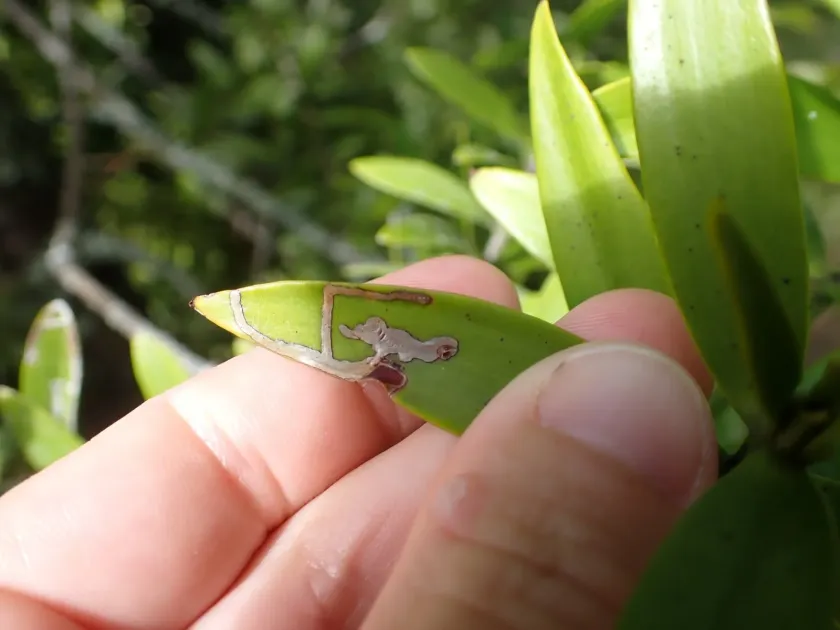
The primary symptom of an infestation is the appearance of small, light-colored spots on the leaf surface. As the larvae develop, these spots extend into narrow, winding tunnels or blotch mines.
Leaves affected by heavy infestations may curl or turn necrotic at the edges. When held up to sunlight, the internal structure of the leaf appears hollowed out, revealing the extent of the damage.
The presence of frass (larval excrement) inside the tunnels appears as dark, granulated lines, which is a definitive sign that the leaf mine is active and currently occupied by the pest.
Early leaf drop during the summer is a key indicator of hidden mining activity. Gardeners should inspect trees regularly, especially if similar damage patterns were observed in the previous growing season.
Control measures
Effective control strategies require a multi-faceted approach. Chemical control is most effective when applied during the period of egg hatching, before the larvae successfully penetrate the leaf epidermis.
Good sanitation is a critical cultural control measure. Collecting and destroying fallen leaves during the autumn significantly reduces the overwintering population of pupae, limiting the initial infestation of the following spring.
Systemic insecticides are generally preferred over contact-based products because they can reach the larvae protected within the leaf tissue. It is crucial to rotate chemical classes to prevent the development of insecticide resistance.
Biological control using entomopathogenic bacteria (e.g., Bacillus thuringiensis) is an environmentally friendly option that effectively targets young larvae while preserving beneficial predatory insects in the orchard.
Integrated Pest Management (IPM) practices, including the use of pheromone traps and regular scouting, allow growers to determine precise treatment windows, ensuring economic efficiency and reducing unnecessary environmental impact.
Taxonomy
- Latin name
- Acrocercops
- Order
- Lepidoptera (butterflies)
- Family
- Gracillariidae
- EPPO code
- AROCSP
Discussion
No discussions yet — be the first.