
Poplar leaf miner
Phyllonorycter populiella
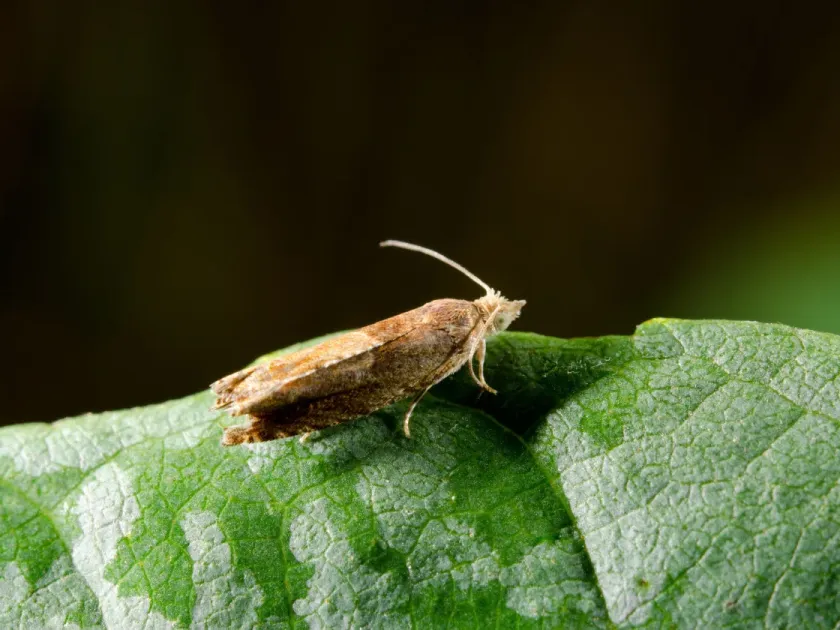
Description
How to identify
The poplar leaf miner (Phyllonorycter populiella) is a small moth belonging to the family Gracillariidae, order Lepidoptera.
Adult moths are very small with a wingspan ranging from 7 to 9 millimeters. Their wings feature intricate patterns of metallic and white hues.
The larvae are specialized leaf-miners, living exclusively within the mesophyll layer of the leaf throughout their developmental stages.
Eggs are typically laid on the underside of the leaf surface, which provides the larvae immediate access to the leaf tissues upon hatching.
The pupal stage occurs within the leaf mine, where the insect creates a small, silk-lined chamber to undergo metamorphosis.
What it damages
The primary hosts for this pest are trees of the genus Populus, including poplar and aspen species, often found in urban landscapes.
Larval feeding destroys the internal leaf structure, which directly reduces the tree's photosynthetic capacity and metabolic efficiency.
Severe infestations can lead to extensive browning and scorching of the entire crown, significantly detracting from the tree's ornamental value.
Chronic damage over successive years leads to reduced tree vigor, making the trees more susceptible to secondary pathogens and climate stress.
Defoliation caused by this pest is a major issue in urban arboriculture, as it stresses trees already affected by poor city soil conditions.
When it appears
The first flight of the adult moths usually coincides with the bud break and early leaf development in the spring.
The insect produces multiple generations throughout the growing season, allowing its population to multiply rapidly under favorable weather.
Larval activity is highest during the peak summer months, when the foliage is fully expanded and provides ample food resources.
The insect overwinters as a pupa within the leaf litter beneath the host tree, remaining in a dormant state until the following spring.
Temperature patterns play a critical role in determining the speed of development and the total number of generations per year.
Signs of infestation
Early symptoms appear as small, whitish blotches on the lower surface of the leaves, corresponding to the initial larval mines.
As the larvae mature, these mines expand and become clearly visible as translucent patches that may cause the leaf to curl or wrinkle.
The presence of dark frass (larval excrement) inside the translucent mine is a definitive diagnostic sign of Phyllonorycter activity.
- Whitish blotch-like mines on the undersides of leaves.
- Visible dark frass particles inside the leaf tissue.
- Premature yellowing and leaf abscission in mid-summer.
In cases of heavy infestation, the entire canopy may appear scorched, leading to premature leaf drop well before the autumn season.
Control measures
Sanitation is the most critical control measure; raking and destroying fallen leaves during autumn removes the overwintering pupae.
Biological control using Bacillus thuringiensis sprays can effectively target young larvae before they build extensive protective mines.
Systemic insecticides may be used as a last resort in high-value ornamental plantings, applied when adult activity is detected.
Encouraging the presence of natural predators, such as parasitic wasps, is essential for maintaining long-term population balance.
Regular monitoring using pheromone traps helps to time the application of controls for maximum efficacy against emerging generations.
Taxonomy
- Latin name
- Phyllonorycter populiella
- Order
- Lepidoptera (butterflies)
- Family
- Gracillariidae
- EPPO code
- LITHPO
Discussion
No discussions yet — be the first.