
Phyllonorycter leucographella
Phyllonorycter leucographella
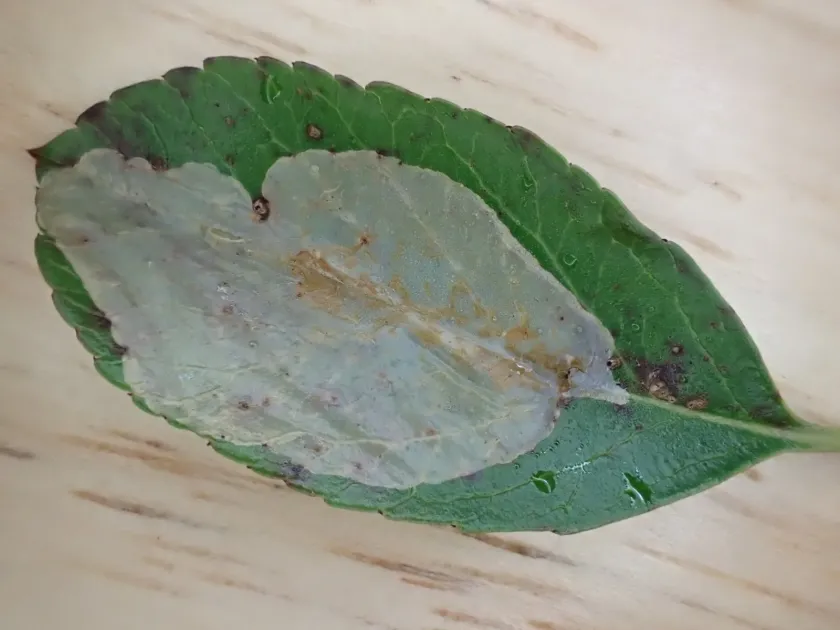
Description
How to identify
Phyllonorycter leucographella is a small moth belonging to the family Gracillariidae. The adult moth has a wingspan of approximately 8-10 mm and is characterized by gold-brown wings with distinct white markings.
The life cycle consists of four distinct stages: egg, larva (caterpillar), pupa, and adult. The caterpillar is the stage responsible for the structural damage to host plants.
Larvae develop inside the leaf tissue, creating specialized tunnels or 'mines'. As they grow, their morphology changes to adapt to this leaf-mining environment.
Pupation occurs within the leaf mine. The pupae are protected by a silk cocoon, which makes them resilient to external environmental conditions during their transition period.
Adult moths are primarily nocturnal and are often found resting in sheltered parts of the tree canopy during the daylight hours, making them difficult to detect by casual observation.
What it damages
The primary hosts include trees from the Rosaceae family, such as apple (Malus), pear (Pyrus), hawthorn (Crataegus), and ornamental shrubs like Pyracantha.
The damage is caused by larvae mining the parenchyma of the leaves. These mines are typically located on the underside of the leaf and can cause the leaf to curl.
Severe infestations lead to a significant reduction in the photosynthetic capacity of the tree, which can cause premature leaf drop and overall physiological stress.
Continuous damage throughout the season impacts the tree's energy reserves, negatively affecting fruit size, quality, and the formation of fruit buds for the following season.
In cases of heavy pest pressure, the foliage can look scorched, and the aesthetic value of ornamental trees like Pyracantha is significantly diminished.
When it appears
This species typically overwinters in the pupal stage, hidden within fallen leaves on the orchard floor, which serves as a major reservoir for the following season.
The first adult moths emerge in early spring, coinciding with the blossom period of many host trees, and immediately begin the cycle of egg-laying on new foliage.
There are usually multiple generations per year, often two or three, depending on the local climate and temperature trends throughout the summer.
Peak activity often occurs in mid-to-late summer, where the population density can build up rapidly, causing noticeable damage by August.
As autumn progresses, the final generation pupates to prepare for overwintering, marking the end of the active feeding season for the larvae.
Signs of infestation
The presence of whitish, blotch-like mines on the underside of leaves is the primary diagnostic feature of an infestation.
As the mine develops, the leaf tissue can become distorted or curled. If you hold the leaf against the light, the frass (excrement) of the larva is often visible inside the mine.
Premature leaf yellowing and falling in late summer, despite adequate irrigation, is often a classic indicator of high leaf miner activity in the canopy.
Small, translucent spots on the leaves represent the early stages of mine formation, where the young larvae have just begun to feed.
High densities of these mines often lead to the merging of multiple feeding sites, resulting in large, necrotic brown patches across the leaf surface.
Control measures
- Thoroughly raking and removing fallen leaves in autumn is crucial to eliminate the overwintering pupal population.
- Monitoring adult flight patterns using pheromone traps to time insecticide applications accurately.
- Applying systemic or contact insecticides when eggs are hatching to target the larvae before they create deep, protected mines.
- Encouraging natural predators and parasitoids, such as eulophid wasps, which can help keep populations below the economic damage threshold.
- Pruning heavily infested branches in smaller gardens to reduce the local population of the pest during the growing season.
Taxonomy
- Latin name
- Phyllonorycter leucographella
- Order
- Lepidoptera (butterflies)
- Family
- Gracillariidae
- EPPO code
- PRYCLE
Discussion
No discussions yet — be the first.