
Hazel leaf miner
Phyllonorycter coryli
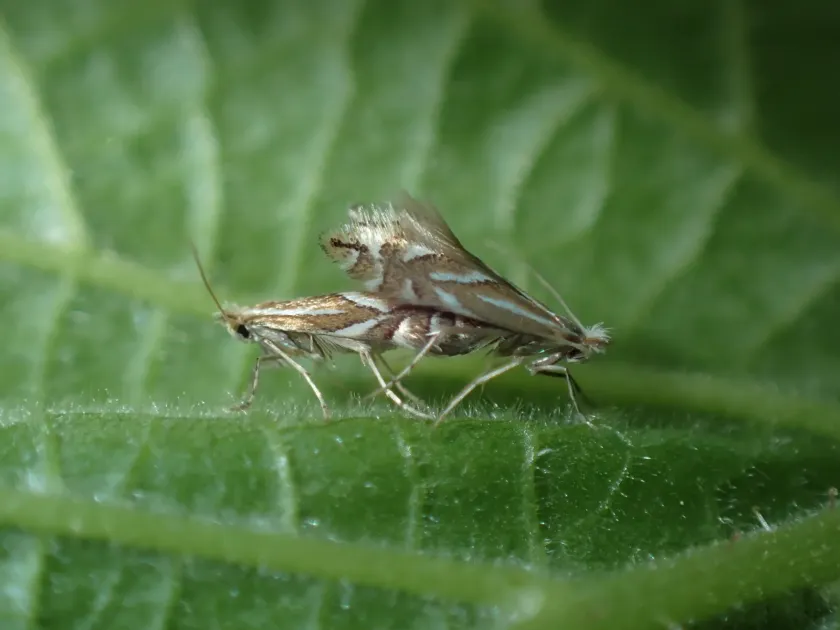
Description
How to identify
The Hazel leaf miner (Phyllonorycter coryli) is a small moth species belonging to the Gracillariidae family, known for its specific host preference for hazel and filbert trees.
Adult moths are quite tiny, with a wingspan ranging from 7 to 9 millimeters, and feature a mottled brown and white pattern that perfectly blends with tree bark.
The larvae are specialized miners that have evolved a flattened body shape to navigate and feed within the thin tissue of the host leaves.
Unlike many other defoliators, these moths spend their larval and pupal stages entirely hidden inside the leaf, which provides significant protection against predators.
The life cycle is highly synchronized with the growth of the hazel trees, ensuring that young larvae have immediate access to fresh leaves upon hatching.
What it damages
Damage is exclusively caused by larvae, which feed on the mesophyll layer of the leaves, creating distinct tunnels known as mines.
Severe infestations reduce the leaf area available for photosynthesis, which directly impacts the tree's vigor and general nutritional status.
In high densities, the moth causes premature leaf drop, which can significantly weaken the trees and lead to reduced nut production in the following season.
Young hazelnut trees are particularly vulnerable to heavy damage, which can stunt their growth and delay the onset of full maturity.
The cosmetic damage caused by the mines can also be problematic for ornamental hazel varieties, impacting their aesthetic value in garden settings.
When it appears
The Hazel leaf miner typically completes two generations per growing season in temperate climates, leading to population buildup by mid-summer.
The first flight of adults usually occurs in the spring, coinciding with the flushing and expansion of new foliage on the hazelnut bushes.
The second generation emerges in summer, and their larvae can cause widespread leaf damage if left unchecked by natural enemies or chemical control.
Pupation takes place inside the mines, and the species overwinters as a pupa within the fallen leaves on the orchard floor.
Temperature fluctuations in early spring can affect the timing of emergence, making consistent orchard monitoring essential for effective management.
Signs of infestation
The most reliable sign of infection is the presence of lower-surface mines, which start as small silvery spots and expand into larger blotches.
The upper surface of the leaf typically shows yellowish or brownish discoloration corresponding to the internal feeding activity of the larvae.
- Small, winding, or blotch-shaped mines on leaves.
- Thinning of the leaf tissue in the affected areas.
- Dark frass granules visible within the leaf mines.
- Leaf curling or necrotic edges appearing in late summer.
- Small exit holes where the adult moths have emerged.
When infestation levels are high, the foliage may look scorched, which is a clear indicator that the tree is under heavy pest pressure.
Regular scouting of the lower leaf surfaces during the peak growth period allows for the early detection of these miners before damage spreads.
Control measures
Sanitation is a primary control method; removing and composting or burning fallen leaves in the autumn destroys the overwintering pupae.
Natural enemies, such as parasitic wasps, often provide significant biological control if broad-spectrum insecticides are avoided in the orchard.
Pheromone traps are highly effective for monitoring adult moth populations and timing necessary applications to match the peak of the first generation.
If chemical control is deemed necessary, systemic insecticides should be applied shortly after egg-laying, before the larvae become protected by the leaf tissue.
Maintaining healthy trees through balanced fertilization and appropriate pruning improves the tree's ability to tolerate and recover from leaf miner damage.
Taxonomy
- Latin name
- Phyllonorycter coryli
- Order
- Lepidoptera (butterflies)
- Family
- Gracillariidae
- EPPO code
- LITHCO
Discussion
No discussions yet — be the first.