
Spotted tentiform leafminer
Phyllonorycter blancardella
Description
How to identify
The spotted tentiform leafminer (Phyllonorycter blancardella) is a small moth belonging to the family Gracillariidae. The adult moth has a wingspan of approximately 8–10 mm and is characterized by golden-brown forewings with white markings.
Larvae pass through several developmental stages. Early-instar larvae are sap-feeders, while later stages consume the leaf tissue to create characteristic "tents." The larvae have a flattened body shape specifically adapted for life inside the leaf tissue.
Eggs are tiny, transparent, and oval-shaped, typically deposited individually on the underside of the leaves. Under favorable temperature conditions, they hatch within about a week, and the young larvae immediately begin mining the leaf.
Pupation occurs within the mines formed by the larvae. The pupae are brown and possess small hooks, which help them exit the mine when the adult moth is ready to emerge. This stage is critical for the insect's overwintering in fallen leaves.
The insect typically completes two to three generations per year, depending on the climatic zone. High reproductive rates mean that, if left unmanaged, the population can reach economic damage thresholds rapidly during the summer months.
What it damages
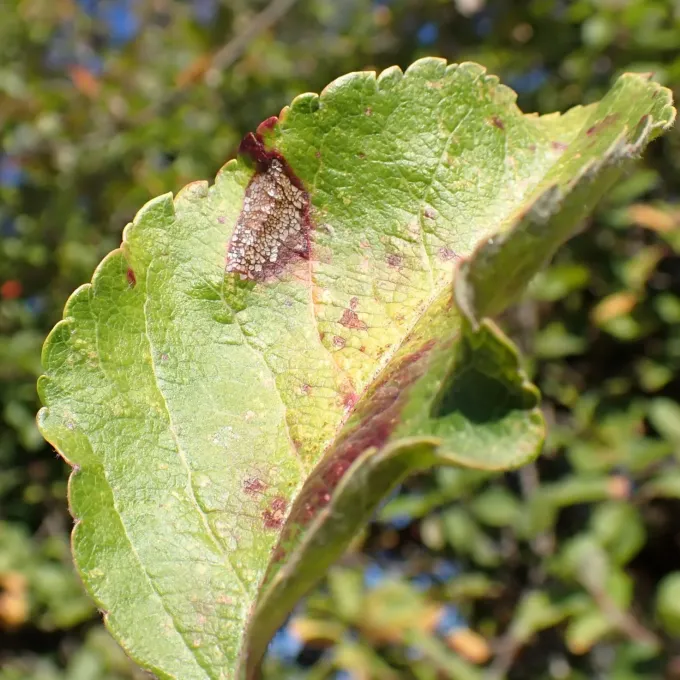
The primary host for this pest is the apple tree, though it may also infest pears and other related rosaceous plants. The larvae feed on the leaf parenchyma, leaving the upper epidermis intact, which creates a characteristic spotted appearance on the leaf surface.
As the larvae feed, the mine increases in size, causing the leaf tissue to contract and form a fold or "tent" on the lower side. This damage reduces the photosynthetic capacity of the tree, as the affected areas of the leaf can no longer produce nutrients.
Severe infestations lead to premature leaf drop, which can significantly weaken the trees. This stress reduces the tree's vigor, impacting the development of fruit buds for the following season and lowering overall fruit quality and yield.
Trees affected by high densities of leafminers often show signs of dehydration and stunted growth. The depletion of nutritional reserves due to early defoliation makes the trees more susceptible to winter injury and various secondary infections.
Economic damage is most significant in commercial orchards where the aesthetic quality of leaves and the metabolic health of the trees are essential for high yields. Early intervention is necessary to prevent cascading losses.
Control measures
Effective control strategies start with orchard sanitation. Collecting and destroying fallen leaves during late autumn removes the primary overwintering sites for pupae, significantly reducing the initial spring population.
Pheromone traps are essential for monitoring adult flights. By tracking the number of moths, growers can determine the optimal timing for insecticide applications, focusing on the period when larvae are newly hatched and vulnerable.
Chemical control should rely on systemic insecticides that can penetrate the leaf tissue to reach the larvae inside the mines. It is crucial to rotate chemical classes to prevent the development of insecticide resistance in the population.
Biological control plays a vital role in sustainable management. Many parasitic wasps act as natural predators of the leafminer larvae, helping to keep population levels in check if broad-spectrum pesticides are avoided.
- Sanitation by removing leaf litter.
- Pheromone monitoring for timing.
- Application of systemic insecticides.
- Encouragement of natural parasites.
Taxonomy
- Latin name
- Phyllonorycter blancardella
- Order
- Lepidoptera (butterflies)
- Family
- Gracillariidae
- EPPO code
- LITHBL
Discussion
No discussions yet — be the first.