
Poplar leaf-mining moth
Phyllocnistis unipunctella
Description
How to identify
The Poplar leaf-mining moth Phyllocnistis unipunctella is a small moth of the Gracillariidae family. The adult insect has a wingspan of about 6–8 mm and is characterized by a silver-white coloration with distinct dark patterns and a prominent black spot at the wing tip.
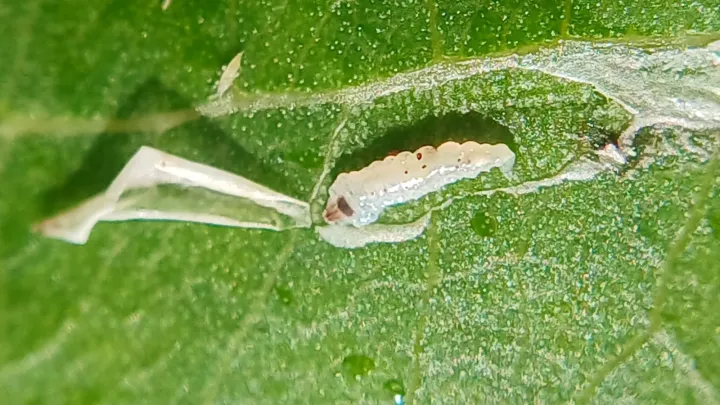
The larvae are specialized leaf miners. They have a flattened, translucent body that allows them to move between the upper and lower epidermis of the leaf, where they consume the photosynthetic tissues throughout their development.
The life cycle consists of four distinct stages: egg, larva, pupa, and adult. Depending on the climate, this species can produce multiple generations per year, which significantly increases the risk of rapid population growth during warm summer months.
Pupation typically occurs within the leaf tissue, often near the leaf margins, which causes the leaf to curl and fold, providing additional protection for the developing pupa.
Overwintering takes place in the pupal stage, hidden within fallen leaves or in the crevices of the bark, which allows the species to survive low winter temperatures effectively.
What it damages
This moth primarily targets species within the Salicaceae family, particularly poplars (Populus). It causes extensive damage to the tree's canopy, which can lead to significant aesthetic and physiological decline.
The larvae create long, winding, silver-colored mines. Because they consume the parenchyma, the chlorophyll content in the leaf decreases, directly reducing the tree's ability to produce energy through photosynthesis.
Severe infestations cause trees to lose their foliage prematurely. This process weakens the trees, making them more susceptible to subsequent attacks by other pests and secondary infections by fungi or bacteria.
Young trees are particularly vulnerable to these infestations. Repeated annual damage can result in stunted growth, dieback of twigs, and eventually, the loss of the tree's structural health.
In urban environments, the presence of these moths is considered a major nuisance, as it ruins the appearance of park trees and leads to significant leaf drop during the peak of the summer season.
Signs of infestation
The primary symptom of an infestation is the appearance of winding, silvery lines on the leaves. These mines are distinctive because they are clean and shiny, as the larvae push their excrement out of the mine.
The leaves often show curling, wilting, or deformation. As the larvae mine the leaf tissue, the structural integrity of the leaf is compromised, causing the edges to roll inward.
If you examine a leaf under backlight, you can clearly see the tracks (mines) created by the larvae. In some cases, the pupa itself can be seen inside a small, silken chamber at the end of the mine.
- Winding silver trails on the leaf surface.
- Distorted and folded leaf blades.
- Premature yellowing and browning of the canopy.
- Visible pupal chambers at the leaf margins.
Over time, the mines may merge, turning the affected parts of the leaf into dry, papery patches that eventually crumble or lead to the death of the entire leaf.
Control measures
The most important cultural control method is the removal and destruction of fallen leaves in autumn, which eliminates the primary overwintering sites for the pupae.
For high-value trees or severe infestations, the application of systemic insecticides is recommended. Since the larvae are protected inside the leaf, contact pesticides are generally ineffective.
Natural biological control involves the conservation of parasitoid wasps that feed on the moth larvae. Maintaining a diverse ecosystem around the trees helps keep the pest population at manageable levels.
Monitoring using pheromone traps can help track the flight periods of adults. This information allows for more accurate timing of insecticide treatments, ensuring they align with the egg-laying and larval emergence stages.
Maintaining tree vigor through proper irrigation and soil care is essential. Healthy trees can better withstand the stress caused by minor infestations and are less likely to succumb to long-term damage.
Taxonomy
- Latin name
- Phyllocnistis unipunctella
- Order
- Lepidoptera (butterflies)
- Family
- Gracillariidae
- EPPO code
- PHYNSU
Discussion
No discussions yet — be the first.