
Poplar leaf miner
Phyllocnistis populiella
Description
How to identify
The Poplar leaf miner (Phyllocnistis populiella) is a small moth belonging to the family Gracillariidae. The adult moth is characterized by its small size, delicate appearance, and metallic luster on the forewings, which are marked with dark spots.
The life cycle of this pest is closely synchronized with the development of its host plants. It typically undergoes multiple generations during the growing season, which allows the population to increase rapidly if conditions are favorable.
Adult moths overwinter in sheltered locations, such as bark crevices, leaf litter, or debris around the base of trees. As soon as temperatures rise in the spring, they emerge to mate and lay eggs on the undersides of young leaves.
The larval stage is spent entirely inside the leaf tissue, where the caterpillar feeds on the epidermal cells. This behavior provides the larva with protection from many environmental hazards and some predators.
The species is highly specialized, meaning it primarily targets trees of the genus Populus. Understanding its life cycle is crucial for timing effective management interventions during the early stages of infestation.
What it damages
The primary hosts are various species of poplar trees. In urban areas, these pests can cause significant damage to ornamental trees, leading to a decline in their aesthetic value and overall physiological health.
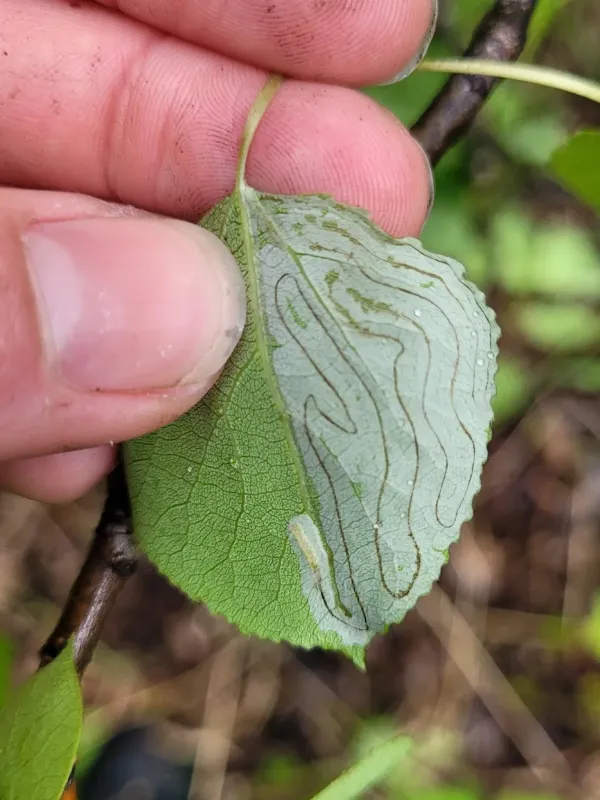
Larval feeding creates meandering, silvery serpentine mines on the leaf surface. As the larva consumes the cells, it destroys the leaf's protective epidermis, which disrupts the tree's normal physiological processes.
Affected leaves often curl, turn brown, and become brittle. Severe infestations result in extensive leaf damage, which reduces the tree's ability to photosynthesize effectively during the peak growing season.
Premature leaf drop is a common consequence of heavy infestations. This premature loss of foliage weakens the tree, making it more susceptible to environmental stress, winter injury, and subsequent attack by other pests or pathogens.
- Reduced photosynthetic efficiency.
- Premature senescence and leaf abscission.
- Increased vulnerability to secondary infections.
- Loss of aesthetic and ornamental quality.
Signs of infestation
The most distinctive sign is the presence of long, thin, silvery tracks on the leaves. These tracks are the mines created by the larvae as they tunnel through the leaf epidermis.
A dark, continuous line of frass (larval excrement) is visible along the center of the mine. This specific visual feature helps differentiate Phyllocnistis populiella from other types of leaf miners that inhabit poplar foliage.
As the infestation progresses, leaves may look mottled or silvery. The curling of leaf edges, especially on young leaves, is another clear indication that larvae are active within the foliage.
During the final stages of larval development, you may notice a small pocket or slight thickening at the end of the mine, which indicates where the pupation process is taking place.
In cases of high pest density, the entire crown of the tree may appear dull or silvery from a distance, reflecting the massive amount of leaf tissue that has been mined.
Control measures
Sanitation is a vital component of control. Removing and destroying fallen leaves in the autumn significantly reduces the number of overwintering pupae and adults, thereby lowering the next season's initial population.
For high-value ornamental trees, systemic insecticides can be used to control larvae within the leaves. Applications must be timed precisely with the emergence of the first generation to be most effective.
Encouraging natural predators, such as parasitic wasps, is an essential part of an integrated pest management strategy. Minimizing the use of broad-spectrum insecticides helps maintain these biological control agents.
Good tree maintenance practices, such as adequate watering and soil fertilization, help keep trees vigorous, allowing them to better withstand or recover from the damage caused by the leaf miner.
Monitoring the moth population using pheromone-baited traps provides data that helps managers make informed decisions about when and where to implement control measures, reducing unnecessary chemical use.
Taxonomy
- Latin name
- Phyllocnistis populiella
- Order
- Lepidoptera (butterflies)
- Family
- Gracillariidae
- EPPO code
- PHYNPO
Discussion
No discussions yet — be the first.