
Podocarpus leaf miner
Phyllocnistis podocarpa
Description
How to identify
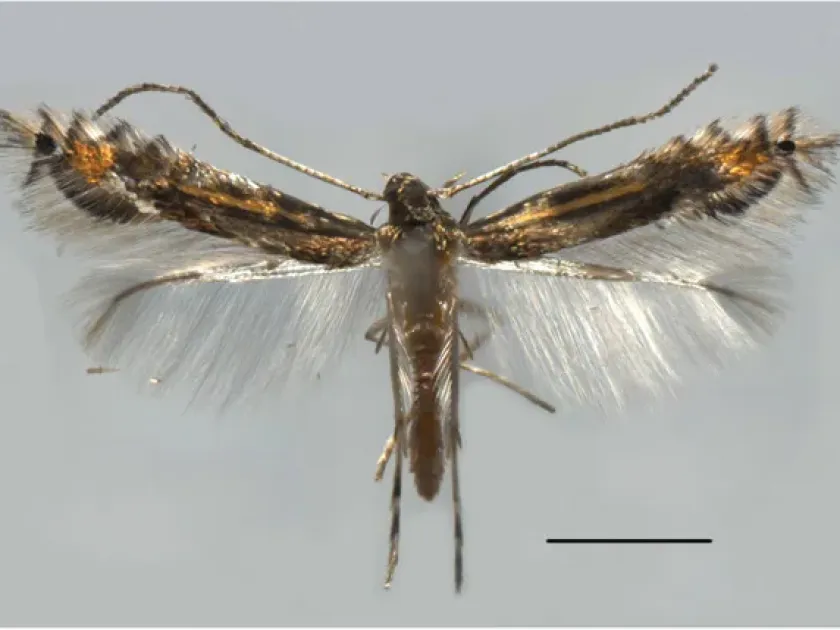
The Podocarpus leaf miner (Phyllocnistis podocarpa) is a small moth belonging to the Gracillariidae family. These insects are microscopic during their larval stage, which makes early detection a challenging task for growers.
Adult moths are tiny, typically having a wing span of only a few millimeters. They are often active during twilight hours, making them rarely seen by casual observers in the garden.
The life cycle involves the female depositing eggs on the young needles of Podocarpus species. Upon hatching, the larvae immediately burrow into the leaf tissue, initiating the mining process.
Their anatomy is specifically evolved for life within the confined space of a leaf, featuring flattened bodies and specialized mouthparts for rasping plant cells.
The species is highly specialized, meaning it primarily targets Podocarpus plants, making its identification easier by narrowing down the potential suspects of needle damage.
What it damages
The primary hosts for this pest are Podocarpus plants, including popular varieties used in landscapes and bonsai. Larval feeding destroys the internal needle structure.
As the larvae mine through the needles, they disrupt the plant's ability to perform photosynthesis. This results in the premature yellowing and dropping of healthy needles, affecting growth.
Severe infestations can lead to stunted shoot development and a loss of overall tree vigor, which is particularly detrimental to young or recently transplanted plants.
The aesthetic damage is often severe, as the needles become deformed and discolored. In commercial nurseries, this can render plants unsalable due to their unsightly appearance.
Secondary infections often take advantage of the weakened state of the plant, entering through the damaged epidermis left behind by the larval mining activity.
When it appears
The development of the Podocarpus leaf miner is closely linked to the growing season of the host plant. The first generation typically appears when new spring growth begins.
Multiple generations can occur throughout the summer, depending on local climate conditions. Warm, humid environments significantly accelerate their reproduction and development cycles.
By mid-to-late summer, if left unchecked, the population can reach high levels, causing visible damage across the entire plant foliage canopy.
The pest overwinters in protected areas of the tree or within the debris. Emerging as adults in the spring, the moths begin the cycle anew once temperatures are favorable.
Monitoring for adult flight and early mining symptoms should begin early in the spring, specifically when the plant starts flushing new, tender growth.
Signs of infestation
The most visible sign of an infestation is the presence of winding, silver-white trails or mines on the surface of the Podocarpus needles.
As the mining progresses, the needles may become twisted, turn brown, and eventually die back. This often gives the tree a scorched or sickly appearance.
Tiny exit holes on the needles indicate that the larvae have completed their development and emerged to pupate, signaling the need for immediate intervention.
Under close inspection, the internal tunnels appear as dark, hollow lines against the green of the needle, especially when backlit by sunlight.
A general decline in the density of the foliage is another indicator, as needles dropped due to mining are not easily replaced by the plant in the same season.
Control measures
Pruning and disposing of heavily infested shoots is an effective physical control method, as it removes a large portion of the larvae and pupae from the population.
Systemic insecticides are generally the most effective chemical approach, as they are absorbed by the plant and target the larvae feeding within the protected mines.
The use of yellow sticky traps can help monitor the timing of adult moth flight, allowing for more precise application of control measures at the peak of infestation.
Biological control agents, such as parasitic wasps that naturally predate on leaf miner larvae, should be encouraged by avoiding broad-spectrum pesticide use.
Maintaining optimal plant health through proper watering and fertilization helps the Podocarpus recover faster and improves its natural resistance to further damage.
Taxonomy
- Latin name
- Phyllocnistis podocarpa
- Order
- Lepidoptera (butterflies)
- Family
- Gracillariidae
- EPPO code
- PHYNPD
Discussion
No discussions yet — be the first.