
Citrus leaf miner
Phyllocnistis
Description
How to identify
The citrus leaf miner (Phyllocnistis citrella) is a small moth belonging to the Gracillariidae family. Adult moths are tiny, with a wingspan of only about 4–5 mm and silvery-white wings.
The damaging stage is the larva, which is flattened, pale yellow, and specialized for mining inside the leaf tissues, protecting it from external environmental conditions.
Its life cycle includes egg, larval, pupal, and adult stages. Depending on temperature, the entire life cycle can be completed in as little as 2 to 3 weeks during the summer.
The female moths are nocturnal and typically lay individual eggs on the underside of young, expanding citrus leaves, usually near the midrib.
Due to their short generation time and high fecundity, these pests can quickly build up large populations, leading to severe outbreaks if left unmanaged.
What it damages
The citrus leaf miner attacks all species of citrus, including lemons, oranges, mandarins, and grapefruit, showing a strong preference for young, succulent growth.
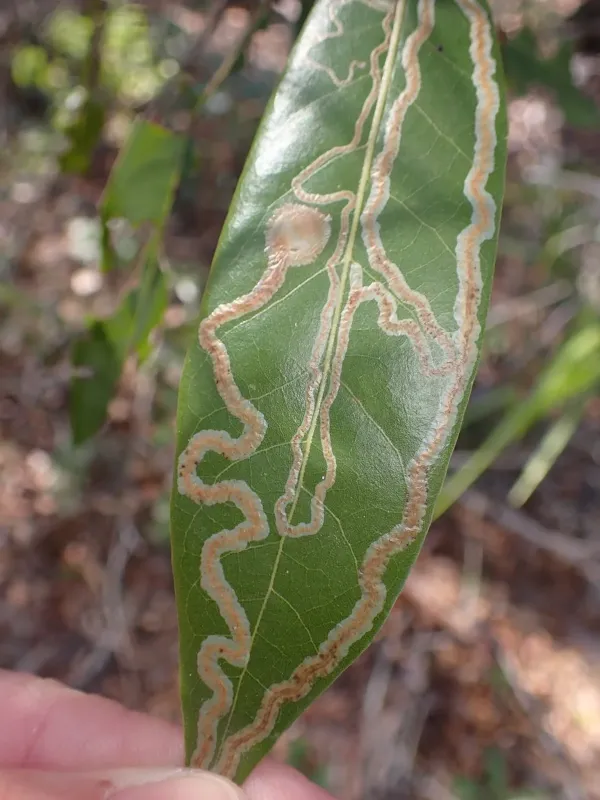
The larvae feed by creating serpentine tunnels, known as mines, just beneath the surface of the leaf epidermis. This feeding pattern disrupts the plant's normal growth.
The primary damage consists of leaf curling and deformation. This severely reduces the photosynthetic surface area and stunts the growth of the infested branches.
In severe infestations, the leaves may dry out and drop prematurely. This stress weakens the tree, making it more susceptible to other diseases or environmental stressors.
Fruit damage can also occur if the larvae mine the surface of developing fruit, leaving permanent, unsightly scars that lower the market value of the crop.
Signs of infestation
The most distinctive sign of infestation is the appearance of silvery, serpentine trails on both the upper and lower surfaces of young leaves.
As the larvae grow, the mines become more prominent. The infested leaves often appear chlorotic and distorted, eventually curling along the edges.
The leaf miner often causes the leaf margin to curl over the mine, creating a protected chamber where the larva pupates and transforms into an adult moth.
Visible stunting of new growth and a generally "wrinkled" appearance of the canopy are typical indicators of a heavy pest pressure in the citrus grove.
Observation of the pupal chambers at the end of the leaf mines is a definitive way to confirm the presence of this specific pest.
Control measures
Management of the citrus leaf miner requires an integrated pest management (IPM) strategy that combines physical, biological, and chemical controls.
Cultural practices include minimizing excessive nitrogen fertilization, which forces succulent growth that is highly attractive to the moths, and pruning infested growth.
Systemic insecticides are generally the most effective chemical control, as they are absorbed into the plant tissues, killing the larvae feeding inside the mines.
- Use pheromone traps for monitoring moth activity.
- Conserve natural predators and parasitoids that prey on larvae.
- Apply neem-based oils or specific biorational insecticides for safer control.
Timing is critical; treatments should coincide with the emergence of new vegetative flushes when female moths are actively seeking sites for egg-laying.
Taxonomy
- Latin name
- Phyllocnistis
- Order
- Lepidoptera (butterflies)
- Family
- Gracillariidae
- EPPO code
- PHYNSP
Discussion
No discussions yet — be the first.