
Beech woolly aphid
Phyllaphis
Description
How to identify
The beech woolly aphid (Phyllaphis fagi) is a host-specific pest that primarily affects beech trees (Fagus spp.). It belongs to the Aphididae family and is known for the distinctive white, waxy secretion that covers its body.
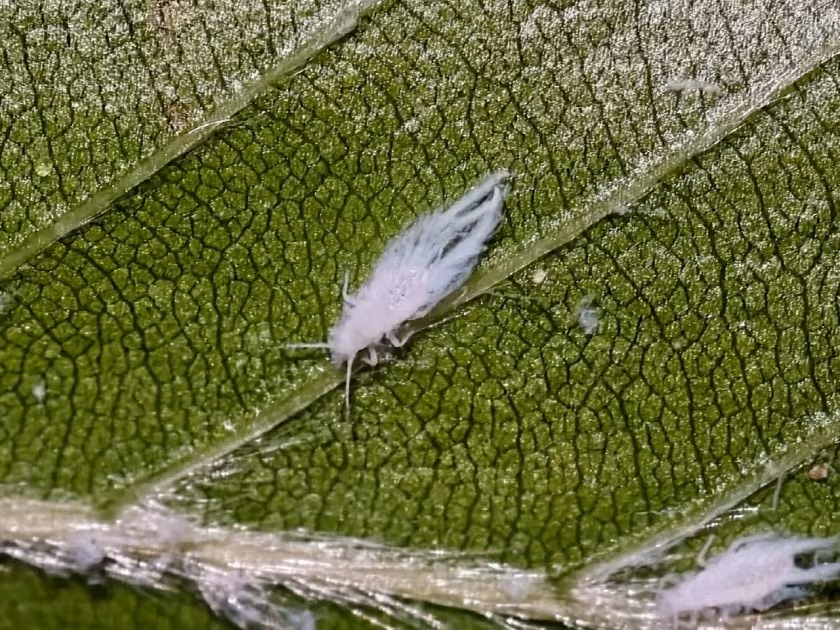
These aphids are small, greenish insects that are often hidden beneath their own waxy filaments. To the untrained eye, these colonies appear as patches of white wool or fluff scattered on the undersides of leaves.
The life cycle involves overwintering as eggs on the bark or near the buds of the host tree. In spring, these eggs hatch, and the population begins to multiply rapidly through asexual reproduction during the summer months.
Some generations produce winged individuals, allowing the infestation to spread between branches and to neighboring trees within the canopy or nursery setting.
Phyllaphis fagi is highly adapted to the beech tree's phenology, timing its activity to coincide with the flush of tender new leaves which are the most nutrient-rich source of sap.
What it damages
The primary host is the European beech (Fagus sylvatica). While mature trees can often withstand moderate infestations, young saplings and ornamental beech specimens are particularly vulnerable to serious physiological damage.
As the aphids feed on the leaf sap, they inject saliva that causes the foliage to curl and lose its healthy appearance. This direct feeding reduces the tree's vigor and can stunt growth significantly.
The accumulation of honeydew, a sugary byproduct of aphid feeding, provides an ideal substrate for the growth of sooty mold. This black fungal coating blocks sunlight and impairs the tree's ability to perform photosynthesis.
Heavy infestations can lead to premature leaf drop, which weakens the tree's energy reserves and makes it more susceptible to secondary pathogens and environmental stressors.
Continued severe damage year after year can lead to branch dieback and, in extreme cases involving young plants, the eventual decline and death of the specimen.
Signs of infestation
The most visible indicator of an infestation is the presence of white, cotton-like masses on the undersides of the leaves starting in late spring.
Affected leaves often show signs of curling, crinkling, and yellowing. The foliage may appear sticky to the touch due to the honeydew excretion, which eventually turns black as sooty mold colonizes the surface.
An increase in ant activity on the bark is another common sign, as ants are attracted to the sugary honeydew produced by the aphids and will protect the colonies from predators.
- White woolly patches on the underside of leaves.
- Leaf curling, deformation, and discoloration.
- Presence of sticky honeydew or black sooty mold.
- Increased ant traffic on the tree trunk.
Control measures
Regular inspection is the first line of defense. Catching an infestation early, when populations are small, makes control significantly easier and prevents the spread of the pest.
Encouraging natural predators such as ladybirds, lacewings, and hoverflies is highly effective. These beneficial insects naturally hunt the aphids and can keep populations below damaging thresholds in many gardens.
For ornamental or young trees, a strong jet of water can be used to physically dislodge the colonies and wash away the waxy secretions and honeydew.
If chemical intervention is necessary, systemic insecticides are the most effective choice. These are absorbed by the plant and kill the aphids as they feed on the sap.
Always apply treatments during the cooler parts of the day to avoid leaf scorch and ensure the safety of beneficial pollinators visiting the garden.
Taxonomy
- Latin name
- Phyllaphis
- Order
- Hemiptera (bugs, aphids, leafhoppers)
- Family
- Aphididae
- EPPO code
- PHYASP
Discussion
No discussions yet — be the first.