
Hemp aphid
Phorodon cannabis
Description
How to identify
The hemp aphid Phorodon cannabis is a small insect species belonging to the family Aphididae, order Hemiptera. It is specifically adapted to feed on the tissues of the cannabis plant.
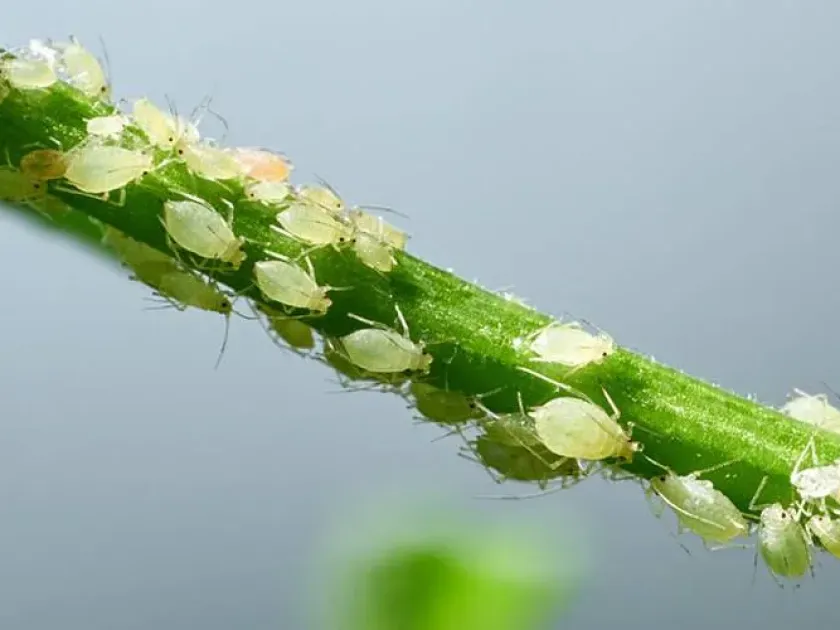
Adult aphids typically measure between 1.5 and 2.5 mm in length. Their body color ranges from pale green to yellow, providing excellent camouflage against the foliage of the host plant.
The species exists in both winged and wingless morphs. The winged form is characterized by dark markings on the thorax and is responsible for the migration and colonization of new host plants.
A distinctive feature of this species is the presence of prominent frontal tubercles on the head, near the base of the antennae, which serves as a key identifying characteristic.
The lifecycle includes several developmental stages, starting from eggs that overwinter on plant debris, followed by multiple generations of live-bearing females during the growing season.
What it damages
The primary host for this pest is Cannabis sativa. The hemp aphid is capable of causing significant damage to both industrial hemp and medical cannabis crops.
Aphids primarily target the youngest leaves, terminal buds, and flowering tops, as these areas contain the highest concentration of phloem sap, their main nutritional source.
By feeding on the sap, aphids remove essential nutrients from the plant, which leads to stunted growth, leaf curling, yellowing (chlorosis), and overall reduced biomass production.
Beyond direct damage, the hemp aphid is a known vector for various plant viruses. These viruses can significantly degrade the quality of fibers and the overall potency of the crop.
The secretion of honeydew by aphids encourages the growth of sooty mold, a black fungal layer that blocks sunlight and interferes with the photosynthesis process of the leaves.
When it appears
In temperate climates, the hemp aphid appears in spring as temperatures rise. The initial infestation usually begins on young seedlings or regrowth from the previous season.
The peak of the population growth typically occurs during the mid-summer months, specifically July and August, when conditions are optimal for rapid reproduction.
Phorodon cannabis has a high reproductive rate, potentially completing many generations in a single growing season, allowing populations to explode within a few weeks.
As autumn approaches and temperatures drop, the population shifts to producing sexual forms. These individuals mate and lay eggs on the remaining plant structures to survive the winter.
The overwintering eggs are highly resilient. With the return of warmer spring weather, these eggs hatch, and the new generation of aphids begins to colonize the emerging cannabis plants.
Signs of infestation
The most visible sign of infestation is the curling and distortion of terminal leaves. This is caused by the aphid's saliva, which alters the growth pattern of the plant tissues.
Visual inspection of the underside of the leaves usually reveals large, dense clusters of small, pale-green insects that move slowly when disturbed.
The presence of ants is a major indicator of an aphid problem. Ants are known to cultivate aphids for their honeydew, often protecting them from natural predators.
Sooty mold growth is another clear sign. The presence of black, dusty patches on the leaf surfaces confirms that an aphid colony has been established on the plant for some time.
General plant decline, including yellowing leaves and a lack of vigor, suggests that the aphids have extracted sufficient sap to negatively impact the plant's metabolic health.
Control measures
Integrated Pest Management (IPM) is crucial. Cultural controls include removing all crop debris after harvest and controlling weeds that might serve as alternative hosts for aphids.
Biological control involves encouraging natural predators such as lady beetles, lacewings, and parasitic wasps, which can provide effective suppression of aphid numbers.
If the economic threshold is exceeded, application of systemic insecticides may be necessary. These products are absorbed by the plant to eliminate aphids that feed on the sap.
Microbial pesticides, such as those derived from entomopathogenic fungi, offer a selective control option that is often safer for beneficial insects and the environment.
- Regular scouting of the fields to detect early populations.
- Maintaining healthy soil to promote plant resilience.
- Using physical barriers or netting in greenhouse environments.
- Applying pesticides only when necessary to preserve biodiversity.
Taxonomy
- Latin name
- Phorodon cannabis
- Order
- Hemiptera (bugs, aphids, leafhoppers)
- Family
- Aphididae
- EPPO code
- PHODCA
Discussion
No discussions yet — be the first.