
Cellar spider
Pholcus
Description
How to identify
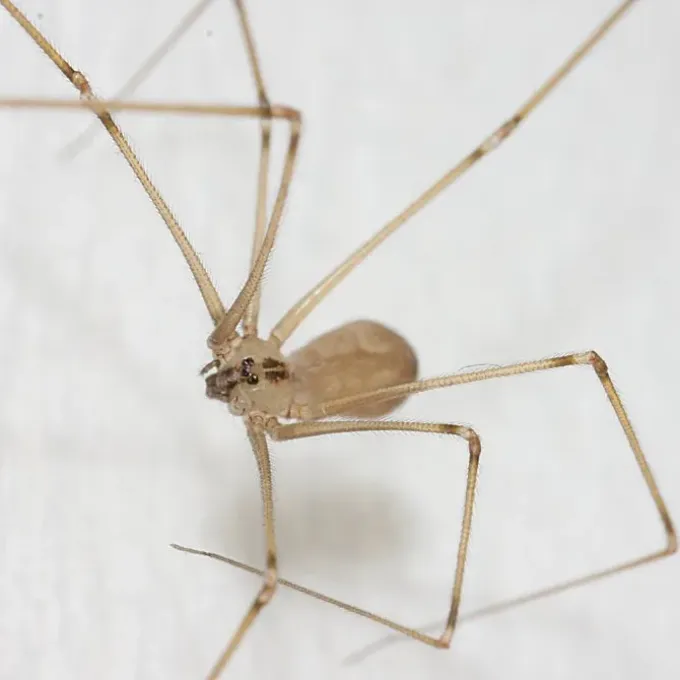
The cellar spider (Pholcus phalangioides) belongs to the family Pholcidae. These spiders are easily identified by their incredibly long, thin legs and small bodies, often giving them a spindly, delicate appearance.
They build messy, irregular webs in sheltered, undisturbed corners. Unlike many other spiders, they thrive in the stable environments of greenhouses, sheds, and storage facilities, often hanging upside down in their webs.
The biological life cycle of these spiders is highly adaptable. Females carry their egg sacs in their chelicerae, ensuring protection for their offspring until they emerge as spiderlings.
These spiders are often confused with harvestmen (Opiliones), but cellar spiders are true spiders capable of spinning silk, which differentiates them from non-web-spinning arachnids.
Their presence is a reliable indicator of a local population of small insects, as they are opportunistic hunters that establish themselves wherever food sources are abundant.
What it damages
Cellar spiders are not direct plant pests; they do not consume foliage, stems, or fruits. In fact, they are considered beneficial predators that hunt common greenhouse pests like gnats and small flies.
The primary issue in agricultural settings is the accumulation of cobwebs on plants, greenhouse structures, and equipment, which negatively impacts the cleanliness of the production environment.
Excessive web accumulation can trap debris and moisture, creating a surface that supports the growth of mold and mildew, which may indirectly lead to secondary plant health issues.
In commercial operations, widespread webbing can obstruct sunlight, impede automated irrigation systems, and interfere with laborers performing daily crop maintenance tasks.
Because they are not herbivorous, they do not cause mechanical damage to crops. Their role is mostly neutral or slightly beneficial, depending on the intensity of their web construction.
Control measures
Chemical control is rarely necessary or recommended, as these spiders act as biological control agents for more destructive greenhouse pests like fungus gnats.
The most effective management strategy is regular sanitation: removing old plant debris and cleaning greenhouse corners to prevent the establishment of permanent spider webs.
Improving air circulation and maintaining proper humidity levels within the greenhouse makes the environment less hospitable for cellar spiders, which prefer stagnant, humid areas.
Mechanical removal, such as using brushes or air blowers to clear webs, is the preferred method for maintaining an aesthetically pleasing production space without using toxic chemicals.
Monitoring the spider population can help identify if there is an underlying infestation of smaller insect pests that are serving as their primary food source in the facility.
Taxonomy
- Latin name
- Pholcus
- Family
- Pholcidae
- EPPO code
- PHLUSP
Discussion
No discussions yet — be the first.