
Holocnemus pluchei
Holocnemus pluchei
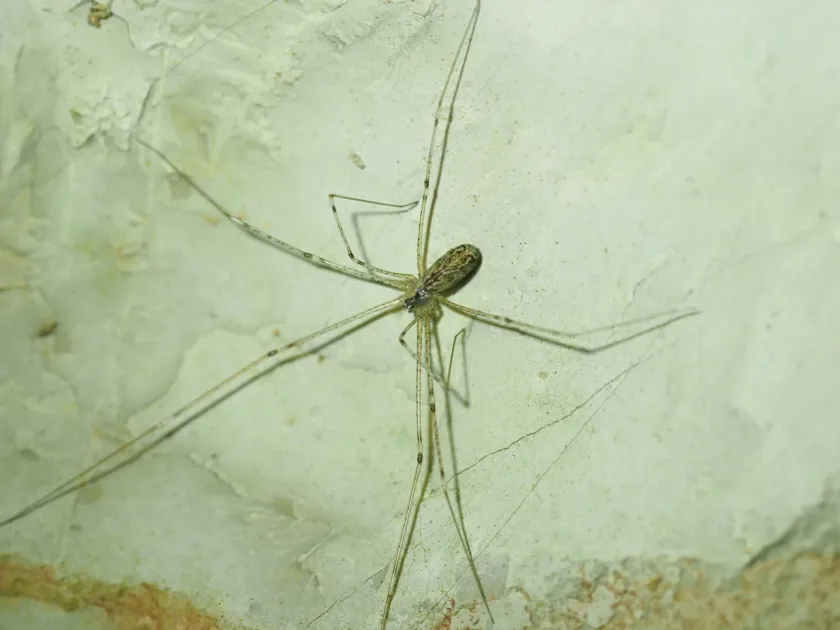
Description
How to identify
Holocnemus pluchei, commonly known as the marble cellar spider, belongs to the family Pholcidae and is widely distributed in temperate and Mediterranean climates.
The species is easily recognized by its very long, thin legs and a greyish body with a distinctive dark brown stripe on the cephalothorax.
Adult females have a body length of about 6–8 mm, but their leg span can be several times larger, helping them navigate complex environments.
These spiders are strictly nocturnal and prefer habitats with low wind flow, such as greenhouses, sheds, and dense garden vegetation.
They are specialized hunters that construct large, loose, and irregular cobwebs to entangle small insects that fly or crawl nearby.
What it damages
Holocnemus pluchei is not a plant pest. It does not feed on any parts of agricultural crops, trees, or garden flowers.
In fact, this spider is considered a beneficial organism in agricultural ecosystems because it preys on various small insects, including potential pests.
The only impact it might have on a farm is the presence of cobwebs in greenhouses or storage facilities, which can be perceived as untidy.
It poses no threat to human health or plant tissue, as its anatomy is specialized solely for predatory behavior and survival.
Farmers should view this spider as an ally in their integrated pest management strategy rather than a target for eradication.
When it appears
The activity period of Holocnemus pluchei starts in early spring as ambient temperatures increase, favoring insect movement.
Peak abundance typically occurs during the summer months when the population of prey insects is at its highest level.
As autumn approaches, the spiders look for protected spots, including cracks in walls or under debris, to overwinter safely.
In temperature-controlled greenhouses, this species can remain active and continue its life cycle throughout the entire winter.
Development involves multiple molting stages, with individuals reaching sexual maturity to continue the population growth in suitable habitats.
Signs of infestation
The most visible sign of its presence is the creation of messy, tangled webs located in corners or between plant stems.
When the web is touched, the spider often displays a unique defensive behavior by vibrating rapidly, making it difficult for predators to focus on it.
There are no signs of tissue necrosis, discoloration, or deformation on plants associated with this spider's presence.
Finding prey carcasses within the web confirms the spider's role as an active predator rather than a consumer of plant material.
- Loose cobwebs in sheltered areas
- Rapid vibration of the spider when disturbed
- Presence of insect remains in webs
Control measures
No pest control measures are required for Holocnemus pluchei as it causes no economic damage to agricultural production.
If web accumulation in indoor storage areas becomes an issue, physical removal with a soft brush or vacuum is sufficient.
Chemical control is strictly discouraged, as broad-spectrum insecticides would harm the beneficial predator population and disrupt the ecological balance.
Maintaining a tidy environment around greenhouses helps prevent excessive web building without the need for harmful chemical interventions.
Promoting the presence of such natural enemies is a cornerstone of sustainable agriculture and responsible crop management practices.
Taxonomy
- Latin name
- Holocnemus pluchei
- Family
- Pholcidae
- EPPO code
- HOLCPL
Discussion
No discussions yet — be the first.