
Holocnemus
Holocnemus
Description
How to identify
Holocnemus is a genus of spiders belonging to the family Pholcidae, commonly known as cellar spiders or daddy-long-legs spiders.
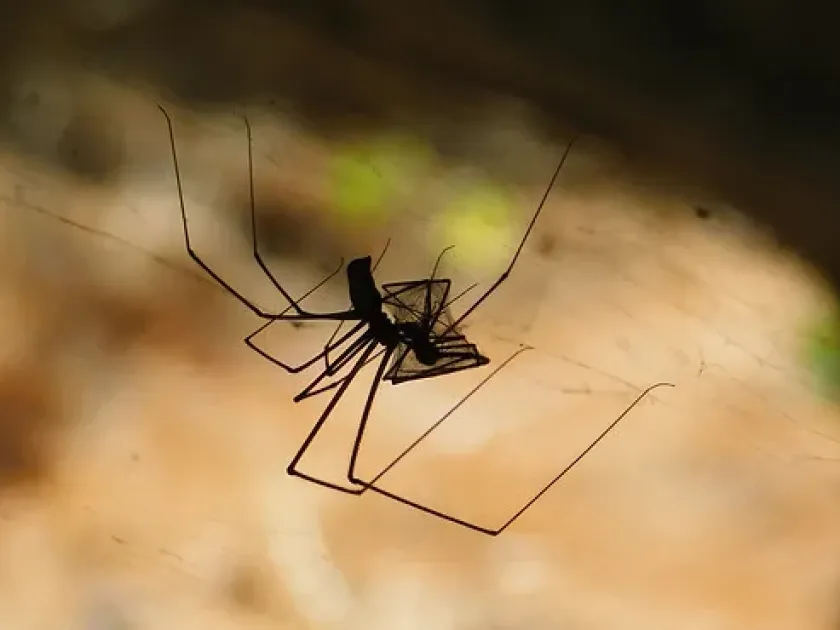
They are easily recognized by their exceptionally long, slender legs and small, elongated bodies which typically measure under 10 mm in length.
These spiders are characterized by a light, mottled appearance and their tendency to occupy crevices, ceiling corners, and sheltered areas within structures.
Their most distinctive behavioral trait is rapid, vibrating movement when they perceive a threat, which makes them look like a blur within their webs.
Like other Pholcids, female Holocnemus spiders carry their eggs in a loose silk bundle held between their mouthparts rather than leaving them in a fixed nest.
What it damages
In agronomic terms, Holocnemus is not a plant pest; they are strictly carnivorous and do not consume plant tissues or sap.
These spiders serve as natural predators in greenhouses, helping to regulate populations of fungus gnats, aphids, and other small flying insects.
The only negative impact they might have on agriculture is the accumulation of unsightly, tangled cobwebs on the foliage of ornamental indoor plants.
In extreme cases, dense webs can collect debris and dust, which may inadvertently shade parts of the leaf surface or restrict airflow around the plant.
Overall, they are considered beneficial organisms that contribute to the biological balance of a managed environment.
When it appears
The activity of Holocnemus spiders is heavily dependent on ambient temperature and the availability of prey.
In temperature-controlled environments such as greenhouses or glasshouses, they remain active and capable of reproduction throughout the year.
In outdoor garden settings, activity peaks during the warmer months when their prey species are most abundant.
Reproduction cycles are opportunistic, often beginning as soon as spring temperatures allow for the survival of spiderlings and ensure a food supply.
During colder months, they typically retreat into deeper crevices or man-made structures to seek refuge from freezing temperatures.
Control measures
Since Holocnemus is not a crop pest, there is no need for chemical control, and applying insecticides is discouraged as it harms beneficial biodiversity.
If web accumulation is an issue for aesthetic reasons, simple mechanical removal with a brush, damp cloth, or water sprayer is the most effective method.
Maintaining high hygiene standards in the greenhouse, such as removing old plant debris and keeping aisles clean, naturally limits nesting opportunities.
Integrated Pest Management (IPM) strategies typically favor the presence of these spiders, as they reduce the need for synthetic pesticide applications.
Control is only recommended if the population becomes exceptionally high to the point of interfering with specific technical plant maintenance tasks.
Taxonomy
- Latin name
- Holocnemus
- Family
- Pholcidae
- EPPO code
- HOLCSP
Discussion
No discussions yet — be the first.