
Harbor seal
Phoca vitulina
Description
How to identify
The harbor seal (Phoca vitulina) belongs to the order Carnivora and the family Phocidae. It is a marine mammal widely distributed along the northern coastal waters.
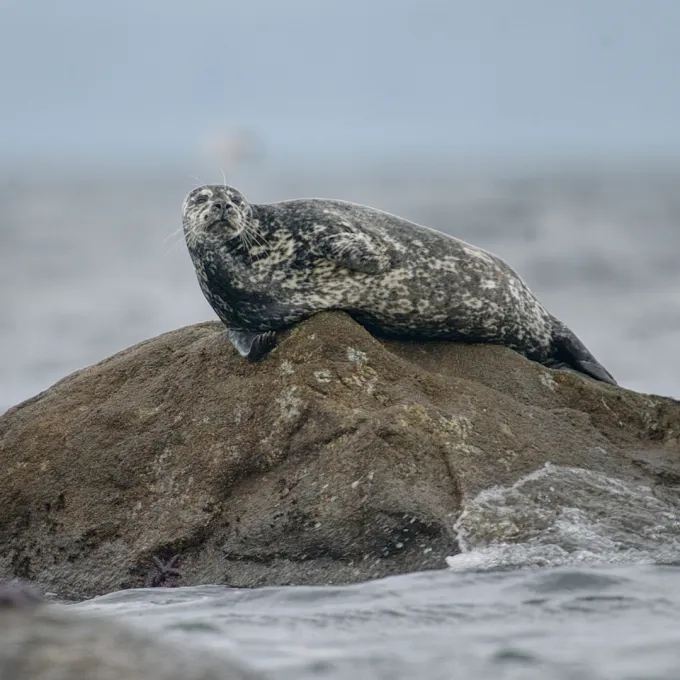
Adult seals are generally 1.6 to 1.8 meters in length. Their body is covered with dense fur with a spotted pattern, which provides camouflage on rocks and sandy beaches.
Unlike agricultural pests, harbor seals are apex predators in marine ecosystems, relying entirely on fish, crustaceans, and cephalopods for their survival.
Their life cycle includes seasonal hauling out on land for resting, molting, and giving birth, which occurs in coastal areas often adjacent to farmland.
It is crucial for agronomists to distinguish between true crop pests and marine fauna to avoid unnecessary and potentially illegal control measures.
What it damages
Harbor seals are not crop pests and cause zero damage to plant tissues, fruits, or seeds. Their nutritional requirements are strictly carnivorous.
Potential damage is limited to physical disturbances, such as the trampling of soil in fields that directly transition into the intertidal zone.
Erosion of coastal embankments and damage to irrigation pipes or perimeter fencing near the sea are the most likely issues for farmers.
While they do not eat crops, their concentration in certain areas can create localized sanitation challenges for organic producers near the shore.
The impact is strictly mechanical and environmental rather than biological in terms of plant pathology or direct predation on agricultural production.
Signs of infestation
The presence of harbor seals is identified by hauling-out sites on sandbars or rocks during low tide.
Distinctive trails and body impressions on the shoreline soil serve as primary indicators of their recent activity.
A noticeable strong scent of marine organic matter near the coast can indicate that seals have been frequenting the area.
Observations of adult seals or pups resting on the beach are clear indicators of their proximity to the agricultural site.
Damage to infrastructure at the water-land interface, such as broken nets or flattened shoreline vegetation, indicates regular visits.
Control measures
Effective control involves the use of sturdy, non-lethal fencing to prevent animals from entering sensitive areas of the farm.
Visual and acoustic deterrents can be employed to encourage seals to choose alternative hauling-out sites, ensuring they do not occupy valuable land.
It is vital to prioritize humanitarian methods and comply with local environmental laws that protect these marine mammals from harm.
Creating buffer zones between agricultural production fields and the high-tide mark reduces the need for active management or intervention.
Collaboration with local conservation authorities ensures that farming activities do not disrupt seal habitats while maintaining operational efficiency.
Taxonomy
- Latin name
- Phoca vitulina
- Family
- Phocidae
- EPPO code
- PJOCVI
Discussion
No discussions yet — be the first.