
Harbor seal
Phoca
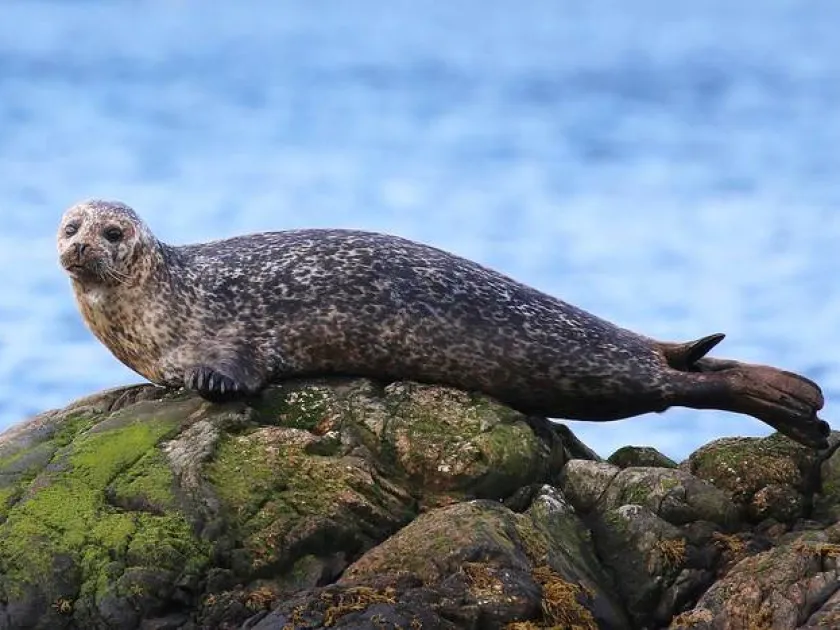
Description
How to identify
The Harbor seal is a marine mammal belonging to the Phocidae family. It is characterized by a spotted coat and a streamlined body shape that facilitates movement in water.
Adults can grow up to 1.8 meters in length and reach weights exceeding 150 kilograms, making them highly efficient predators in coastal habitats.
These animals possess well-developed sensory organs, enabling them to navigate complex marine environments and locate food sources with extreme precision.
Their physiological adaptations allow them to remain submerged for extended periods, providing a significant advantage in hunting near human-made structures.
The species is widespread in northern temperate and arctic waters, frequently interacting with coastal economic activities, including fish farming.
What it damages
While not a traditional agricultural pest, the Harbor seal is considered a nuisance in the aquaculture industry due to its predatory habits.
The primary economic impact involves damaging containment nets of fish cages, which allows the enclosed stock to escape or creates access for further predation.
Direct consumption of farmed fish significantly reduces the total yield and profitability of aquaculture operations.
The presence of seals induces chronic stress in farmed fish, which negatively impacts their growth rates, immune response, and overall flesh quality.
In addition to physical damage, seals can act as carriers of pathogens, potentially increasing the risk of disease spread within the farm perimeter.
When it appears
Seal activity near fish farms typically spikes during fish migration seasons, as they naturally track their primary food sources.
Breeding and molting seasons often concentrate seal populations near coastal haul-out sites, increasing the pressure on local aquaculture sites.
Winter conditions can drive seals toward nearshore areas in search of open water, coinciding with intensive periods for certain fish farming operations.
Spring and early summer periods may see higher activity due to the presence of young pups and increased foraging requirements for nursing females.
Seasonal changes in water temperature and currents significantly influence the frequency and intensity of seal visits to fixed farm locations.
Signs of infestation
The most common sign of a seal visit is the presence of torn or ripped netting, displaying characteristic bite marks or structural failure from blunt force.
Unexpected loss of fish inventory without clear indications of disease or water quality issues is a strong indicator of predator activity.
Observing significant behavioral shifts in the fish population, such as panic responses or avoidance patterns, signals a persistent external threat.
Direct visual confirmation of seals swimming around the cages or hauled out on nearby floating structures provides definitive evidence.
The presence of distinctive vocalizations or splashes near the cages, particularly during low-light conditions, suggests active patrol by predators.
Control measures
Acoustic harassment devices are frequently used to deter seals from approaching fish farms by emitting high-frequency sounds.
Implementing high-tensile, predator-resistant netting is essential for maintaining the structural integrity of containment areas.
Optimizing feeding schedules helps to reduce the attractiveness of cages during times when seals are most actively hunting for food.
Regular maintenance of the farm perimeter, including rapid repair of any structural weakness, is vital to prevent opportunistic entry.
- Installation of reinforced secondary barriers.
- Use of automated monitoring and sensor systems.
- Strategic placement of deterrent structures.
Taxonomy
- Latin name
- Phoca
- Family
- Phocidae
- EPPO code
- PJOCSP
Discussion
No discussions yet — be the first.