
Grey seal
Halichoerus grypus
Description
How to identify
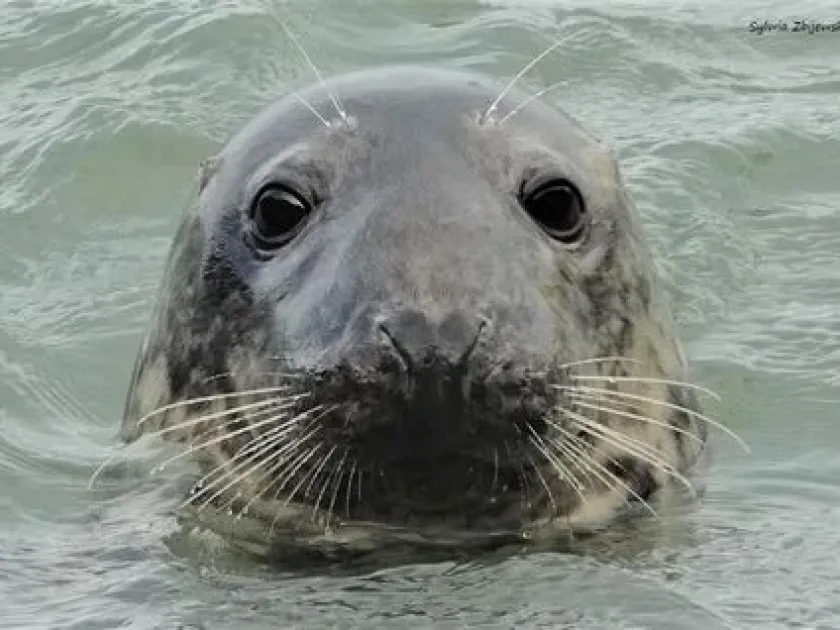
The Grey seal (Halichoerus grypus) is a large marine mammal belonging to the Phocidae family within the order Carnivora.
It is easily identifiable by its large size and a distinctively long, sloping snout often referred to as a "Roman nose," which helps distinguish it from other seal species.
Their life cycle includes seasonal breeding and molting periods, during which they congregate in significant numbers along coastal rocky areas.
Young seals undergo rapid growth phases and quickly develop the hunting instincts necessary to thrive in cold coastal waters.
From an agro-industrial perspective, particularly in aquaculture, this mammal is viewed as a persistent predator capable of compromising infrastructure and stock security.
What it damages
The primary economic impact occurs in coastal salmon and trout farming operations where seals target the stock kept in large underwater cages.
Seals physically damage the protective netting by tearing or biting through the material, which leads to significant losses of farmed fish.
Beyond direct predation, the proximity of a large predator induces a state of chronic stress in the farmed fish, which suppresses growth rates and feed efficiency.
Damaged netting can also compromise the hygiene of the farm, potentially exposing the fish to pathogens that would otherwise be excluded.
Repeated predation events often lead to long-term financial damage due to the need for frequent repairs and the replacement of specialized netting systems.
Signs of infestation
The most reliable sign of a seal breach is the presence of large, irregular holes in the netting, showing clear evidence of mechanical tension or biting.
Sudden declines in stock counts without obvious disease outbreaks are strong indicators that a predator has gained access to the farming area.
Finding uneaten fish carcasses or "half-eaten" remains within the cage structures is a signature sign of seal hunting activity.
Fish behavior often changes; they may shoal tightly in the corners of the cage, showing signs of severe agitation due to the presence of an intruder.
Observation of seals resting on nearby buoys or rocky outcrops near the farm site strongly suggests that the facility is being monitored as a food source.
Control measures
The most effective strategy involves the use of high-tension, shark-proof, or predator-proof synthetic nets that are resistant to tearing.
Acoustic Deterrent Devices (ADDs) are commonly deployed to emit sounds that are unpleasant for seals, encouraging them to move away from the farming site.
Routine inspections by professional divers are essential to identify and repair minor breaches before they become large enough for a seal to exploit.
Modern farm management also employs structural modifications, such as stiffened cage collars and taut tensioning systems, to reduce the seal's ability to grab the net.
It is crucial that all protection methods are implemented in compliance with local wildlife protection laws, which generally prohibit the harm of these marine mammals.
Taxonomy
- Latin name
- Halichoerus grypus
- Family
- Phocidae
- EPPO code
- HLCHGR
Discussion
No discussions yet — be the first.