
Poplar twig aphid
Phloeomyzus passerinii
Description
How to identify
The poplar twig aphid (Phloeomyzus passerinii) is a small insect belonging to the family Aphididae within the order Hemiptera. It specializes in living on poplar trunks.
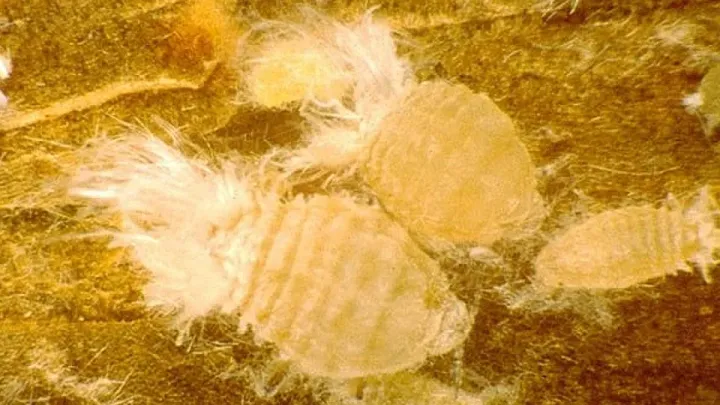
Adults are oval-shaped and reach approximately 2 mm in length. They are covered in a protective waxy secretion, which appears as white woolly threads on the host tree.
The life cycle involves multiple generations per year, consisting mainly of apterous viviparous females that form dense colonies under loose bark.
High temperatures and dry conditions during the summer months significantly accelerate their reproduction, leading to rapid population outbreaks.
They overwinter as first-instar nymphs, usually tucked away in the deep fissures of the bark where they are sheltered from the harsh winter environment.
What it damages
This pest targets various poplar species and their hybrids, particularly those grown in forest plantations and landscape settings where conditions may favor the aphid.
By sucking sap from the phloem, the aphids deprive the tree of vital nutrients, leading to reduced growth rates and general physiological stress.
Intense colonization causes the bark to crack and peel, resulting in large areas of necrotic tissue that disrupt the tree's vascular system.
The damage to the bark creates entry points for secondary pathogens, such as fungi and bacteria, which can cause cankers and further weaken the tree's structure.
Severe infestations often result in the dieback of branches and, in extreme cases, the total death of the tree, causing significant losses in timber production.
Signs of infestation
The most diagnostic sign of an infestation is the presence of white, cottony, wax-like filaments accumulating within the crevices and cracks of the poplar bark.
Discoloration of the bark and the appearance of liquid seepage (wet spots) are common indicators that the aphid colony is actively feeding underneath.
The presence of ants trailing up and down the trunk is a strong indicator of an aphid infestation, as they are attracted to the honeydew produced by the aphids.
Direct observation under the loose bark flakes reveals clusters of grayish-brown insects, which may quickly retreat deeper when disturbed.
Foliage symptoms such as premature yellowing and thinning of the canopy occur because the damage to the trunk hinders the flow of sap to the leaves.
Control measures
Planting resistant clones is the primary and most sustainable strategy for managing the poplar twig aphid in new forest plantations.
- Systemic insecticide applications applied to the trunk during early spring.
- Removal and destruction of heavily infested trees to reduce the overall population density.
- Monitoring programs to detect early signs of colony formation before widespread damage occurs.
- Encouraging natural predators such as lady beetles, lacewings, and parasitic wasps.
Chemical control is most effective when systemic products are applied before the aphids move too deep into the bark crevices to be reached by sprays.
Good silvicultural practices, including maintaining proper tree vigor through adequate water and nutrient management, help trees resist minor infestations.
Taxonomy
- Latin name
- Phloeomyzus passerinii
- Order
- Hemiptera (bugs, aphids, leafhoppers)
- Family
- Aphididae
- EPPO code
- PHLOPA
Discussion
No discussions yet — be the first.