
Poplar twig aphid
Phloeomyzus
Description
How to identify
The Poplar twig aphid (Phloeomyzus passerinii) is a specialized insect pest of the family Aphididae that colonizes the stems and branches of poplar trees.
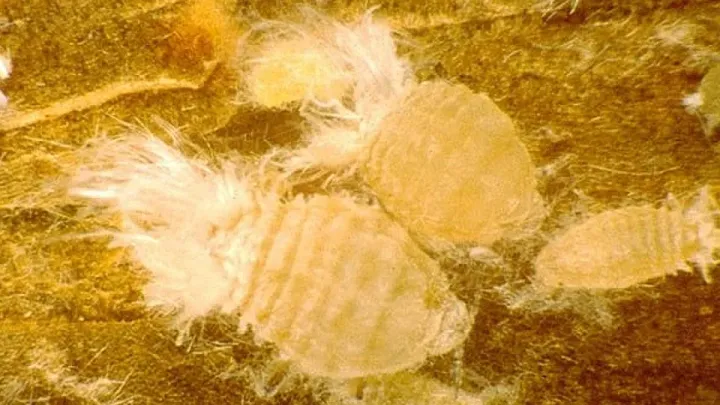
The insects are grayish-brown in color, often obscured by a woolly, white wax secretion, which makes them look like small patches of mold on the bark.
This species has a complex life cycle characterized by parthenogenetic reproduction, allowing the population to increase rapidly during the growing season.
Overwintering occurs primarily in the nymphal stage, as they hide deep within the crevices of the bark to survive the colder winter months.
Adults and nymphs become active in the spring as temperatures rise, moving to feeding sites where they anchor themselves to the tree's bark.
What it damages
Poplar trees are the primary hosts, with many commercial poplar varieties showing high susceptibility to this aphid species in plantation environments.
By feeding on the sap of the inner bark and phloem, the aphids deprive the tree of essential nutrients, leading to physiological stress and reduced vigor.
Chronic infestations result in bark necrosis, stunted branch growth, and increased vulnerability to secondary bark beetles and fungal pathogens.
In forest nurseries, severe attacks can lead to the mortality of young trees and significant loss of timber production quality.
The cumulative damage often manifests as a thinning crown and premature leaf senescence, signaling a decline in the tree's overall health status.
Signs of infestation
The presence of white, cottony masses on the bark of trunks and branches is the most characteristic sign of a Phloeomyzus infestation.
Bark surfaces often show darkened areas or discoloration due to the growth of sooty mold, which develops on the honeydew excreted by the aphids.
Closer inspection of the bark reveals clusters of small, sessile insects packed into crevices, sometimes covered by layers of wax and dust.
Trees infested with high numbers of aphids show visible signs of distress, such as reduced terminal growth and chlorotic foliage during the peak summer months.
Ant activity on the trunk is another major indicator, as ants are frequently attracted to the sticky honeydew produced by the aphids during their feeding.
Control measures
Managing the Poplar twig aphid requires a mix of early detection and the targeted application of pesticides, as they are well-protected by the bark.
Systemic insecticides are generally the most successful control measure because they can reach the aphids hidden within the crevices of the bark.
Maintaining high tree health through adequate irrigation and proper site selection is key to reducing the tree's overall susceptibility to pest outbreaks.
- Applying contact and systemic insecticides during the early spring.
- Utilizing trunk injections to deliver chemicals directly into the infested tissue.
- Monitoring natural predators like ladybird beetles that feed on the aphid colonies.
Effective management also involves keeping nurseries free of infested stock to prevent the spread of the pest to new forest or landscape plantations.
Taxonomy
- Latin name
- Phloeomyzus
- Order
- Hemiptera (bugs, aphids, leafhoppers)
- Family
- Aphididae
- EPPO code
- PHLOSP
Discussion
No discussions yet — be the first.