

Description
How to identify
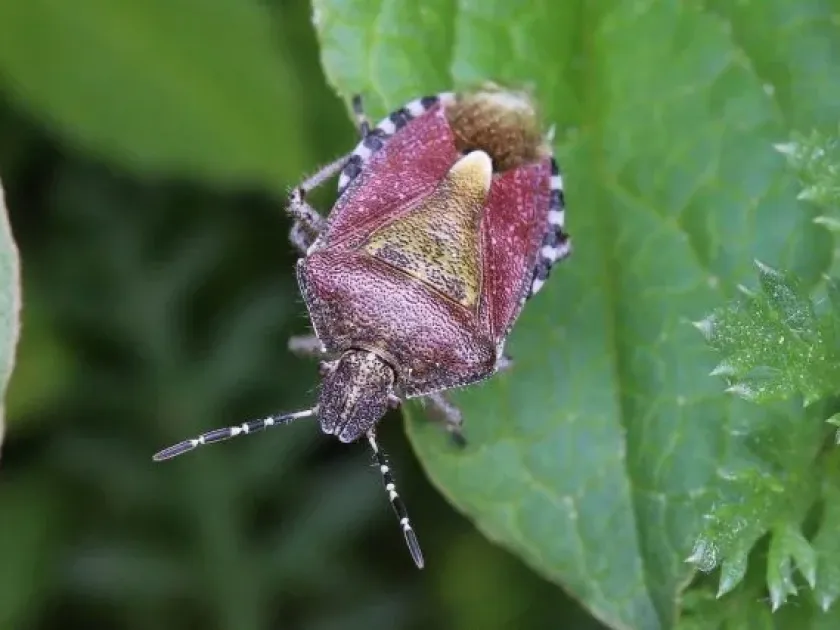
The cabbage bug (Latin: Eurydema ventralis) is a prominent member of the Pentatomidae family, known for its vivid, warning coloration. Adult bugs typically display a red, yellow, or white background with distinct black markings, which serve as an aposematic signal to predators.
The insect has an oval, flattened body measuring approximately 7 to 10 millimeters in length. Its small, mobile head features a specialized piercing-sucking mouthpart, known as a proboscis, which is designed to penetrate plant tissues and extract cellular sap efficiently.
The eggs of the cabbage bug are barrel-shaped and are typically laid in neatly arranged rows on the underside of host plant leaves. The nymphs pass through five instar stages, resembling small versions of the adults but lacking fully developed wings and reproductive organs.
Adults overwinter in sheltered locations, such as leaf litter, hedgerows, or agricultural debris near fields. As temperatures rise in early spring, they emerge and migrate to host crops to begin feeding and laying eggs for the first generation of the season.
Development speed is highly dependent on ambient temperatures, with warm, dry summers facilitating rapid life cycles. In favorable conditions, one or two generations can occur within a single growing season, potentially leading to significant population outbreaks.
What it damages
The primary hosts of the cabbage bug are members of the Brassicaceae family, including rapeseed, cabbage, radish, mustard, and turnip. They also frequent cruciferous weeds, which can act as secondary hosts during periods when primary crops are unavailable or sparse.
Both adults and nymphs cause damage by feeding on the leaves, stems, flower buds, and pods of host plants. During feeding, they inject toxic saliva that contains enzymes, causing localized tissue death, discoloration, and physiological stress to the plant.
Seed-producing crops are particularly vulnerable, as the bugs frequently attack developing pods and seeds. This feeding results in shriveled, underdeveloped seeds with poor germination rates, leading to substantial yield losses and diminished commercial crop quality.
In seedlings, intense feeding can destroy the apical meristem or growing point, causing stunted growth or total plant mortality. The deformation of leaves and physiological weakness make the plants more susceptible to secondary infections or environmental stress.
During drought conditions, the impact of cabbage bug feeding is amplified, as the plants are already struggling with water deficit. Rapid sap extraction can lead to severe wilting, premature blossom drop, and a significant reduction in overall plant vigor.
Signs of infestation
Initial signs of a cabbage bug infestation include the appearance of small, yellow or whitish spots on leaf surfaces. These spots are the direct result of the bug's piercing action and subsequent enzymatic tissue breakdown at the feeding site.
Regular field scouting should include inspecting the undersides of leaves to locate egg masses, which are easily identifiable by their patterned, row-like arrangement. The presence of nymphs of varying sizes indicates an active breeding population that requires management.
Leaves affected by high bug density often appear deformed, riddled with holes, or exhibit signs of wilting. On flowering stalks, feeding results in chlorotic spots and the premature abscission of buds, which directly impacts the potential yield of the crop.
Early morning is the best time to detect the insects, as they are less active and tend to congregate openly on foliage or flower heads. When disturbed, they may drop to the ground and feign death, a behavior that can complicate visual inspections.
Observing stunted plant growth or wilting in the heat of the day can be a reliable indicator of high insect pressure. In such cases, a thorough examination of the plant base and stem areas is necessary to confirm the infestation levels.
Control measures
Cultural control strategies focus on eliminating cruciferous weeds that serve as initial breeding grounds for the bugs. Deep autumn tillage is effective in burying and destroying the overwintering sites, significantly reducing the pest population for the following season.
Crop rotation and spatial isolation of new cruciferous plantings from old fields are essential preventive measures. Ensuring optimal seeding times allows crops to establish robust growth, making them more resilient to early-season insect pressure.
Chemical control is warranted when populations exceed established economic injury levels. Systemic or contact insecticides are generally applied during the early stages of infestation to prevent the build-up of nymphs and minimize damage to reproductive tissues.
Integrated pest management (IPM) practices, including the rotation of insecticide classes, are recommended to prevent the development of pesticide resistance. All chemical applications must prioritize the protection of beneficial predatory insects and pollinators.
Effective management protocols include:
- Removal and destruction of cruciferous weeds.
- Careful monitoring of fields using sweep nets.
- Application of insecticides during peak nymph activity.
- Deep cultivation to disrupt overwintering habitats.
Content graph
Connections · Cabbage bug
Most often together:
Marketplace
Products · 1
Biology
Taxonomy
- Latin name
- Philonis crucifer
- Order
- Coleoptera (beetles)
- Family
- Curculionidae
- EPPO code
- FILOCU
Community
Discussion
No discussions yet — be the first.