
Phassus moth
Phassus
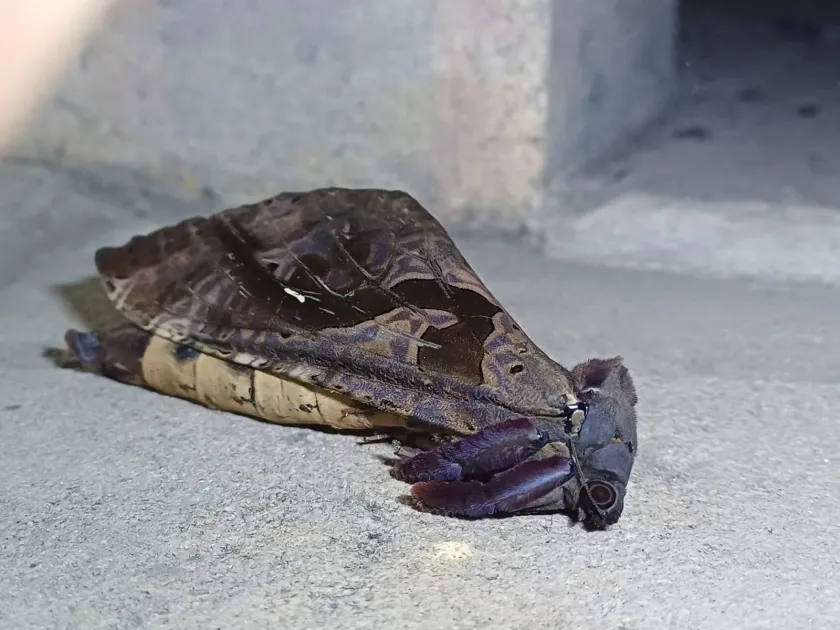
Description
How to identify
The genus Phassus belongs to the order Lepidoptera and the family Hepialidae, commonly known as ghost moths or swift moths. These insects are characterized by their cryptic nature and nocturnal habits.
Adult moths are often large, featuring robust bodies and cryptic coloration that provides camouflage against tree bark or dry vegetation, making them difficult to detect in their natural habitat.
The larvae are typically cylindrical with a pale, whitish body and a well-developed, hardened head capsule, which allows them to bore effectively into dense plant materials like stems and roots.
The life cycle is often extended compared to other moths. In many species, development from egg to adult takes more than one year, which poses challenges for population monitoring and control.
Identification is primarily based on the morphology of the adults and the distinct galleries they construct inside host plants, often lined with silk and filled with frass.
What it damages
Species of the genus Phassus act as polyphagous pests, causing significant damage to a wide range of woody plants, shrubs, and even some herbaceous field crops.
The primary damage is caused by the larvae, which bore into the stems, trunks, or roots of the host plants, creating galleries that disrupt nutrient and water flow, eventually killing parts of the plant.
Young trees in nurseries are particularly vulnerable. A single larva can cause severe structural damage to the main stem or taproot, leading to rapid decline or death of the specimen.
Beyond physical destruction, the larval tunnels act as entry points for various phytopathogenic fungi and bacteria, which exacerbate the damage and accelerate plant decay.
Economic damage is often observed in orchards and plantation forests, where high larval density leads to stunted growth, reduced yields, and significant tree mortality across large areas.
Signs of infestation
One of the earliest signs of infestation is the unexplained wilting or flagging of leaves, often localized to a specific branch or the apical part of the stem, even under favorable moisture conditions.
Close inspection of the stem or root crown often reveals entrance holes marked by piles of fresh sawdust or "frass," which the larva pushes out of the tunnel during its feeding activity.
The presence of silken webbing covering the entrance hole is a hallmark of the larva’s activity, indicating its efforts to protect the tunnel entrance from predators or environmental factors.
In cases of stem-boring, the affected plant may show visible swelling or structural deformation at the site of the tunnel, which can lead to breakage of the stem during strong winds.
Opening the affected stem section usually exposes a longitudinal tunnel packed with brownish excrement and the larva itself, confirming the identity of the pest responsible for the damage.
Control measures
Managing Phassus moth requires an integrated pest management (IPM) approach that focuses on early detection, physical removal, and judicious chemical interventions.
Cultural practices such as deep plowing in late autumn are effective in exposing overwintering larvae to harsh conditions and natural predators, significantly reducing their population density.
Removing and destroying highly infested host plants is essential to prevent the larvae from completing their life cycle and emerging as adults to infest neighboring plants.
The application of systemic insecticides during the peak period of larval hatching can be effective, as the young larvae are most exposed before they fully bore into the plant tissues.
- Conduct regular monitoring of seedlings for entry holes or sawdust piles.
- Utilize light traps to track adult moth flight activity and determine treatment timing.
- Maintain weed-free environments around plantations to reduce alternative hosts.
- Apply entomopathogenic fungi as a biological control agent in high-risk areas.
Taxonomy
- Latin name
- Phassus
- Order
- Lepidoptera (butterflies)
- Family
- Hepialidae
- EPPO code
- PHAUSP
Discussion
No discussions yet — be the first.