
Phaonia erratica
Phaonia erratica
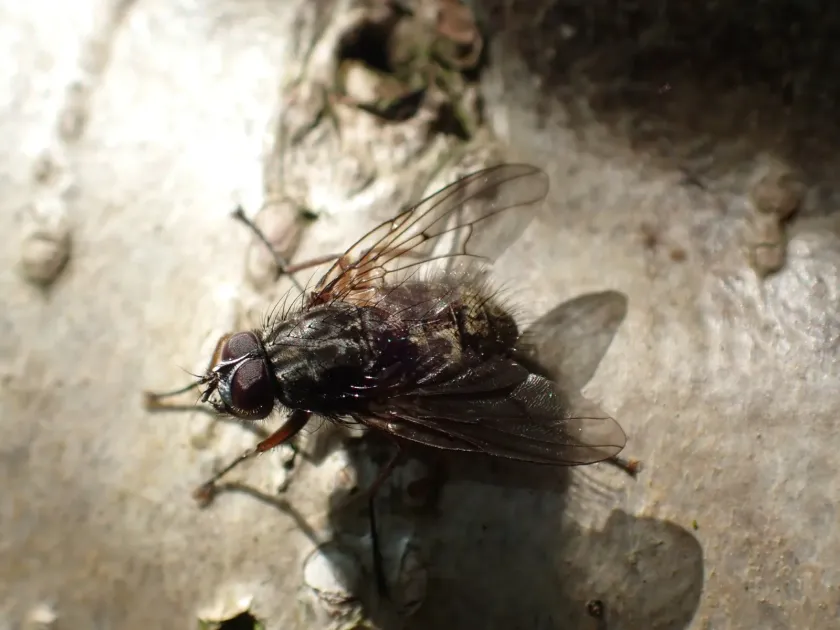
Description
How to identify
Phaonia erratica belongs to the family Muscidae (house flies and allies). This species is a common fly found in temperate regions across Europe and other parts of the northern hemisphere.
Adult flies are typically 6–8 mm in length, possessing a dark body with sparse bristles. Their appearance is similar to other common flies, making identification by appearance alone quite difficult without microscopic analysis.
The larvae are creamy-white, legless, and cylindrical. They are primarily saprophagous, thriving in decaying plant material, wet organic matter, or compost piles, but can also inhabit damp soil.
The genus Phaonia contains many species, making it a taxonomically challenging group. Proper identification of P. erratica often requires examination of the male terminalia or specific chaetotaxy patterns.
Despite being relatively small, their presence in large numbers can have ecological impacts, as adults visit various flowers for nectar and interact with decomposing materials.
What it damages
While adults are harmless, the larvae are considered pests in specific horticultural settings. They can cause damage to young seedlings by feeding on roots or the base of the stem, especially when plants are under stress.
Feeding by P. erratica larvae creates wounds in the plant tissue, which often become entry points for secondary pathogens like bacteria and fungi, leading to severe root or stem rot.
Vegetable seedlings and crops grown in high-humidity environments are particularly susceptible. Poorly drained soil acts as an attractant for egg-laying females seeking decaying organic matter.
Damage is characterized by stunted growth, yellowing of leaves, and wilting, often mistaken for nutrient deficiencies or simple soil-borne diseases rather than insect feeding.
In high-density infestations, the loss of seedling stand can be significant, particularly in early spring when conditions favor both the fly's development and the crop's vulnerability.
When it appears
The activity of Phaonia erratica typically begins in late spring, following the first period of sustained warm temperatures. Adults are active throughout the summer months.
The life cycle consists of egg, three larval stages, and a pupal stage. Depending on environmental factors such as moisture and temperature, multiple generations can occur within a single season.
Pupation occurs within the soil or in accumulated leaf litter. These puparia serve as the overwintering stage, allowing the species to survive harsh winter conditions and emerge early in the next spring.
The flight period is extended due to overlapping generations, meaning that monitoring should be continuous throughout the growing season to catch early signs of population spikes.
Peak occurrence usually coincides with mid-summer, especially in areas with significant organic matter buildup or irrigation systems that keep the soil surface constantly moist.
Signs of infestation
Visible signs of infestation include sudden wilting of young plants that does not recover after watering. A closer inspection of the stem base usually reveals tissue damage.
The presence of small, creamy-white larvae in the soil around the roots is a definitive sign of infestation. They are usually found just below the soil surface or in proximity to decaying matter.
In greenhouses or tunnel structures, the presence of adult flies on sticky traps or flying near the soil surface indicates potential egg-laying activity that warrants intervention.
Yellowing of the foliage and overall weak plant vigor are secondary symptoms. These are often caused by the disruption of water and nutrient transport due to root or stem damage.
Soft rot at the soil line is a common symptom in infested patches. If the stem is easily dislodged, the larvae have likely caused significant internal damage to the primary root system.
Control measures
The most effective management strategy is strict sanitation. Removing decomposing plant debris and managing composting sites away from growing areas significantly reduces the breeding grounds.
Improving soil drainage is crucial to prevent the moist conditions that attract the flies. Proper irrigation management avoids creating stagnant conditions favorable for larval survival.
Biological control using entomopathogenic nematodes or fungi has shown success in reducing larval populations in the soil without the need for toxic chemicals.
Yellow sticky traps can be used as a monitoring tool to determine the timing and density of adult fly populations, allowing for targeted management before egg-laying occurs.
If chemical control becomes necessary, use targeted soil-applied insecticides following local agricultural regulations. Preventive measures and cultural practices remain the preferred approach.
Taxonomy
- Latin name
- Phaonia erratica
- Order
- Diptera (flies)
- Family
- Muscidae
- EPPO code
- PAONER
Discussion
No discussions yet — be the first.