
Phaonia
Phaonia
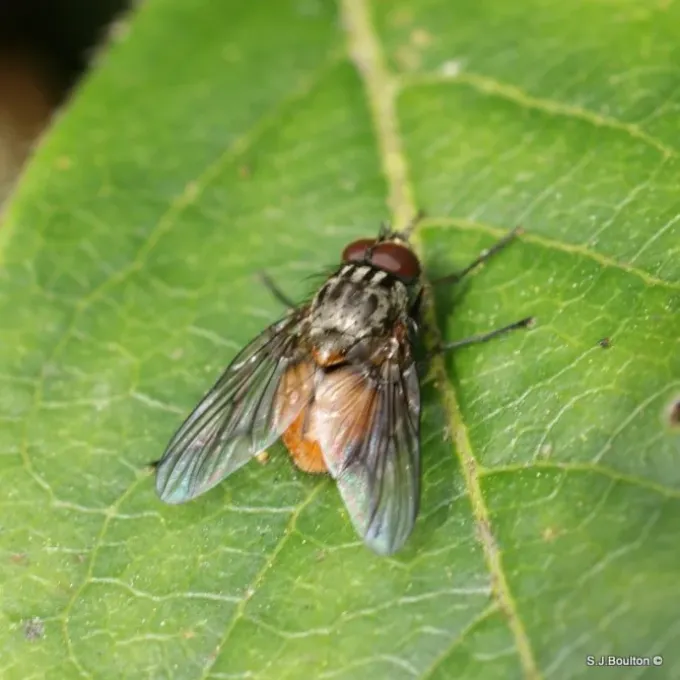
Description
How to identify
The genus Phaonia belongs to the family Muscidae. These flies are often similar in appearance to the common housefly but exhibit distinct morphological features typical of predatory or saprophagous habits.
Adult flies measure between 5 and 10 millimeters in length and are generally dark-colored, sometimes with a metallic sheen or grey stripes on the thorax. The wings are clear with characteristic venation typical of muscids.
The larvae are cylindrical, tapering towards the anterior end, and lack a distinct head capsule. They lead a cryptic life, inhabiting decaying organic matter, moist soil, or plant tissues where they consume decomposing material.
The life cycle involves complete metamorphosis, consisting of egg, larva, pupa, and adult stages. Pupation usually occurs in the soil or within the substrate where the larvae developed, providing them with protection.
Phaonia species are categorized within the order Diptera. The genus is diverse, and accurate identification is crucial for effective pest management programs, as different species may have varying ecological roles.
What it damages
The primary damage is caused by the larvae, which can attack weakened parts of various crops, particularly vegetables and cereals. They are most commonly found in environments with high moisture levels where tissues have begun to rot.
Stored root crops and vegetables are at risk if temperature and humidity levels in storage facilities are not properly managed. Larvae infiltrate tissues through existing mechanical injuries, further spreading decay.
Some Phaonia species act as secondary pests in cereal stalks that have already been compromised by other insects or fungal diseases. They thrive in these damaged tissues, worsening the overall plant health.
The pest is rarely a primary agent of damage to healthy plants. Its presence is typically an indicator of underlying environmental issues such as overwatering, poor drainage, or inadequate ventilation in storage.
Indirect damage includes the transmission of fungal spores and bacteria by the larvae, which significantly accelerates the spread of diseases within the crop or storage facility, leading to severe yield losses.
When it appears
Adult activity begins in the spring as soil temperatures rise. During this time, flies emerge from overwintering sites and seek moist, organic-rich substrates to lay their eggs.
Population peaks usually occur during mid-summer, especially in seasons with high rainfall. Increased humidity provides optimal conditions for larval development, shortening the life cycle and allowing for more generations per season.
As autumn approaches, the flies prepare for overwintering. However, in heated greenhouses or storage buildings, Phaonia can continue to breed throughout the year, posing a year-round threat.
Generations often overlap, which complicates monitoring efforts. Agronomists should use yellow sticky traps near potential breeding grounds to detect early arrivals and manage population spikes.
Special vigilance is required during prolonged rainy spells, as saturated soil and wet plant debris become highly attractive to females searching for optimal oviposition sites.
Signs of infestation
The first sign of Phaonia presence is the appearance of small, whitish larvae inside decaying plant tissues. Often, the affected areas emit a characteristic putrid odor associated with rot.
The presence of adult flies can be visually detected by their congregation on moist surfaces or near decaying organic matter. In storage facilities, flies are frequently observed resting on walls or containers.
Wilting of individual plants, despite adequate soil moisture, may indicate larval damage to the root system. Excavating such plants often reveals tunnels carved by the larvae.
Secondary infections such as molds and soft rots often develop on damaged tissues, which may mask the actual signs of larval feeding. Careful inspection is necessary to identify the larvae as the underlying cause.
- Tunnels inside plant tissues and root crops.
- Development of rot centers.
- Specific decaying odor.
- Mass presence of adults in greenhouses or storage facilities.
Control measures
The primary control measure is the implementation of good agricultural practices. It is essential to avoid overwatering, ensure proper ventilation in storage, and promptly remove crop residues.
Insecticide application is only justified during high population outbreaks. Contact-acting insecticides can be used to control adults, thereby preventing further egg-laying cycles.
Soil-applied insecticides or seed treatments are sometimes used to target larvae, though these methods are limited by the potential for insecticide resistance within the population.
Biological control, particularly the use of entomopathogenic nematodes, is effective in reducing larval populations in the soil. This is a sustainable and environmentally friendly approach for greenhouse cultivation.
Rigorous hygiene, including the disinfection of storage facilities and containers, is a key factor in limiting the population of Phaonia and ensuring the longevity and quality of agricultural products.
Taxonomy
- Latin name
- Phaonia
- Order
- Diptera (flies)
- Family
- Muscidae
- EPPO code
- PAONSP
Discussion
No discussions yet — be the first.