
Perlodes microcephala
Perlodes microcephala
Description
How to identify
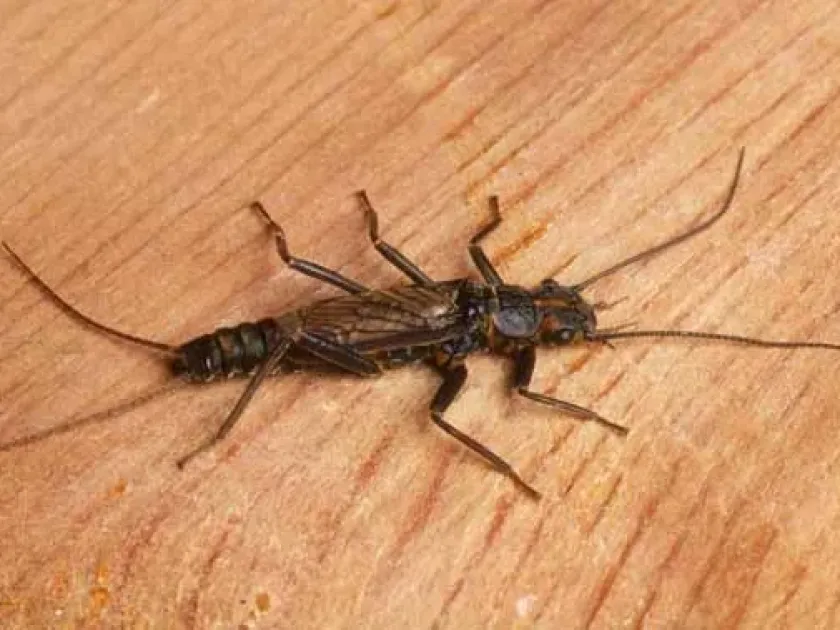
Perlodes microcephala is a species of stonefly belonging to the family Perlodidae within the order Plecoptera. These insects are easily recognized by their flattened, elongated body shape adapted for life in fast-moving streams.
Adult specimens feature well-developed wings and a head noticeably smaller than the pronotum. This unique characteristic is the basis for their scientific name and aids in differentiating them from other stonefly species.
The nymphs (larvae) are strictly aquatic and possess specialized gills, allowing them to extract oxygen from flowing water. They are typically found under rocks and in gravel beds.
The life cycle is hemimetabolous, meaning they do not undergo a pupal stage. The nymphs transform directly into winged adults after the final molt, which usually occurs outside of the water.
Identification often requires careful inspection of the wing venation patterns and genital morphology, as the family Perlodidae contains several similar species.
What it damages
It is crucial to clarify that Perlodes microcephala is not considered a pest of agricultural crops. It does not cause damage to plants, fruits, or root systems.
The nymphs are primarily predators or scavengers in aquatic environments, consuming organic matter or smaller aquatic invertebrates rather than vegetation.
In rare instances, their presence in irrigation water taken from natural rivers may pose a minor technical issue, such as clogging water intake filters, but this is not a significant agricultural problem.
In ecology, this stonefly is highly valued as a bioindicator. Its presence indicates clean, well-oxygenated water, reflecting a healthy local environment.
Therefore, rather than being a nuisance, they are essential components of a thriving ecosystem that sustains biodiversity in and around agricultural lands.
When it appears
The emergence of adult stoneflies typically occurs during spring and early summer, spanning from March to June depending on regional water temperatures.
The larval stage is the longest part of the life cycle, often lasting for one or more years. During this time, they remain submerged and relatively active in the benthos.
Warmer temperatures in the spring trigger the transition of the nymphs to the shore, where they undergo their final molt into the aerial adult form.
During the winter, nymphs continue to grow at a slower rate, remaining adapted to the cold, flowing water conditions of their habitat.
The lifespan of the adult form is brief, focusing primarily on finding a mate and ovipositing eggs back into the water to ensure the next generation.
Control measures
No pest control measures are required for Perlodes microcephala, as it does not constitute a threat to agricultural productivity or plant health.
If insects accidentally enter irrigation systems, standard mesh filters on intake pipes are fully effective at preventing any technical obstruction.
The use of insecticides is strictly discouraged in the vicinity of waterways, as such chemicals would be devastating to aquatic life and harmful to the surrounding environment.
Practicing sustainable agricultural runoff management is the best way to maintain water quality, which supports the presence of these beneficial stoneflies.
Regular maintenance of irrigation infrastructure ensures that natural inhabitants of the water do not interfere with system operations while preserving biodiversity.
Taxonomy
- Latin name
- Perlodes microcephala
- Family
- Perlodidae
- EPPO code
- PELDMI
Discussion
No discussions yet — be the first.