
Kuwana maple aphid
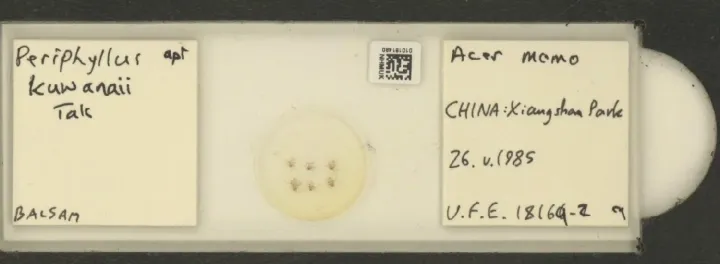
Periphyllus kuwanaii
Description
How to identify
The Kuwana maple aphid (Periphyllus kuwanaii) is a specialized insect species belonging to the family Aphididae. It is commonly found on various species of maple trees throughout its native range.
These aphids are small, soft-bodied insects. Their coloration varies between green and brownish-yellow, often matching the host plant's tissues, which serves as a natural camouflage.
They possess specialized abdominal structures known as siphunculi. Through these, they secrete honeydew and defensive chemicals that play a role in their survival and interaction with ants.
The life cycle involves both sexual and asexual generations. During the year, they produce multiple generations, allowing the population to expand rapidly under favorable weather conditions.
Identification is confirmed by examining the morphology of the antennae, siphunculi, and the presence of eggs on the bark of young twigs during the dormant season.
What it damages
The Kuwana maple aphid primarily feeds on maple trees (genus Acer). They target tender shoots and the underside of leaves, where the phloem sap is most nutrient-rich.
By piercing and sucking the sap, the aphids extract vital nutrients, causing the plant to lose energy and vital fluids needed for new growth.
Heavy infestations can lead to significant aesthetic damage, making the trees look sickly. In ornamental settings, this loss of beauty is a major concern for landscape management.
Seedlings and young trees are particularly vulnerable. Stunted growth and premature leaf drop are common consequences of severe aphid feeding pressure.
The presence of these insects also attracts other pests and may facilitate the entry of pathogens into the vascular system of the tree through feeding wounds.
When it appears
The lifecycle is strictly tied to the phenology of the host maple. Overwintering eggs hatch into "stem mothers" in early spring, synchronized with the bud break of maple trees.
Population density typically peaks in late spring and early summer. During these months, the aphids are most active and visible on the expanding foliage.
In mid-summer, when the quality of sap changes or the climate becomes harsh, some populations may enter a period of aestivation, becoming less active to survive heat.
As autumn approaches, sexual forms appear and mating occurs. These adults lay eggs in the crevices of the tree bark, which will serve as the source for the next season.
Regular inspection of new growth starting from early April is crucial for detecting the initial presence of the colony before it spreads throughout the canopy.
Signs of infestation
Early symptoms include the curling and twisting of young leaves. As aphids feed, the leaf tissue becomes distorted and often develops chlorotic spots.
The most noticeable sign is the accumulation of honeydew, a sticky substance excreted by the aphids. This substance frequently coats the leaves and branches below the colonies.
Sooty mold, a black fungus, thrives on the honeydew. This layer covers the leaves, inhibiting photosynthesis and causing the tree to look unkempt and dark.
Ant activity is a common indicator. Ants are often seen patrolling the branches, as they feed on the honeydew and actively guard the aphids against natural predators.
In severe cases, you may notice premature yellowing of the canopy, leaf necrosis, and a general lack of vigor compared to nearby uninfested maple trees.
Control measures
Effective management requires a combination of cultural practices and chemical interventions. Proper tree maintenance is the first line of defense against infestations.
Biological control plays a significant role. Encouraging beneficial insects like lady beetles, lacewings, and hoverflies can help suppress aphid populations naturally.
If chemical control is necessary, systemic insecticides applied as soil drenches or trunk injections provide long-term protection, especially for large trees where spray coverage is difficult.
- Prune and remove heavily infested branches to reduce local pest numbers.
- Use sticky bands around trunks to prevent ants from protecting the aphids.
- Apply dormant oil sprays in late winter to smother overwintering eggs.
- Ensure adequate watering and nutrient balance to help trees recover from damage.
Taxonomy
- Latin name
- Periphyllus kuwanaii
- Order
- Hemiptera (bugs, aphids, leafhoppers)
- Family
- Aphididae
- EPPO code
- PERPKU
Discussion
No discussions yet — be the first.