
Maple hairy aphid
Periphyllus hirticornis
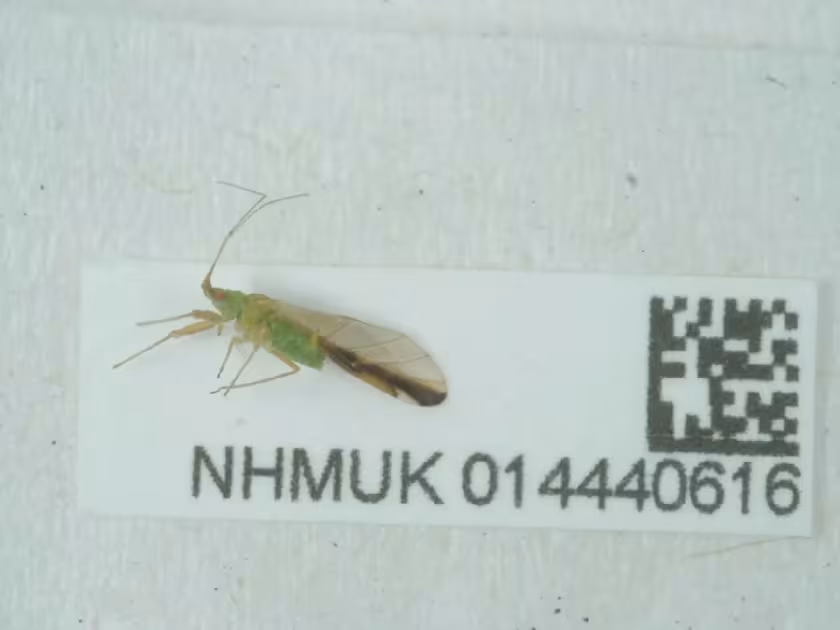
Description
How to identify
The maple hairy aphid (Periphyllus hirticornis) belongs to the family Aphididae. It is a small insect characterized by a dense covering of hairs on its body, which serves as a key distinguishing feature from other common aphid species found on trees.
The coloration of these aphids typically ranges from brownish to dark brown, providing excellent camouflage against the bark and leaves of their host trees. They possess a piercing-sucking mouthpart designed specifically to extract sap from plant tissues.
Their life cycle is complex, involving both winged and wingless generations. This adaptability allows the species to effectively colonize different parts of the maple tree, ensuring survival and propagation throughout the growing season.
This species is highly host-specific, primarily infesting trees of the genus Acer. Accurate identification often requires close inspection of the body hair structure and antenna morphology, usually performed by entomologists or arborists.
Monitoring the population density is crucial in urban environments where maples are commonly used for landscaping. Early identification of the hairy aphids helps in implementing control measures before the population reaches damaging levels.
What it damages
The damage caused by Periphyllus hirticornis results from the aphids feeding on the sap of young leaves, petioles, and succulent stems. This continuous sap extraction drains the tree of vital nutrients, leading to physiological stress.
Visible symptoms include the curling and yellowing of foliage, as well as the stunted growth of new shoots. In severe cases, the tree may experience premature leaf drop, which weakens the overall vigor and reduces the aesthetic value of the maple.
The aphids secrete honeydew, a sugary byproduct that accumulates on leaves and branches. This substance acts as a medium for the growth of sooty mold, a fungus that forms a black coating and inhibits photosynthesis by blocking sunlight.
Repeated infestations make the maple trees more susceptible to environmental stress, such as drought, and secondary attacks by other pests or diseases. A weakened tree loses its resilience, which can eventually lead to branch dieback.
In nursery settings, this aphid can be particularly problematic, as it negatively impacts the growth rate of young saplings. Proper management is essential for maintaining the health and commercial quality of maple stocks.
When it appears
The activity of the maple hairy aphid begins in early spring, synchronized with the bud break of the host tree. The fundatrices (stem mothers) emerge from overwintering eggs and start feeding on the tender new growth immediately.
Population peaks typically occur during late spring and early summer, when environmental conditions are optimal for reproduction. Rapid development leads to dense colony formation on the undersides of leaves and along stems.
During the hotter months of mid-summer, a portion of the population may enter a dormant state or migrate to more shaded areas of the tree canopy to escape extreme heat. This is a common survival strategy for many aphid species.
As autumn approaches, the aphids produce sexual forms that lay eggs in the crevices of the tree bark. These overwintering eggs are highly resistant to cold temperatures, ensuring the species survives until the following spring.
Climate patterns significantly influence the population dynamics. Unusually warm springs can accelerate the life cycle, leading to more generations per season and increasing the total impact of the infestation on the host tree.
Signs of infestation
The most noticeable sign of an infestation is the curling of young leaves and a general yellowing of the canopy. Close inspection of the leaf undersides often reveals colonies of aphids, which appear as hairy clusters attached to the plant tissue.
The presence of honeydew on the leaves and branches is a clear indicator of aphid activity. This sticky substance often attracts ants, which aggressively defend the aphids from natural predators to protect their food source.
- Curled and deformed new leaves.
- Sticky honeydew residue on foliage.
- Development of black sooty mold on leaf surfaces.
- Heavy ant traffic on the tree trunk and branches.
- Premature leaf senescence and early autumn coloration.
Reduced vigor and stunted annual shoot growth are clear indicators of long-term infestation. If left unmanaged, the tree may show thinning of the crown and increased susceptibility to other pathogens, compromising its structural integrity.
While the hairy appearance of the aphid provides camouflage, a proactive check of the leaf undersides in the spring is the best way to detect early colonies before they spread across the entire tree.
Control measures
Effective management requires an integrated approach. Cultural practices such as proper watering and fertilizing help maintain tree health, making the maples more resilient to aphid feeding pressure and reducing the severity of infestations.
Biological control is highly effective when natural predators are preserved. Lady beetles, lacewings, and hoverflies are efficient at consuming aphid populations. Minimizing the use of broad-spectrum insecticides helps protect these beneficial insects.
Mechanical removal can be used for small, localized infestations. Pruning off heavily infested twigs or spraying the canopy with a high-pressure water stream can effectively wash the aphids away and reduce the local population density.
When chemical intervention is necessary, systemic insecticides are often preferred as they are absorbed by the tree and target the sap-sucking insects. Applications must be timed correctly to minimize impact on pollinators and non-target species.
Winter or early spring dormant oil sprays can be applied to the bark of the trees to smother overwintering eggs. This preventative measure significantly reduces the initial population size at the start of the next growing season.
Taxonomy
- Latin name
- Periphyllus hirticornis
- Order
- Hemiptera (bugs, aphids, leafhoppers)
- Family
- Aphididae
- EPPO code
- PERPTE
Discussion
No discussions yet — be the first.