
California maple aphid
Periphyllus californiensis
Description
How to identify
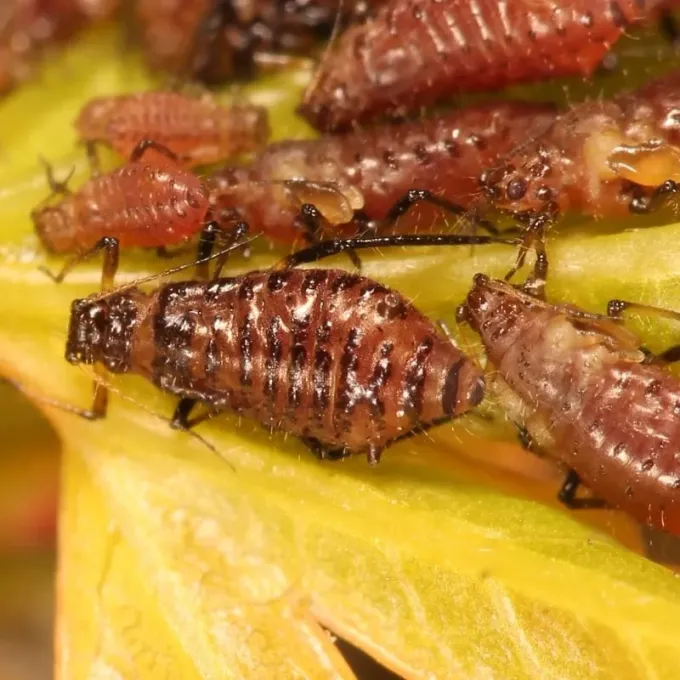
The California maple aphid, known scientifically as Periphyllus californiensis, is a member of the Aphididae family, primarily specializing on trees of the genus Acer.
These insects are characterized by their small size and ability to exist in different morphological forms, including wingless and winged individuals depending on the season and population density.
One of the unique biological features of this species is the production of specialized aestivating larvae, which allows the population to survive adverse high-temperature conditions during the summer.
In the field, these aphids are typically identified by their presence in colonies on the undersides of leaves and along the petioles of host maple trees.
While they are common pests, their specific preference for maple species makes them a significant concern for nurseries and urban landscapes containing Japanese or ornamental maples.
What it damages
The damage caused by this aphid stems from its feeding behavior, where it uses its piercing-sucking mouthparts to extract vital sap from the host plant's phloem.
This nutrient depletion leads to stunted growth, leaf curling, and overall reduction in the tree's vigor, significantly impacting the aesthetic value of the maple.
As the aphids feed, they excrete honeydew, a sticky substance that falls onto the leaves below, providing a perfect substrate for the growth of sooty mold fungus.
The resulting sooty mold interferes with photosynthesis, further stressing the tree and potentially leading to premature leaf drop during the peak of summer.
Continuous feeding throughout the growing season can cause branch tip dieback and weaken the tree, making it susceptible to secondary stressors such as drought or disease.
When it appears
The lifecycle begins in early spring, when overwintering eggs hatch, and the first generation of nymphs starts colonizing the developing buds and young leaves of the maple tree.
Population growth is most aggressive in spring and early summer when the trees provide an abundance of fresh, tender foliage for the aphids to exploit.
During the hotter months, the species often enters a period of summer diapause, where the specialized aestivating larvae remain dormant until conditions improve.
As the days grow shorter in autumn, the population resumes activity, resulting in the production of sexual forms that mate and lay eggs on the bark.
These eggs represent the overwintering stage, ensuring the survival of the species throughout the winter months to restart the cycle the following spring.
Signs of infestation
Early warning signs of an infestation include the curling and yellowing of the youngest leaves, which often appear distorted or misshapen compared to healthy foliage.
The presence of a sticky, shiny film on the leaves is a definitive indicator of aphid activity, as this is the honeydew excretion left behind by the feeding colonies.
Ant activity is another strong indicator; ants frequently guard and protect aphid colonies to harvest the honeydew, moving them between branches as needed.
Closer inspection of the leaf underside, particularly along the midrib and leaf stalks, will reveal clusters of the aphids, which can range in color from pale green to brownish.
The development of black sooty mold on the foliage is a late-stage sign, indicating that the aphid population has been established for a significant amount of time.
Control measures
Effective management begins with monitoring during the early spring to detect the emergence of nymphs before they reach a density that causes significant economic or aesthetic damage.
Horticultural oils or insecticidal soaps can be highly effective when applied directly to the colonies in the early stages of an infestation, helping to minimize chemical impact.
For more severe cases, systemic insecticides can be applied to provide longer-lasting protection, although these should be used judiciously to protect beneficial insects.
- Encourage natural predators like lady beetles, lacewings, and hoverflies in the garden.
- Use forceful water sprays to dislodge colonies from leaves if the tree is small enough.
- Apply dormant oil sprays in late winter to target overwintering eggs on the bark.
- Implement ant barriers on tree trunks to isolate the aphids from their protectors.
Maintaining tree health through proper irrigation and balanced fertilization can significantly improve the tree's natural resilience against aphid population explosions.
Taxonomy
- Latin name
- Periphyllus californiensis
- Order
- Hemiptera (bugs, aphids, leafhoppers)
- Family
- Aphididae
- EPPO code
- PERPCA
Discussion
No discussions yet — be the first.