
Maple aphid
Periphyllus brevispinosus
Description
How to identify
The maple aphid (Periphyllus brevispinosus) is a small sap-sucking insect belonging to the family Aphididae. It is specifically adapted to feed on various species within the Acer (maple) genus.
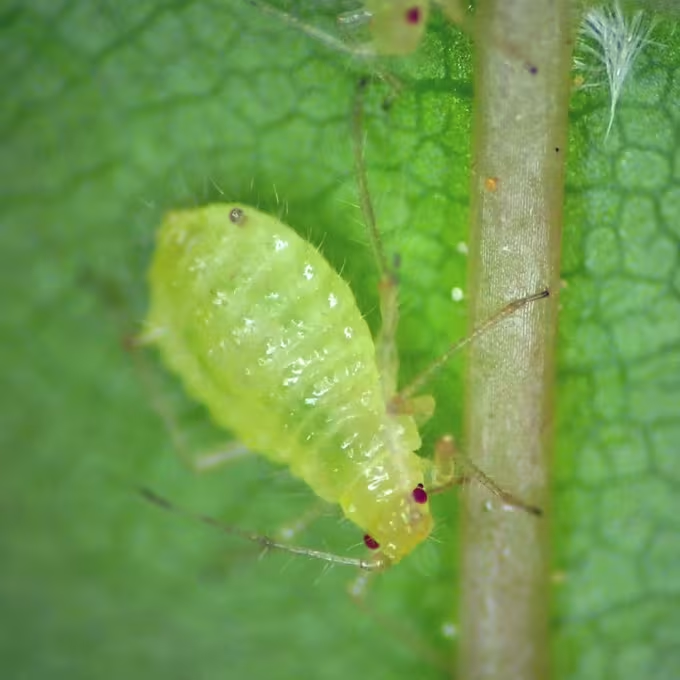
Adults are characterized by distinctively short spines on their bodies, which is a key diagnostic feature for this species. Their color typically ranges from yellow-green to brownish, providing effective camouflage against the maple foliage.
These aphids exhibit complex life cycles, including both asexual reproduction during the growing season and sexual reproduction in the autumn to ensure over-wintering success.
Wingless forms are common within the colonies, while winged individuals appear periodically to facilitate dispersal to neighboring branches or nearby trees.
The overwintering stage occurs in the form of eggs, which are carefully deposited by females into bark crevices and near dormant buds, ensuring resilience against cold winter temperatures.
What it damages
The primary damage is caused by the aphid's feeding on plant sap. They prefer succulent new shoots and the underside of young leaves, where the nutrient concentration is highest.
Infested leaves often exhibit curling, deformation, and stunted growth. Severe infestations can cause premature leaf drop, which significantly weakens the tree's vigor before winter.
The drainage of plant sap leads to a reduction in the overall health of the tree, making it more susceptible to opportunistic pathogens and secondary pests.
Honey-dew, a sticky substance excreted by the aphids, accumulates on the leaves, creating an ideal substrate for sooty mold fungi. This black fungus covers the leaf surface, effectively blocking photosynthesis.
Long-term heavy infestations can lead to dieback of twigs and stunted development of the entire canopy, reducing the aesthetic and ecological value of the maple tree.
When it appears
The life cycle begins in early spring when eggs hatch synchronously with the swelling and opening of maple buds, providing an immediate food source for the first generation.
Populations tend to peak during the late spring and early summer, typically in May and June, when warm weather accelerates their reproductive rate and development cycle.
During the peak of summer, if conditions become too hot or dry, aphid activity might stabilize, but they often recover as soon as milder conditions return.
As the days shorten in autumn, the population transitions to sexual reproduction, producing overwintering eggs to complete the annual biological cycle.
Strategic monitoring is most effective during the spring months, as managing early colonies prevents the exponential population growth that causes severe damage later in the season.
Signs of infestation
The most visible signs of infestation are curled leaves and the presence of a sticky, glistening residue known as honeydew on the foliage and branches.
A frequent indicator is the increased presence of ants on the tree; ants often tend to aphid colonies, protecting them from predators in exchange for honeydew.
Closer inspection of the underside of leaves usually reveals dense colonies of small, huddled aphids and their cast-off skins (exuviae).
The appearance of black, velvety sooty mold on the leaves and stems is a strong secondary indicator that an aphid colony has been established for an extended period.
General yellowing (chlorosis) of the leaves and a lack of vitality in the young shoots provide strong evidence that the tree is under pressure from sap-sucking pests.
Control measures
Biological control is the first line of defense; encouraging natural predators such as ladybugs, lacewings, and hoverflies can naturally keep aphid populations below damaging levels.
If chemical intervention becomes necessary, systemic insecticides are highly effective as they are absorbed by the tree and provide long-lasting protection against sucking insects.
For smaller infestations or garden settings, horticultural oils or insecticidal soaps can be used to coat the insects, causing them to suffocate without harming beneficial insects.
Controlling ant populations around the base of the tree can significantly reduce the ability of aphids to persist and spread, as ants are known to transport aphids between branches.
Maintaining tree health through proper watering and fertilization practices increases the natural resilience of the maple tree, making it less attractive to pest colonization.
Taxonomy
- Latin name
- Periphyllus brevispinosus
- Order
- Hemiptera (bugs, aphids, leafhoppers)
- Family
- Aphididae
- EPPO code
- PERPBR
Discussion
No discussions yet — be the first.