
Maple aphid
Periphyllus aceris
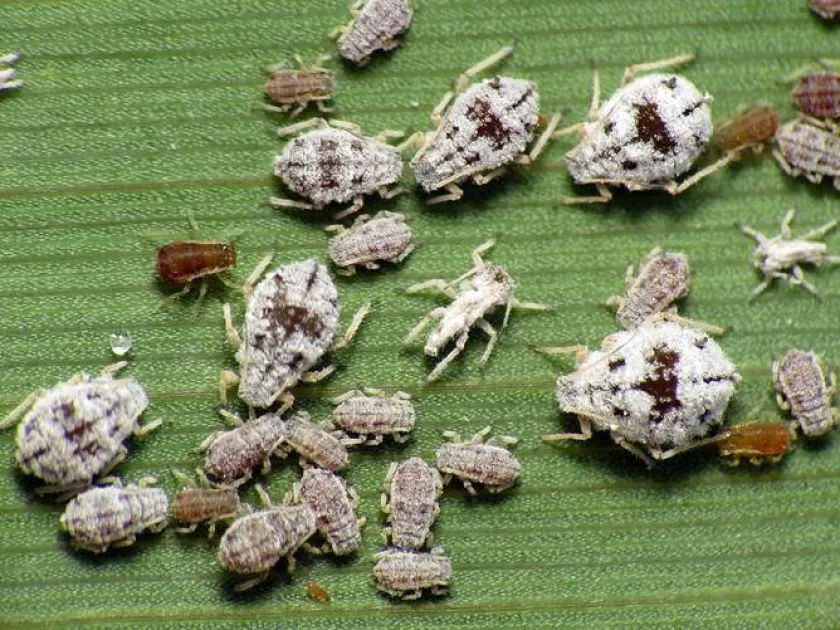
Description
How to identify
The maple aphid (Periphyllus aceris) is a member of the Aphididae family. It is a small insect characterized by its specialized association with maple trees and a complex life cycle involving multiple generations.
Adults exhibit polyphenism, appearing in both winged and wingless forms. Their bodies range in color from pale green to yellowish-brown, often blending perfectly with the foliage of the host tree.
A distinctive biological trait of this species is the ability to undergo estivation, a summer diapause that allows the aphids to survive high temperatures and limited resources.
The life cycle concludes with the emergence of sexual morphs in autumn. After mating, females deposit overwintering eggs, typically hidden in crevices of the bark or near terminal buds.
Identification often requires examining morphological features such as the siphunculi (cornicles) on the abdomen, which are vital for taxonomic classification in field studies.
What it damages
The maple aphid feeds exclusively on various maple species (Acer spp.). It uses its piercing-sucking mouthparts to extract phloem sap from developing leaves and young shoots.
Infestation causes significant aesthetic and physiological damage, including leaf curling, discoloration, and stunted growth of young twigs, which reduces the plant's overall vitality.
As they feed, they excrete honeydew, a sugary substance that coats the leaves. This serves as a primary substrate for sooty mold, a black fungus that hampers the tree's photosynthetic capability.
Heavy infestations can lead to premature leaf drop, which significantly weakens the tree and makes it susceptible to opportunistic pathogens and secondary pests like wood borers.
In urban landscapes, the sticky honeydew produced by the aphids can create nuisances on sidewalks, cars, and garden furniture located beneath the infested trees.
When it appears
The active season begins in early spring when the overwintering eggs hatch. This coincides with the bud break of the host maple tree.
Population levels usually peak during late spring and early summer, as aphids reproduce rapidly through parthenogenesis to establish dense colonies.
During the peak of summer, if environmental conditions become harsh, the population may transition into estivation, with individuals remaining inactive until cooler temperatures return.
As autumn approaches, the aphid population resumes its cycle, leading to the production of males and females, which then prepare for the next dormant period.
The cycle concludes with the onset of winter frost, as the sexual generation lays eggs that remain protected on the bark until the following spring.
Signs of infestation
Initial signs of an infestation include the curling and yellowing of young leaves as the aphid colonies begin to feed in sheltered areas.
The presence of a sticky, shiny substance on the leaves and branches is a clear indication of honeydew accumulation resulting from aphid feeding.
Frequent visits by ants are a strong indicator of an aphid colony, as ants aggressively protect the aphids in exchange for the sugary honeydew they provide.
Sooty mold growth, appearing as a dark, velvety layer on leaf surfaces, indicates an established infestation that has persisted for some time.
Close inspection of the underside of leaves reveals clusters of small insects and discarded white cast skins, which are left behind as the nymphs molt and grow.
Control measures
Managing maple aphid populations requires a multi-faceted approach focusing on prevention, monitoring, and targeted intervention when necessary.
- Encouraging natural predators such as ladybugs, lacewings, and hoverflies in the garden.
- Applying horticultural oils or insecticidal soaps to suffocate the aphids on contact.
- Using systemic insecticides for severe infestations in mature landscape trees.
- Pruning and destroying heavily infested branches to reduce local pest pressure.
Systemic insecticides are generally the most effective method for controlling large-scale infestations, as they are absorbed by the tree and provide long-term protection.
Timing is critical; treatments should be applied before the leaves become severely curled, as the curled foliage provides a physical barrier that protects the aphids from sprays.
Maintaining tree health through proper irrigation and soil management helps the trees better withstand aphid damage and recover more quickly from potential stress.
Taxonomy
- Latin name
- Periphyllus aceris
- Order
- Hemiptera (bugs, aphids, leafhoppers)
- Family
- Aphididae
- EPPO code
- CHAOAC
Discussion
No discussions yet — be the first.