
Maple aphid
Periphyllus acericola
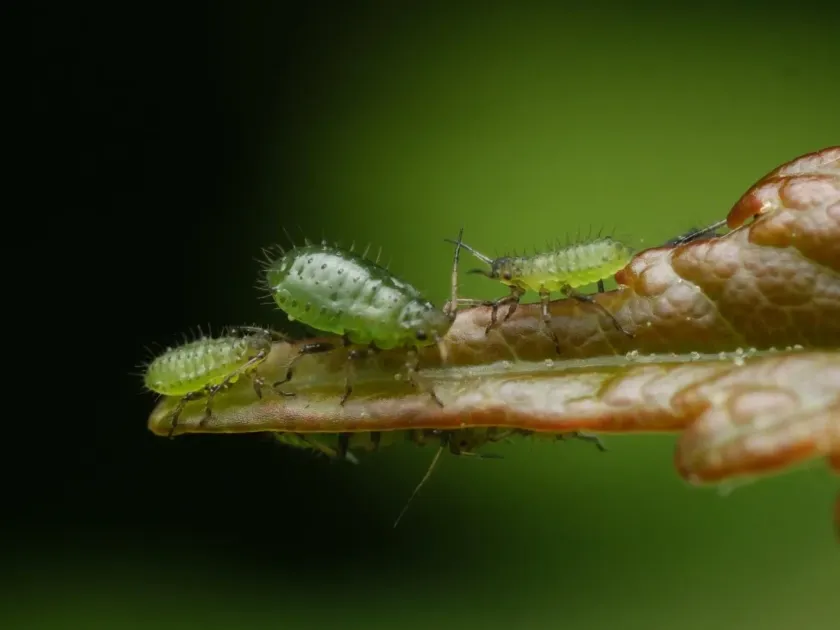
Description
How to identify
The maple aphid (Periphyllus acericola) is a specific insect species belonging to the Aphididae family, which primarily impacts various types of maple trees.
These small, soft-bodied insects have complex lifecycles, involving both asexual reproduction through the spring and summer and sexual reproduction in autumn.
Adults exhibit different forms, including wingless and winged individuals, allowing them to effectively colonize new parts of the tree or move to new hosts.
Their mouthparts are specialized for piercing plant tissue and sucking phloem sap, which constitutes the primary source of their nutrition.
Understanding their morphology is key to identification, as their subtle colors and habit of hiding on the undersides of leaves can often lead to late detection.
What it damages
This pest targets the genus Acer, causing significant stress to healthy trees by draining vital nutrients required for growth and leaf development.
Feeding often results in leaf curling, yellowing, and premature senescence, which reduces the photosynthetic capacity of the maple tree.
The excretion of honeydew promotes the growth of sooty mold, which not only hinders light absorption but also severely degrades the ornamental value of the tree.
In cases of heavy infestation, the tree may experience stunted shoot growth, leaving it susceptible to secondary infections and environmental stress.
Nursery-grown saplings are particularly vulnerable, as even moderate aphid populations can lead to significant economic loss and reduced plant vigor.
When it appears
Activity begins in early spring, synchronized with the emergence of leaves from the buds, providing the first generation with immediate food sources.
The peak infestation period typically occurs during the late spring and early summer months when environmental conditions are optimal for population growth.
As summer progresses, winged forms appear, facilitating the spread of the colony to neighboring trees and ensuring the species' survival across a wider area.
In autumn, sexual forms produce eggs that are laid in bark crevices and near buds, serving as the overwintering stage of the pest.
Monitoring should be conducted weekly throughout the growing season to ensure that population explosions are caught before significant damage occurs.
Signs of infestation
Distorted, twisted, or cupped leaves are the most common early indicators that a maple aphid colony is present on the foliage.
A shiny, sticky substance found on the upper surface of leaves or on the branches below indicates the presence of aphid honeydew.
Black, powdery soot-like deposits on leaves or trunks are a clear sign of sooty mold, which grows on the aphid waste products.
Increased ant activity around the tree trunk is a classic sign, as ants are often found tending to aphids to feed on the sugary secretions.
- Curled and deformed foliage
- Sticky honeydew coating on leaves
- Presence of black sooty mold
- Large numbers of ants on the bark
- Premature leaf drop during summer
Control measures
Systemic insecticides are highly effective for large-scale infestations, as they provide long-lasting protection by translocating throughout the tree tissues.
Encouraging biological control agents, such as ladybugs, lacewings, and parasitic wasps, can naturally suppress aphid populations in a garden setting.
Horticultural oils and insecticidal soaps offer a safer, non-toxic alternative for managing localized infestations on smaller or ornamental trees.
A strong jet of water can be used to physically dislodge aphid colonies from branches, providing immediate, chemical-free relief for the tree.
Proper fertilization and watering schedules help maintain tree vigor, allowing the plant to better withstand the stress caused by aphid feeding.
Taxonomy
- Latin name
- Periphyllus acericola
- Order
- Hemiptera (bugs, aphids, leafhoppers)
- Family
- Aphididae
- EPPO code
- PERPAA
Discussion
No discussions yet — be the first.