
Maple aphid
Periphyllus
Description
How to identify
Maple aphids (genus Periphyllus) belong to the order Hemiptera and the family Aphididae. These insects are specialized pests that have developed complex life cycles specifically adapted to maple trees.
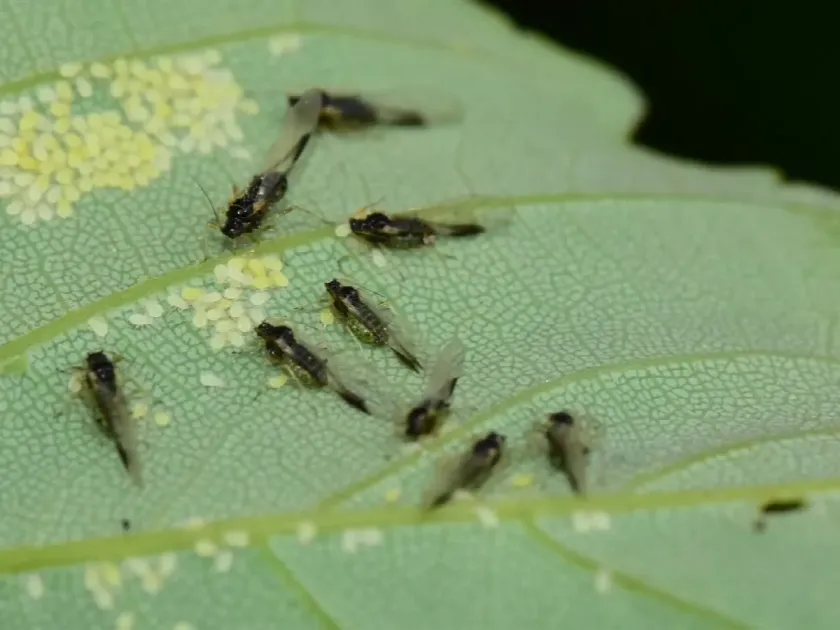
Adult aphids typically measure up to 3 mm in length. Their coloration ranges from green to brownish, allowing them to blend perfectly with the bark or the underside of the leaves they inhabit.
A distinctive feature of the Periphyllus genus is the existence of different morphs, including dormant summer forms that appear as small, scale-like structures, making them difficult to detect.
The life cycle involves alternating generations, transitioning between asexual reproduction (parthenogenesis) during the growing season and sexual reproduction in autumn to produce overwintering eggs.
These pests aggregate in dense colonies, typically found on young shoots, leaf petioles, and the undersides of leaves, ensuring a steady food supply from the host tree.
What it damages
The primary hosts for these aphids are species of the genus Acer, including Norway maple and various ornamental varieties used in urban landscapes.
As sap-sucking insects, they deplete the tree of vital nutrients, leading to growth stunting and a significant reduction in the overall vigor of the host plant.
The secretion of honeydew is a major issue, as it serves as a substrate for sooty mold fungi, which coat the foliage in a black layer and interfere with essential photosynthesis.
Heavy infestations cause leaf curling, premature yellowing, and leaf drop, significantly impairing the tree's health and visual appeal.
Chronic damage weakens the tree’s immune system, making it more susceptible to secondary infections, environmental stress, and other opportunistic pests.
When it appears
The season begins in early spring when the aphids emerge from overwintering eggs located in bark crevices as the buds begin to burst.
Peak activity and population growth occur throughout May and June, coinciding with the rapid growth phase of the maple trees.
During the heat of midsummer, some populations may enter a state of summer dormancy (estivation), attaching themselves to leaves as inconspicuous larvae until cooler conditions return.
Activity increases again in autumn, when sexual forms appear and lay eggs on the bark, ensuring the survival of the population through the winter months.
Their life cycle is highly synchronized with the host tree's phenology, allowing the pests to exploit resources effectively throughout the entire growing season.
Signs of infestation
The presence of a sticky, glistening residue on the leaves (honeydew) is the most prominent indicator of an active aphid infestation.
Direct observation of aphid colonies on the undersides of leaves or along succulent stems confirms the presence of Periphyllus.
The development of black sooty mold on leaf surfaces is a clear signal that the aphid colony has been present for an extended period.
High ant activity on the tree trunk is a reliable secondary sign, as ants farm the aphids to collect their sugary secretions, often protecting them from predators.
Visible curling, yellowing, or abnormal twisting of new leaves and shoots indicates that the aphid colony is actively feeding on the most vulnerable parts of the tree.
Control measures
Effective management requires early intervention, starting with monitoring the trees as soon as the first leaves begin to emerge in spring.
Chemical control involving systemic insecticides is the most effective approach for large infestations in nurseries or urban park settings.
Biological control, by encouraging natural predators such as lady beetles, lacewings, and syrphid fly larvae, can help keep aphid populations below damaging thresholds.
Good horticultural practices, including proper fertilization and adequate irrigation, help maintain tree vitality and improve their natural resistance to pest attacks.
- Apply systemic insecticides during the early stages of infestation.
- Use high-pressure water sprays to physically dislodge aphids from small trees.
- Install sticky bands on trunks to deter ants from protecting the aphid colonies.
- Perform dormant oil sprays during late winter to kill overwintering eggs.
Taxonomy
- Latin name
- Periphyllus
- Order
- Hemiptera (bugs, aphids, leafhoppers)
- Family
- Aphididae
- EPPO code
- PERPSP
Discussion
No discussions yet — be the first.