
Coffee leaf miner
Perileucoptera coffeella
Description
How to identify
The coffee leaf miner Perileucoptera coffeella belongs to the order Lepidoptera, family Lyonetiidae. It is a tiny moth with silver-white wings and a wingspan of approximately 6-7 mm.
The insect undergoes a complete metamorphosis, including egg, larva, pupa, and adult stages. Females lay their eggs singly on the upper surface of coffee leaves.
The larvae are specialized leaf-miners that feed exclusively on the parenchymal tissue inside the leaf, protected by the leaf's epidermis.
Pupation occurs externally in a unique, white, silk-like cocoon often attached to the leaf underside or other surfaces near the damaged site.
The entire lifecycle is highly temperature-dependent, usually completing in less than a month under tropical conditions, allowing for multiple generations per year.
What it damages
The primary hosts of this pest are plants of the genus Coffea, with Coffea arabica being the most susceptible and economically affected species.
Larval feeding creates tunnels within the leaf tissue, which destroys the chlorophyll-containing cells and interferes with the plant's ability to produce energy.
Severe infestations lead to widespread leaf necrosis and premature defoliation, which causes significant stress to the coffee tree.
The loss of foliage results in a direct reduction in fruit set and bean size, leading to substantial yield losses in coffee production.
In young trees, repeated attacks can stunt growth and, in extreme cases, lead to the death of the entire plant.
Signs of infestation
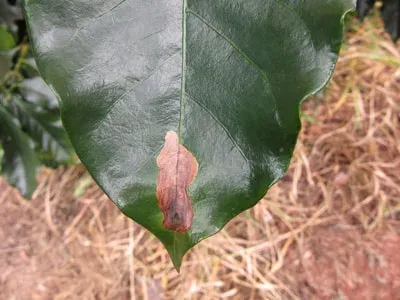
Initial signs of infestation appear as small translucent spots on the leaves, which gradually enlarge into brown, dry, irregular-shaped mines.
Holding the leaf against light reveals the presence of larvae inside the mines, which is a definitive diagnostic feature of the pest.
Over time, the necrotic areas crack and the leaves become brittle, often leading to heavy leaf drop starting from the lower canopy.
White, H-shaped cocoons may be visible on the underside of leaves, indicating that the larvae have finished feeding and are preparing for metamorphosis.
Visible decline in plant vigor, including reduced lateral branching and overall sparse canopy, are common symptoms of chronic infestation.
Control measures
Successful management requires an Integrated Pest Management (IPM) approach that combines monitoring, biological, and chemical methods.
Cultural practices such as proper pruning to improve air circulation and regular removal of heavily infested leaves help keep pest populations low.
Biological control using entomopathogenic fungi like Beauveria bassiana is effective in reducing larval populations without harming beneficial insects.
Chemical intervention should be reserved for periods of high pressure, using systemic insecticides applied with careful consideration for natural predators and parasitoids.
Encouraging the presence of natural enemies, including various species of parasitic wasps (Braconidae), is essential for long-term sustainable control of the coffee leaf miner.
Taxonomy
- Latin name
- Perileucoptera coffeella
- Order
- Lepidoptera (butterflies)
- Family
- Lyonetiidae
- EPPO code
- LEUCCO
Discussion
No discussions yet — be the first.