
Laburnum leaf miner
Leucoptera spartifoliella
Description
How to identify
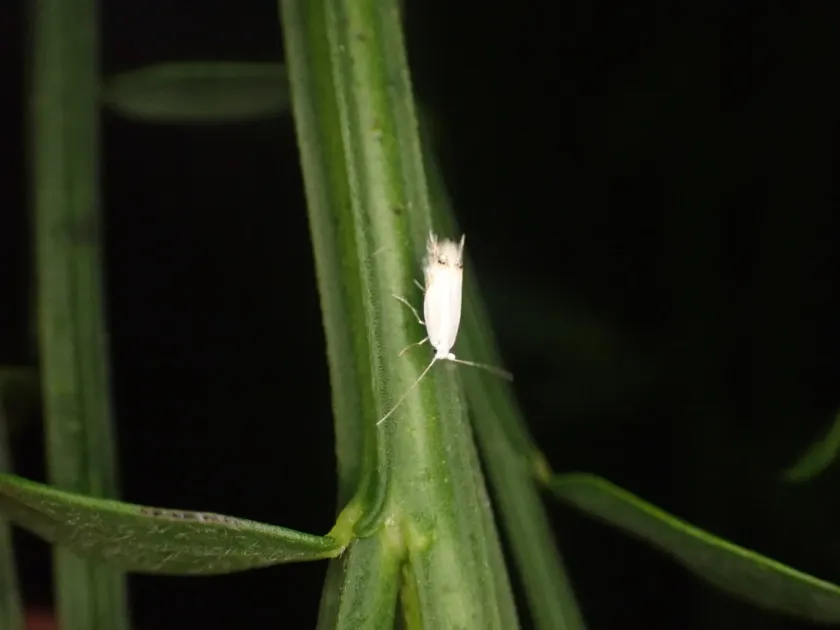
The Laburnum leaf miner Leucoptera spartifoliella belongs to the Lyonetiidae family. These are tiny moths with a wingspan of approximately 6 to 8 mm, typically sporting silver-white wings with a distinct dark spot at the tips.
The life cycle consists of egg, larva, pupa, and adult stages. Adult moths are primarily nocturnal, making them difficult to spot in the garden during daylight hours.
The larvae are specialized miners that live and feed beneath the epidermis of stems. Their bodies are flattened to navigate easily through the narrow spaces between the plant's outer tissues.
Pupation occurs within white, spindle-shaped cocoons that are often visible on the surface of infested stems or twigs, serving as a key diagnostic feature.
As a host-specific pest, its presence is usually concentrated on specific plants, primarily those in the broom and laburnum groups, within urban and rural landscapes.
What it damages
This pest primarily infests broom plants Cytisus, but it is also known to feed on other members of the legume family, including gorse Genista species.
Larvae create winding, serpentine mines under the bark of young stems. This feeding behavior disrupts the vascular tissue, impeding the plant's ability to transport water and nutrients effectively.
Visible damage often includes yellowing, wilting, and the eventual death of infested twigs. Heavy infestations can lead to significant dieback and a stunted, ragged appearance of the shrub.
Beyond cosmetic issues, the weakened state of the plant makes it more susceptible to secondary environmental stresses and potential fungal infections.
In nursery production, the presence of these miners can render entire batches of plants unmarketable due to the persistent damage caused to the new season's growth.
When it appears
Adult moths typically emerge in late spring or early summer, depending on local temperature conditions, to mate and lay eggs on the stems of host plants.
Soon after hatching, the young larvae tunnel into the host's stems, where they remain throughout the summer months to feed and develop.
The species usually completes one generation per year. Development is synchronized with the growth of the host plant, ensuring that larvae have access to young, tender stems.
By late summer or autumn, larvae prepare to overwinter, often within the shelter of the mined stems or by creating cocoons on the outer surface of the plant.
Spring temperatures trigger the completion of the life cycle, leading to the emergence of the next generation of moths and the start of a new infestation cycle.
Signs of infestation
The most characteristic sign is the presence of winding, silver-white or brownish tracks on the bark of young green stems, which indicate where the larvae have been feeding.
Tiny white cocoons attached to the stems or near leaf buds are strong indicators of the moth's recent pupation and presence in the area.
Wilting and browning of shoot tips that appear sickly or deformed are clear evidence of internal tissue damage caused by the mining larvae.
Premature leaf drop and a general lack of vigor in the shrub during the growing season can also point to a long-term infestation that has been overlooked.
Careful inspection of the stems might reveal small holes where larvae have entered or exited the tissue, as well as accumulated frass under the semi-transparent bark.
Control measures
Pruning and destroying infested stems during the dormant or early growth season is the most effective way to mechanically reduce the pest population.
Systemic insecticides applied when the larvae are just beginning to mine can provide effective control by reaching the pests within the plant tissues.
Biological control methods, such as the use of beneficial nematodes or specific microbial agents, can be employed to manage populations in residential gardens.
Maintaining plant health through adequate irrigation and proper fertilization helps shrubs recover more efficiently from the stress caused by pest feeding.
Monitoring for adult activity using pheromone traps can help time control measures accurately, ensuring that intervention happens at the most vulnerable stage of the pest's life.
Taxonomy
- Latin name
- Leucoptera spartifoliella
- Order
- Lepidoptera (butterflies)
- Family
- Lyonetiidae
- EPPO code
- LEUCSA
Discussion
No discussions yet — be the first.