
Pergandeida
Pergandeida
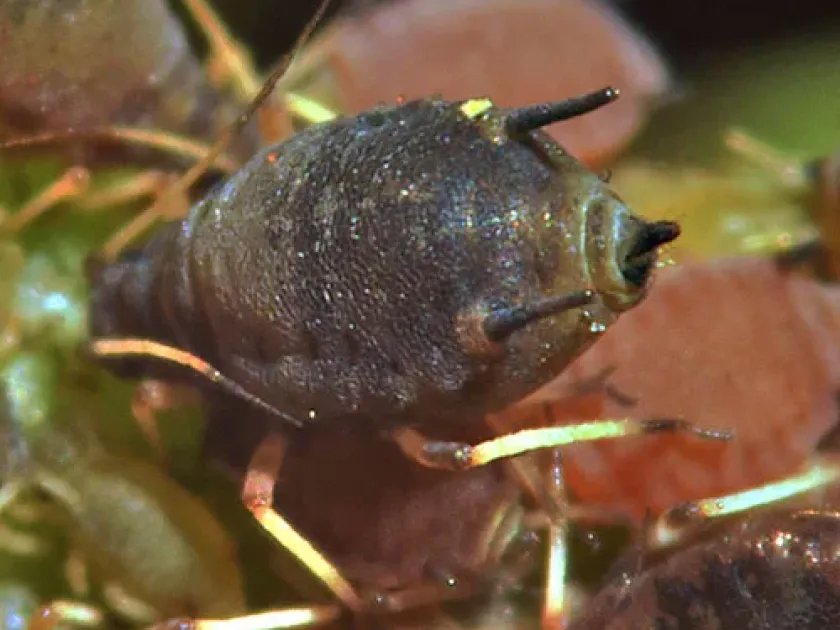
Description
How to identify
Pergandeida is a genus of insects belonging to the family Aphididae, which falls under the order Hemiptera, commonly known as true bugs.
Morphologically, these aphids are characterized by a soft body, a pair of cornicles (siphunculi) on the abdomen, and specialized piercing-sucking mouthparts for sap feeding.
Adults typically measure between 1 and 3 mm in length, with coloration varying from light green to dark brown depending on the species and environmental factors.
Winged forms (alates) possess two pairs of transparent wings that are held roof-like over the abdomen, enabling colonization of new host plants.
Their life cycle involves complex generations, including both parthenogenetic (asexual) and sexual reproduction, allowing for rapid population growth during favorable conditions.
What it damages
This pest primarily infests plants in the Rosaceae family, although its host range can vary depending on the specific ecosystem and geographic location.
Feeding occurs mainly on young succulent shoots, flower buds, and the undersides of leaves where nutrient-rich phloem sap is easily accessible.
By extracting plant fluids, the aphids drain energy from the plant, causing significant stunting and developmental abnormalities in the foliage.
Heavy infestations of Pergandeida can lead to severe weakening of the host plant, rendering it more susceptible to environmental stressors and secondary diseases.
Continuous feeding leads to reduced overall vigor, resulting in diminished growth rates and a decrease in the reproductive potential of the affected host.
Signs of infestation
The most visible signs of infestation include leaf curling, deformation, and chlorosis, which occur as the plant reacts to the feeding activity of the aphids.
The secretion of honeydew is a characteristic symptom, which eventually coats the leaves and branches, creating a favorable substrate for sooty mold growth.
Plants heavily colonized by these aphids often exhibit stunted shoot tips and a noticeable decline in the health of younger plant tissue compared to uninfested areas.
The presence of ants roaming on the stems and leaves is a strong indicator of an aphid colony, as ants protect the pests to harvest the sweet honeydew.
Early bud drop or failure of flowers to develop properly is also a frequent consequence of aphid feeding stress on susceptible ornamental and fruit crops.
Control measures
Effective management begins with good cultural practices, such as pruning infested shoots and maintaining healthy soil conditions to strengthen the plant's resilience.
Biological control plays a crucial role by encouraging the presence of natural predators like lady beetles, lacewings, and syrphid fly larvae in the garden.
If chemical intervention becomes necessary, systemic or contact insecticides should be applied carefully, ensuring full coverage of the infested plant parts.
It is essential to rotate different classes of insecticides to prevent the development of resistance within the aphid population.
- Regular monitoring of new growth during the spring and summer seasons.
- Application of horticultural oils or insecticidal soaps as an early-season deterrent.
- Removing weeds that may serve as alternative hosts or refuges for the pest.
Taxonomy
- Latin name
- Pergandeida
- Order
- Hemiptera (bugs, aphids, leafhoppers)
- Family
- Aphididae
- EPPO code
- PERNSP
Discussion
No discussions yet — be the first.