
European perch
Perca fluviatilis
Description
How to identify
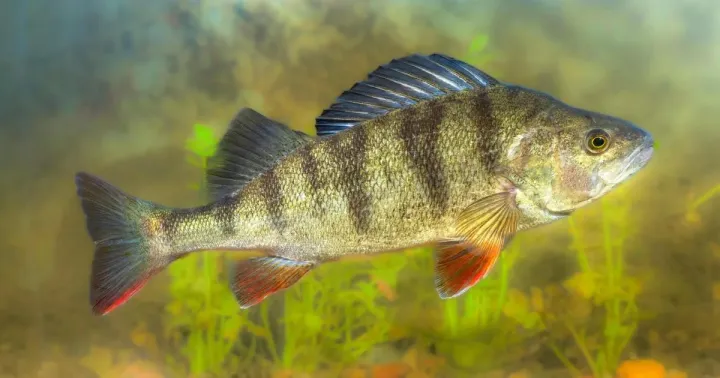
The European perch (Perca fluviatilis) belongs to the Perciformes order and Percidae family. It is a predatory freshwater fish common in Europe and Asia.
The fish is characterized by a greenish-yellow body with distinct dark vertical bands and sharp spiny fins.
Biologically, it is a predator that exclusively feeds on invertebrates and small fish, having no dietary link to plant materials.
The taxonomic classification confirms that this species is not an insect or a herbivorous organism.
It occupies a niche in aquatic food webs that does not overlap with land-based agricultural production.
What it damages
The European perch does not cause any damage to agricultural crops as it does not consume plants.
It lacks the physiological mechanisms or dietary motivation to interact with or harm terrestrial plant organs.
There is no evidence of this species damaging crops, grains, vegetables, or fruits in any part of the world.
The interaction between this fish and agricultural systems is purely geographical if water sources are near fields.
No economic losses in agriculture have ever been attributed to the presence of this aquatic species.
When it appears
The seasonal cycle of the perch is defined by water temperature fluctuations, impacting its activity levels throughout the year.
Spawning occurs during the spring, which is independent of the planting or harvesting cycles of terrestrial crops.
During the summer months, the fish remains active within the water column, completely isolated from farm land.
Winter activity decreases, and the fish seeks deeper parts of the water body to survive low temperatures.
These biological phases have zero impact on agricultural activities or crop development stages.
Signs of infestation
Since the European perch is not an agricultural pest, there are no specific signs of damage to identify in the field.
Presence of the fish in ponds is not an indicator of a phytosanitary threat to nearby agricultural land.
No biological or mechanical damage on crop surfaces can be associated with this fish species.
Observations in the field should focus on insects, fungal diseases, or mammals that genuinely threaten the plants.
The presence of perch in an irrigation water source actually suggests a healthy ecosystem balance.
Control measures
No control measures are needed for the European perch as it represents no risk to agricultural crops.
Efforts to control this species in or near farming areas are unnecessary and ecologically harmful.
Protecting the biodiversity of aquatic habitats is advised to maintain water quality for irrigation purposes.
If blockage of irrigation channels occurs, manual removal of vegetation or debris is the only recommended practice.
Agricultural management should prioritize legitimate pests that directly affect the yield and quality of the crops.
Taxonomy
- Latin name
- Perca fluviatilis
- Family
- Percidae
- EPPO code
- PECAFU
Discussion
No discussions yet — be the first.