
Yellow perch
Perca flavescens
Description
How to identify
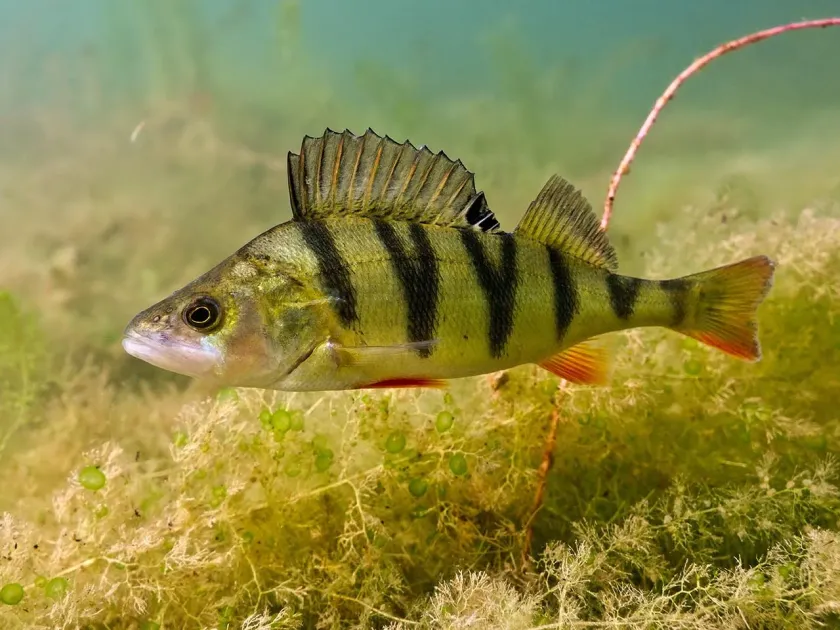
The yellow perch (Perca flavescens) is a freshwater fish belonging to the order Perciformes and the family Percidae. It is widely recognized by its golden-yellow body and distinct vertical dark bands along its sides.
This species is a common inhabitant of lakes, ponds, and slow-moving rivers. It thrives in areas with abundant submerged aquatic vegetation, often found near agricultural drainage canals.
As a predator, the yellow perch is a key component of the aquatic food web. It does not possess any biological traits that allow it to feed on terrestrial or aquatic crops.
The life cycle of the perch involves spawning in the spring, where eggs are attached to vegetation. This biological dependency confirms its preference for aquatic habitats rather than terrestrial environments.
It is important to classify the yellow perch correctly: it is an ecologically significant species and a popular aquaculture candidate, not a plant pest.
What it damages
The yellow perch is not a plant pest. It does not feed on crops, vegetables, or field plants, nor does it cause any structural damage to agricultural systems or irrigation infrastructure.
Its diet consists of zooplankton, aquatic insects, and small forage fish. It plays a role in regulating the population of aquatic organisms, which may indirectly benefit local water quality.
There are no scientific reports or agricultural data suggesting that Perca flavescens causes damage to agricultural production or causes economic loss to farmers.
In contexts such as flooded fields (e.g., rice paddies), the presence of yellow perch is neutral or even beneficial as it preys on potential insect larvae that could occupy the surrounding water.
Therefore, any assessment regarding its status as a pest is scientifically incorrect, and the species should be treated as a component of the local aquatic ecosystem.
Control measures
Since the yellow perch is not an agricultural pest, there are no control measures or mitigation strategies intended for its eradication in or near agricultural lands.
Best practices for water management in agriculture emphasize maintaining natural balance in water sources. Using pesticides in these areas would be detrimental to both the environment and the biodiversity of the aquatic system.
If population management is needed for industrial or technical reasons, it should be done through responsible fishing practices or natural resource management strategies.
Agricultural efforts should be focused on preventing runoff into the habitats of such fish, ensuring that fertilizers or farm chemicals do not disrupt the aquatic balance.
There is no justification for including this species in a list of threats. Any management of water bodies containing yellow perch should focus on aquaculture productivity rather than destruction.
Taxonomy
- Latin name
- Perca flavescens
- Family
- Percidae
- EPPO code
- PECAFL
Discussion
No discussions yet — be the first.